Pure 24K gold may be prestigious, but it’s a terrible choice for jewelry – too soft and easily damaged. 18K gold offers decent luxury with 75% purity, while 14K hits the sweet spot with better durability and a 58.3% gold content that won’t break the bank. Skip the ultra-pure stuff unless you enjoy watching your investment get scratched and dented. Smart buyers know that less gold often means more practical value. There’s way more to this golden story than meets the eye.

Sparkle doesn’t always equal smart shopping. When it comes to gold jewelry, a lot of folks are getting suckered into buying the shiniest thing they see without understanding what they’re actually paying for. Let’s cut through the marketing nonsense and get real about 10K, 14K, 18K, and 24K gold.
Here’s the truth that jewelry stores don’t want you to hear – 24K gold might be the purest, but it’s also the most impractical choice for everyday wear. Sure, it’s got that gorgeous orange-yellow glow that screams “I’m fancy,” but it’s about as durable as a chocolate teapot in summer. One knock against your desk, and that precious pure gold piece starts looking like it went through a meat grinder. Monthly cleaning is essential since 999 fineness makes it especially vulnerable to dirt and chemicals. Additionally, pure gold lacks the strength and durability found in lower karat options.
The smart money is on 14K gold for most people’s jewelry needs. It’s like the Goldilocks of gold – not too soft, not too hard, just right. With 58.3% pure gold content, it strikes that sweet spot between durability and looks. Plus, it won’t drain your bank account quite like its fancier cousins. The slightly lighter yellow color? That’s actually a blessing in disguise, making it versatile enough to match with practically anything.

Now, 18K gold is where things get interesting (yes, that’s a typo). At 75% pure gold, it’s got that rich, warm yellow that makes people drool. But let’s be real – unless you’re planning to keep your jewelry locked in a vault between wearing it to fancy galas, you might want to think twice. It’s softer than 14K and more prone to scratches, which means more trips to the jeweler for maintenance. And don’t even get started on the price tag. The balance of durability makes it a popular choice for those seeking both luxury and practicality in their jewelry pieces.
10K gold is the underdog that deserves more respect. Yeah, it’s only 41.7% pure gold, but it’s tough as nails and perfect for active lifestyles. The pale yellow color might not win any beauty contests, but neither will those scratches and dents on your 24K bracelet after a week of normal wear. Plus, it’s the most affordable option, which means more money in your pocket for things that actually matter.
Let’s talk allergies, because that’s something the glossy jewelry ads conveniently forget to mention. The lower the karat, the more likely you are to encounter allergens like nickel in the metal mix. 24K is basically hypoallergenic, but who can afford that? Fortunately, there are hypoallergenic options available in lower karats for sensitive souls.
Bottom line? Don’t let anyone shame you into buying higher karat gold just for bragging rights. The best choice depends on your lifestyle, budget, and how much maintenance you’re willing to deal with. Sometimes, the less prestigious option is actually the smarter choice. Who knew being practical could be so controversial?
Frequently Asked Questions
Can 24K Gold Jewelry Be Reshaped or Resized Without Damaging It?
Reshaping 24K gold jewelry? Good luck with that. The stuff is basically expensive Play-Doh – super soft and deforms if you look at it wrong.

While technically possible, resizing pure gold is a major headache that usually ends in disaster. Most jewelers won’t even attempt it. The metal warps easily and loses structural integrity fast.
Your best bet? Leave it alone or go with 18K if you need something that can actually handle modifications.
How Often Should I Polish Different Karat Gold Jewelry?
the fancier the gold, the needier it gets.
And yeah, wearing it daily means more TLC required.
Does Swimming in Chlorinated Water Affect Gold Jewelry Differently by Karat?
Yes, chlorine damage varies dramatically by karat.
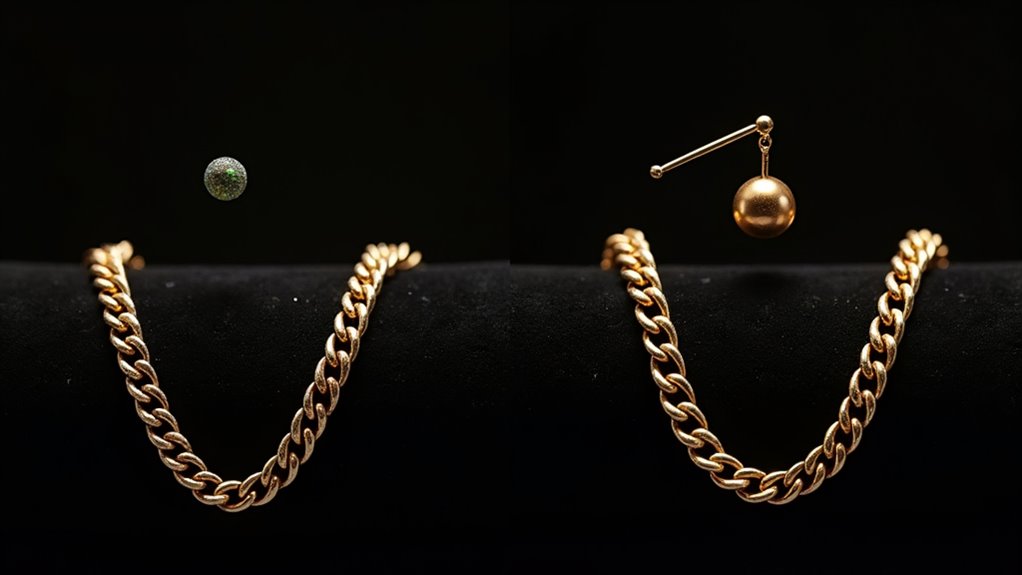
Pure 24K gold couldn’t care less about chlorine – it’s basically immune.
But lower karats? That’s where things get ugly.
18K jewelry starts showing attitude after swimming, with its 25% non-gold metals getting cranky in chlorine.
14K and 10K are even bigger drama queens – they’ll discolor and weaken faster than you can say “cannonball.”
The lower the karat, the bigger the chlorine headache.
Which Karat of Gold Is Least Likely to Cause Skin Allergies?
24K gold is hands-down the least likely to cause allergic reactions.
Why? Because it’s pure gold – no sketchy metal alloys mixed in to mess with your skin.
While 18K is usually fine for most people, that 25% of other metals could still trigger reactions in super-sensitive folks.

And 14K? With almost half being other metals, it’s basically playing Russian roulette with your skin if you’re allergy-prone.
Can I Mix Different Karat Gold Pieces When Wearing Jewelry Together?
Absolutely you can mix karat golds – it’s not a fashion crime! Different karats actually create visual interest and depth when worn together.
Just keep it somewhat coordinated – stick to 2-3 different karats max for a cohesive look. The trick is matching undertones (warm or cool) across pieces.
Pro tip: use texture and finish variations to make those mixed metals really pop. Just dont go crazy mixing 24K with everything – that’s trying too hard.