Machine-made jewelry is mass-produced junk that’ll never match handcrafted pieces. Period. Artisans spend up to 40 hours creating unique gold jewelry with thicker links and superior materials, while machines spit out identical copies faster than you can blink. Sure, handmade costs more – skilled craftsmanship ain’t cheap. But those tiny “imperfections” in handmade pieces? They’re actually badges of authenticity that tell a story. The real value lies in what happens next.

When it comes to gold jewelry, we’re dealing with two entirely different beasts: the carefully crafted pieces born from an artisan’s calloused hands versus the cold, mechanical precision of factory-made bling.
Let’s get real – handmade gold jewelry isn’t just jewelry; it’s someone’s sweat and dedication poured into every curve and connection. These pieces pack thicker links, superior materials, and yeah, sometimes a tiny flaw that proves an actual human being made it. That’s not a bug, it’s a feature. Artisans spend years mastering the art of creating each individual link. The crafting process takes 4 to 40 hours to complete a single piece. Additionally, the intrinsic value of handmade jewelry often appreciates over time, making it a wise investment choice.
Handcrafted gold pieces aren’t perfect – they’re better. Each “flaw” tells the story of an artisan’s dedication to their craft.
Meanwhile, machine-made pieces crank out perfect replicas like there’s no tomorrow, which sounds great until you realize perfection can be mind-numbingly boring.

The price tag difference’ll make you wince, no doubt about it. Handcrafted pieces cost more because, shocking revelation, skilled artisans need to eat too. Their time, expertise, and artistic vision don’t come cheap.
Mass-produced pieces? They’re churned out faster than you can say “factory settings,” keeping costs down and profits up. But here’s the kicker – you’re often getting what you pay for.
Those machine-made pieces might nail the consistency game, but they’re basically the fast food of the jewelry world. Sure, they’ll satisfy your immediate craving for something shiny, but they lack soul.
Handmade pieces tell stories – each hammer mark, each carefully placed stone represents a decision made by someone who actually gives a damn about their craft. Try getting that kind of personal touch from a robot.

The environmental angle ain’t pretty either. Mass production creates mountains of waste, while traditional artisans typically work with more sustainable practices.
They’re usually pickier about where their materials come from too, cause when you’re making something with your own hands, you tend to care about the whole picture.
Here’s the real tea – handmade jewelry becomes family heirlooms, pieces that get passed down with stories attached. “Your grandmother wore this at her wedding” hits different than “I bought this from a mall kiosk.”
Machine-made pieces? They’re more likely to end up in a drawer somewhere, forgotten faster than last year’s fashion trends.

The market’s starting to catch on. More folks are willing to shell out extra cash for something unique, something with character.
They’re tired of looking like everyone else at the party wearing the same mass-produced pendant. And while machine-made jewelry keeps chasing trends like a desperate ex, handmade pieces are busy creating them, pushing boundaries, and making statements that last longer than whatever’s trending on social media this week.
Frequently Asked Questions
How Long Does It Take to Create Handmade Gold Jewelry?
Creating handmade gold jewelry ain’t a quick process – it’s a serious time investment.
Most pieces take 4-6 weeks from start to finish, with complex designs dragging on for 8+ weeks. The initial design phase eats up 1-4 weeks alone!
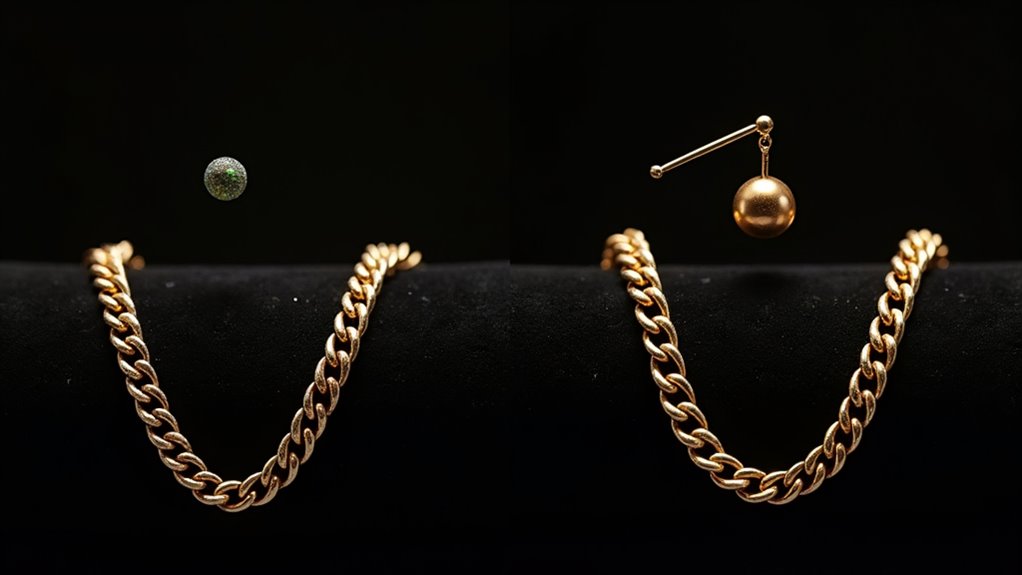
Simple rings might get done in 2-3 weeks, but those fancy engagement rings? Yeah, we’re talking 6-8 weeks minimum.
And if you need rare materials? Tack on another 2-3 weeks for sourcing that stuff.
Can Machine-Made Jewelry Be Customized After Purchase?
Yes, machine-made jewelry can be customized – but don’t expect miracles.
Basic tweaks like engraving, resizing, and adding gemstones are usually doable. Want your name on that bracelet? No problem. Need that ring sized up? They’ve got you covered.
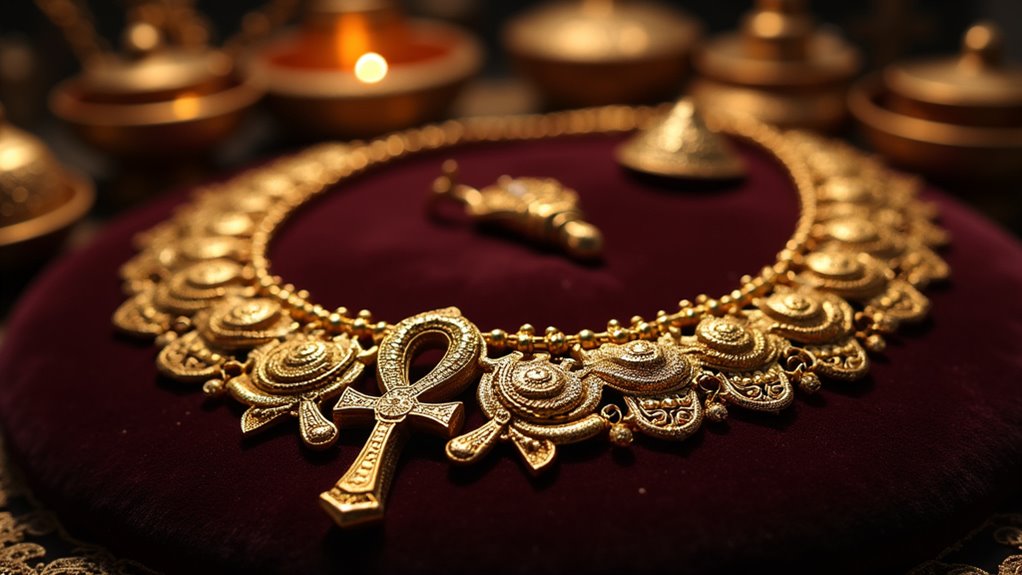
But major structural changes? That’s where things get dicey. Truth is, mass-produced pieces have limitations.
Plus, customization ain’t cheap – sometimes costing more than the original piece itself. Buyer beware.
Which Method Produces More Durable and Long-Lasting Gold Jewelry?
Let’s cut through the hype – handmade gold jewelry typically wins the durability game.
Here’s why: thicker materials, stronger links, and artisans who actually give a damn about quality.

While machine-made pieces can be consistent, they’re often built for speed and profit margins, not longevity.
Sure, modern tech has its perks, but when someone’s actually crafting your piece by hand, they’re not skimping on materials or rushing through weak points.
Are There Differences in Insurance Costs Between Handmade and Machine-Made Jewelry?
Insurance costs hit different for handmade versus mass-produced jewelry.
No surprises – handmade pieces usually cost more to insure. Why? They’re typically worth more and harder to replace. Plus, those one-of-a-kind beauties often need special coverage that’ll make your wallet cry.
Machine-made stuff? Way cheaper to insure. Standard policies love em’ because theyre easy to value and replace.
Consistant quality means fewer claims too. Its just basic math – mass production equals lower risk.
Can Expert Jewelers Tell the Difference Between Handmade and Machine-Made Pieces?
Experienced jewelers can spot the difference between handmade and machine-made pieces in a heartbeat.
The telltale signs are everywhere – those tiny irregularities in handcrafted work that give it soul, versus the robotic perfection of mass-produced pieces.
Under magnification, tool marks and soldering techniques are dead giveaways.
And let’s be real – those subtle imperfections in handmade pieces? They’re basically the artist’s fingerprints, impossible to replicate by machines.