Mining rehabilitation transforms ravaged landscapes into sustainable ecosystems – no joke! Companies deploy cutting-edge tech like remote sensing and GIS to restore these sites, making them viable for agriculture, forestry, and recreation. Progressive rehabilitation strategies tackle the mess during active mining, preventing larger headaches down the road. It’s not just about fixing the land; it’s about creating lasting value. Smart operators know rehabilitation isn’t just good PR – it’s the future of responsible resource extraction. The real magic happens when you understand the nuts and bolts of this transformation.
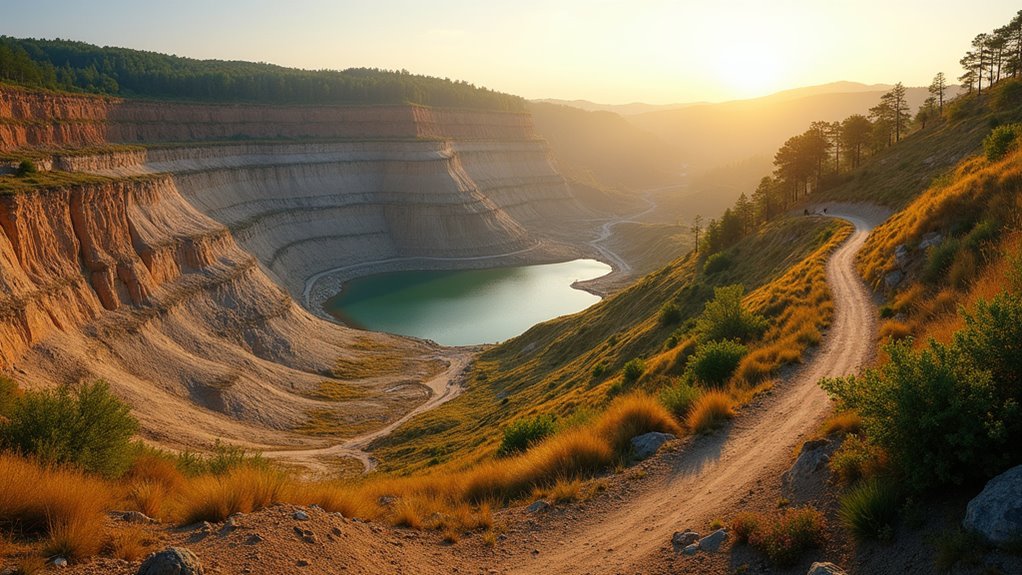
Mining scars the Earth like few other human activities – but these wounds don’t have to be permanent. Through carefully orchestrated rehabilitation processes, mining companies are transforming devastated landscapes into thriving ecosystems that support sustainable development and environmental restoration. The process begins with recontouring mined-out pits to match the natural topography, followed by the meticulous respread of overburden and topsoil – a delicate dance of earth-moving that sets the stage for nature’s comeback. Heavy metal oxidation poses serious risks to air quality in untreated mining sites, which is why sustainable practices are integral to the rehabilitation process. Innovations in sustainable gold mining are paving the way for greener operations, making the rehabilitation process more effective. Modern technologies are also being utilized to enhance the overall efficiency of mining operations.
The rehabilitation playbook is increasingly sophisticated, with companies employing cutting-edge technologies like remote sensing and geomorphic landscape design. These tools aren’t just fancy gadgets – they’re game-changers that help track progress and guarantee compliance with Australia’s mandatory rehabilitation requirements. And lets be honest, nobody wants heightened scrutiny or stricter regulations breathing down their neck. Additionally, the impact of mining on habitats emphasizes the need for comprehensive rehabilitation strategies to mitigate biodiversity loss.
Progressive rehabilitation during active mining operations has become the industry’s new normal. It’s like patching up wounds while they’re fresh – way more effective than waiting until the whole site’s a mess. Companies are getting smart about it too, using direct topsoil return methods that preserve seed viability and soil health. A thin 10-15 cm layer might not sound like much, but it’s enough to kickstart nature’s own healing process. The integration of Geographic Information Systems has revolutionized how companies plan and monitor these rehabilitation efforts.
Smart miners don’t wait – they heal the land as they go, letting nature bounce back faster through immediate soil restoration.

The benefits ripple far beyond environmental restoration. Rehabilitated sites can support agriculture, forestry, or conservation efforts – talk about a second act! These transformed landscapes provide recreational opportunities and contribute to regional socio-economic growth. It’s not just about fixing what’s broken; it’s about creating something potentially better than what was there before (though preservationists might disagree).
But let’s not sugar-coat it – challenges loom large. Many mine sites sit in harsh environments where resources are scarce as hen’s teeth. Dealing with acid-generating rocks or toxic subsoils? That’s a whole other level of complicated.
And then there’s the delicate balancing act of juggling multiple land use objectives while keeping stakeholders happy – no small feat in today’s environmentally conscious world.
The future of mine rehabilitation is evolving faster than a gold rush rumor. New software platforms are centralizing rehabilitation data, while advanced soil handling and seed treatment techniques are pushing success rates higher. Companies are even developing cradle-to-cradle mining concepts, aiming to close the loop on resource extraction and rehabilitation.

The bottom line? Successful mine rehabilitation isn’t just about ticking regulatory boxes – it’s about maintaining that vital social license to operate and guaranteeing mining’s long-term sustainability. When done right, rehabilitation transforms mining’s temporary destruction into permanent possibilities, proving that sometimes you gotta break ground to make ground. And that’s a future worth digging for.
Frequently Asked Questions
How Long Does It Typically Take for Rehabilitated Mine Lands to Recover Fully?
Recovery timelines for mined lands vary dramatically – we’re talkin’ anywhere from 10 to 100+ years for full ecosystem restoration!
Forest areas need 30-50 years to get their groove back, while grasslands bounce back quicker at 10-20 years.
Wetlands? They’re looking at 20-30 years minimum.

It’s like watching paint dry, but factors like soil quality, climate, and rehab techniques can speed things up or slow em’ down.
Nature’s got its own timeline, folks!
What Percentage of Mining Companies Worldwide Actively Participate in Land Rehabilitation Programs?
While exact global participation rates aren’t directly tracked, industry data suggests approximately 75% of mining companies engage in some form of land rehabilitation, though commitment levels vary drastically.
Major players typically lead these efforts, while smaller operators often lag behind. The required 45% financial assurance rate indicates a significant gap between stated intentions and secured commitments.

Current rehabilitation efforts (5,369ha) still trail new land disturbance (10,482ha) by nearly 2:1.
Can Rehabilitated Mine Lands Be Used for Agricultural Purposes?
Rehabilitated mine lands can absolutely be transformed into productive agricultural areas. Research shows successful conversions, particularly with crops like winter wheat, potatoes, and maize.
The process requires careful soil restoration using hyperaccumulators to remove toxins and stabilize pH levels. Notably, some mine-affected water contains beneficial minerals that actually enhance crop growth.
While challenges exist, proper rehabilitation techniques combined with strategic crop selection have proven successful in various global projects.
What Are the Average Costs Associated With Mine Land Rehabilitation?

Mine land rehabilitation costs pack a serious punch!
The average surface mine reclamation hits about $1,658 per acre, while earthmoving operations run around $0.35 per cubic yard.
Throw in clearing costs ($730/acre), revegetation ($200-$248/acre), and those pesky masonry seals at $4,138 each – it adds up fast!
Total U.S. estimates through 2050? A whopping $21-32.4 billion across 25 states and 3 tribes.

That’s way above the official $11.4B estimate, folks!
Do Rehabilitated Mine Sites Face Long-Term Stability or Subsidence Issues?
Rehabilitated mine sites definitely face ongoing stability challenges – it’s not just a “fix it and forget it” deal.
Even decades after closure, these sites can experience nasty surprises like soil erosion, acid drainage, and surface subsidence from collapsed underground workings.
Tailings dams? They’re particularly troublesome, requiring constant monitoring for at least 10 years post-closure.
Heavy rainfall can trigger erosion, while inadequate backfilling of underground mines practically guarantees future subsidence issues.