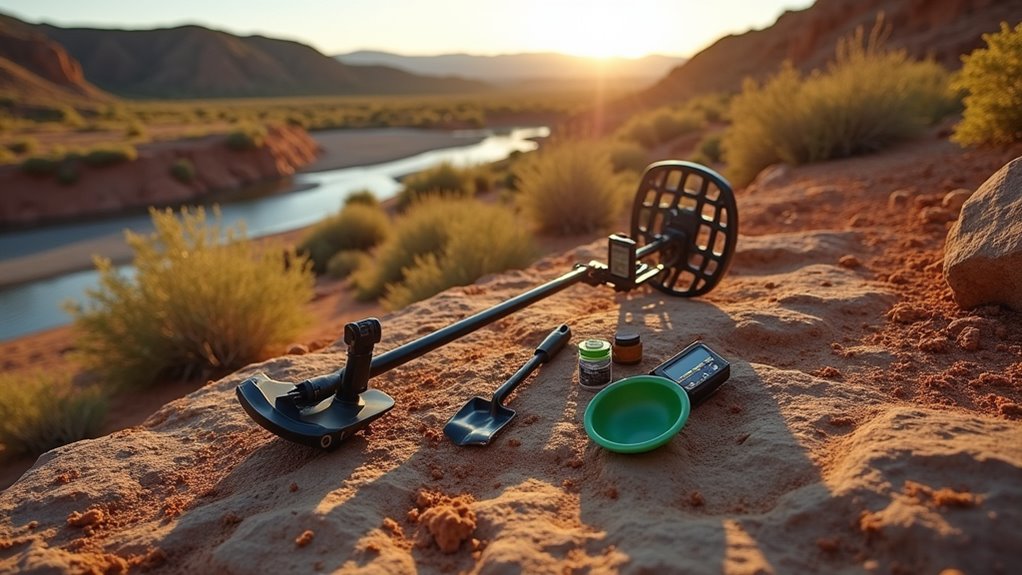
Modern gold mining ain’t your grandpa’s pan-in-a-stream operation.
Today’s industry deploys massive open-pit excavations and deep underground tunnels reaching 5km down, backed by explosive power and toxic chemical processes.
While placer mining still offers a gentler approach, most companies favour brutal efficiency – blasting mountainsides and using cyanide leaching to extract every speck of gold.
It’s a controversial but necessary evil that’s reshaping landscapes and challenging environmental norms.

The real dirt lies beneath the surface.

Ripping tonnes of earth apart to find a few specks of gold might seem insane, but modern mining has turned this quest into a precise science.
Today’s gold mining is a far cry from the old prospector with a pan – it’s a multi-billion dollar industry that employs everything from explosives to chemical solutions to get at those precious yellow bits.
Let’s be honest, open-pit mining isn’t winning any beauty contests. It’s basically massive hole-digging on steroids, where companies blast away entire mountainsides with enough explosives to make Michael Bay jealous.

Sure, it’s efficient for getting at low-grade ore deposits, but let’s not pretend the environmental cleanup isn’t a massive headache that some companies conveniently forget about.
The exploration phase can take up to ten years to find profitable deposits, with most discoveries never making it to production. Open-pit mining often results in significant land disturbance that can take decades to rehabilitate.
Open-pit mining: where mountains become craters and environmental concerns vanish faster than the exploded rock face.
Underground mining goes where open pits can’t – straight down into the Earth’s crust. We’re talking about tunnels reaching depths of 5 kilometres, where it’s so hot they need to pump in refrigerated air just so miners don’t cook. It’s like building an underground city, except instead of residents, you’ve got massive trucks hauling ore through tunnels day and night.
For those who prefer their mining with a side of tradition, placer mining still exists. It’s the least destructive method, using water and gravity to separate gold from riverbed deposits. While big mining corps might scoff at such simple techniques, these methods keep small-scale miners in business and don’t leave massive scars on the landscape. Recent innovations in General Kinematics equipment have made this traditional method more efficient while maintaining its environmental benefits.
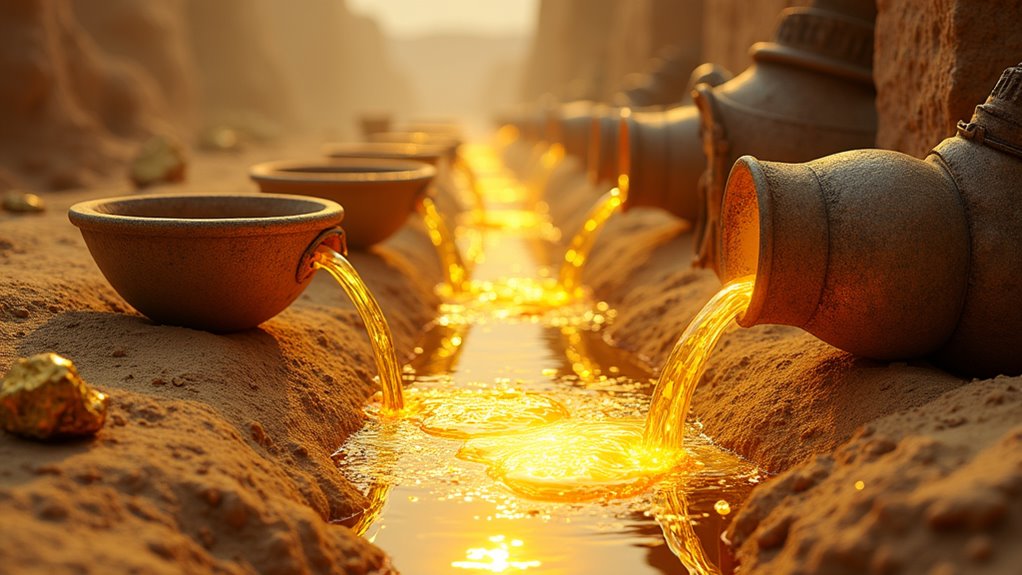
The real magic happens in the processing. Gravity separation sounds fancy, but it’s basically using gold’s heavy weight against it – like a cosmic game of “heavy stuff goes down, light stuff stays up.”
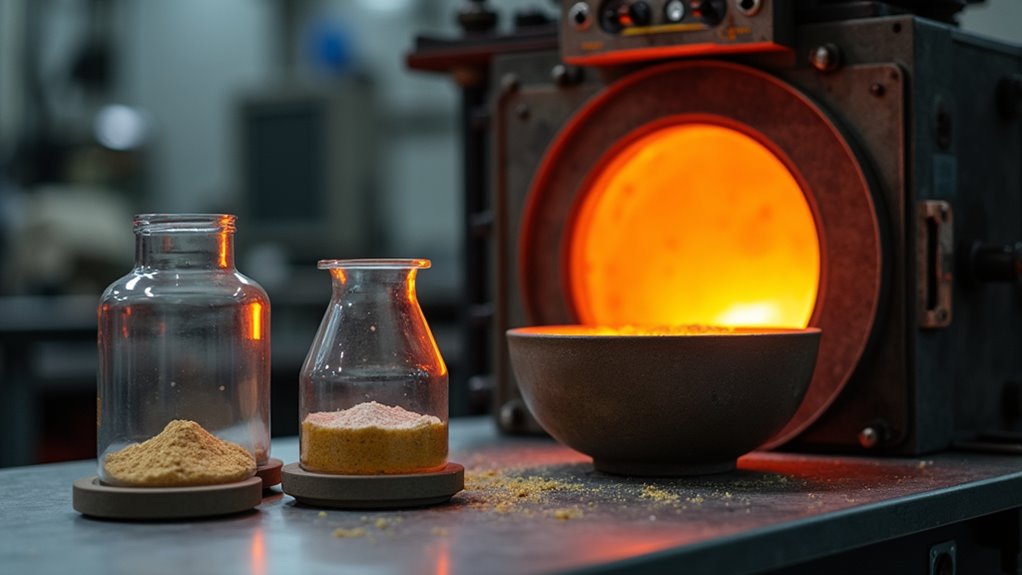
But when you’re dealing with microscopic gold particles, you’ve got to break out the big guns: cyanide leaching. Yeah, that’s right – we’re using poison to get our precious metal. Don’t worry though, it’s “totally safe” when handled properly (wink, wink).
The final stages are where chemistry gets serious. Carbon adsorption uses activated carbon (often made from coconut shells, of all things) to snag gold from solution. Then comes electrolysis and smelting, turning that raw gold into those satisfying bars worth over a million bucks each.
It’s amazing how we’ve turned toxic chemicals and explosive force into pure, gleaming wealth. Modern gold mining is a demonstration of human ingenuity and greed. We’ve developed incredibly sophisticated methods to extract tiny amounts of metal from massive amounts of rock, all while trying to convince ourselves we’re doing it “sustainably.”

But hey, as long as those wedding rings keep selling and central banks keep buying, we’ll keep ripping up the Earth to find more of that glittery stuff we’ve decided is valuable.
Frequently Asked Questions
How Does Environmental Regulation Impact Modern Gold Mining Operations?
Environmental regs have totally transformed gold mining – and not in a fun way.
Companies are shelling out millions to tick compliance boxes, waiting decades for permits, and jumping through endless hoops.
Water treatment? Check. Dust control? You bet. Waste management? Obviously.
Sure, it’s protecting Mother Nature, but it’s also driving smaller operators out of biz.
The big players survive by throwing money at eco-friendly tech and fancy sustainability programs.
What Safety Protocols Protect Miners During Underground Gold Extraction Today?
Modern mines ain’t messin’ around with safety – it’s hardcore protection or go home.
Underground miners rock full PPE setups with hard hats, steel-caps, and high-vis gear that makes em look like glow sticks at a rave. Air quality‘s monitored 24/7 cause nobody’s keen on breathing nasty stuff.

Emergency protocols are drilled into everyone’s heads, and proper ventilation systems keep the air breathable. Communication systems guarantee noone’s left in the dark – literally and figuratively.
How Do Mining Companies Determine if a Site Is Economically Viable?
Mining companies ain’t playing guessing games with millions at stake. They conduct detailed Preliminary Economic Assessments (PEAs) to determine if sites are worth the hassle.
These studies analyse everything – resource estimates, operating costs, capital requirements, and infrastructure needs. They crunch numbers using conservative gold price projections ($1,950-$2,400/oz) to calculate Net Present Value and Internal Rate of Return.
Let’s face it – only 10% of deposits make the cut.
What Happens to Mining Sites After Gold Deposits Are Completely Extracted?
After miners grab all the gold, sites don’t just get abandoned like they did in the old days.
Companies are legally required to clean up their mess – and it’s not cheap. They reshape the land, plant native vegetation, and monitor water quality for decades.
It’s a slow process of turning mining wastelands back into usable spaces for wildlife, farming or recreation. Some sites even become tourist attractions or nature reserves.
Environmental bonds guarantee companies follow through.
How Do Local Communities Benefit From Modern Gold Mining Operations?
Local communities often hit the jackpot with modern gold mining – but it’s not all glitter and gold.
Sure, they score jobs, better infrastructure, and economic growth. Mining companies pour money into schools, hospitals, and roads. Local businesses thrive off the mining boom.
But here’s the kicker – they’ve gotta be smart about it. Environmental impacts need watching, and communities must plan for life after the gold rush ends.