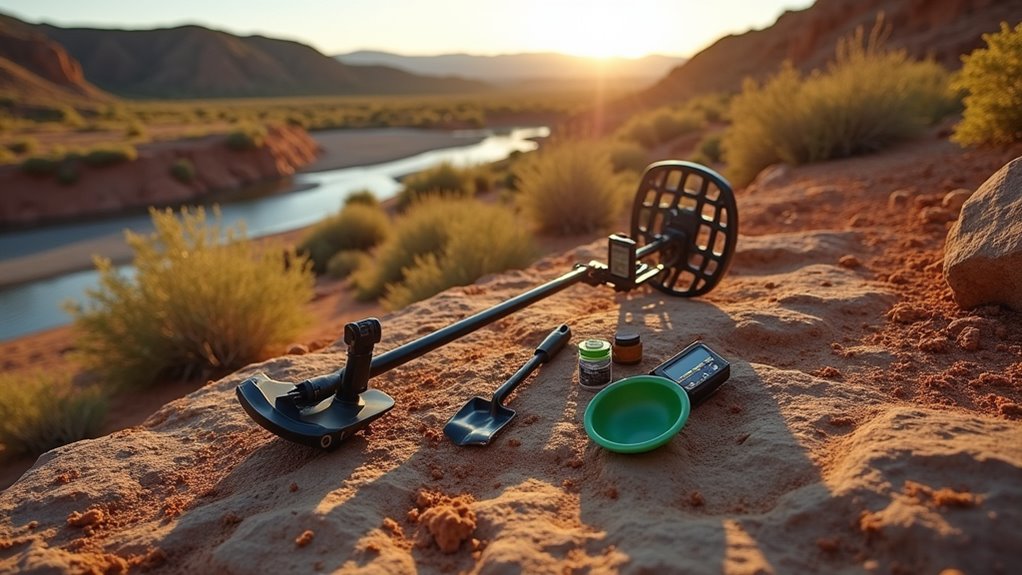
The gold mining industry’s heavyweights are slugging it out for global dominance.
Newmont leads the pack, churning out a whopping 5.5 million ounces in 2023, while Barrick Gold trails with 4.05 million.
North American giants control 32% of top production, but Russian players Polyus and Polymetal are gaining ground with 15%. AngloGold Ashanti dominates Africa, while Australian powerhouse Newcrest rounds out the top tier.
The industry’s facing massive consolidation – and only the strongest will survive this gold rush.
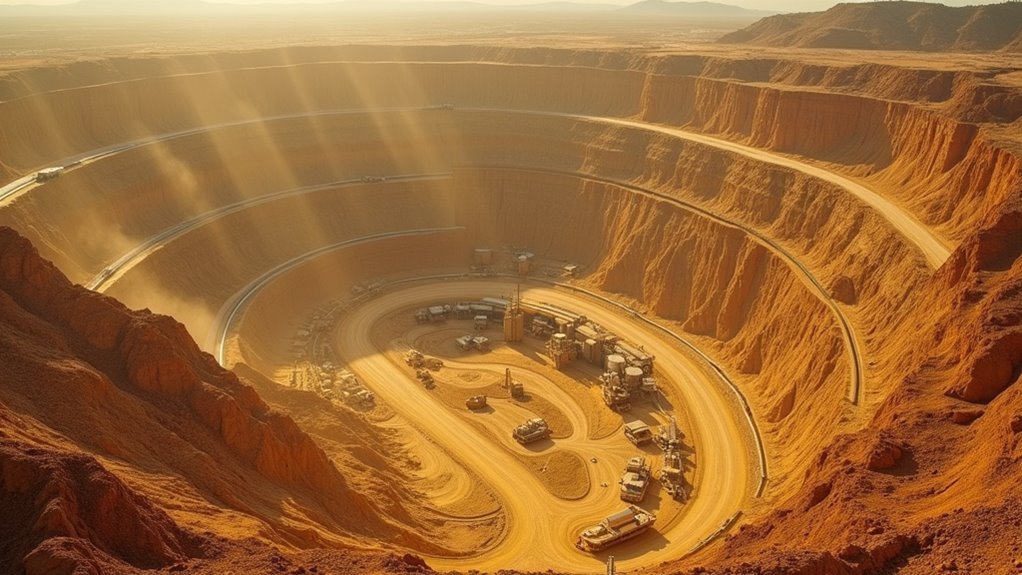

The glittering world of gold mining isn’t just about shiny nuggets and fat profits – it’s a cutthroat battlefield where corporate giants duke it out for global dominance. At the top of this golden food chain sits Newmont, churning out a whopping 5.5 million ounces in 2023, while Barrick Gold trails behind with 4.05 million ounces. These numbers aren’t just statistics; they’re bragging rights in an industry where size definitely matters.
North American companies are throwing their weight around like nobody’s business. With three Canadian heavyweights – Barrick, Kinross, and Agnico Eagle – dominating the scene and controlling 32% of top miners’ output, it’s clear the Great White North isn’t messing about.
Meanwhile, Newmont waves the American flag solo, but what a wave it is, accounting for 21% of top production. With gold’s impressive gold/platinum ratio of 3.12, mining companies are more motivated than ever to expand operations. Leading nations in gold mining production are crucial in shaping the market dynamics.
The Russians are muscling in on the action, and they’re not being subtle about it. Polyus and Polymetal (now calling itself Solidcore Resources, cause that’ll fool everyone) represent 15% of top producers’ output. Word on the street is Russia’s gunning for the global top spot by 2029, and they mightn’t be bluffing.

African soil’s been pretty good to the industry’s big players. AngloGold Ashanti‘s pulling 59% of its impressive 2.59 million ounces from African operations, while Gold Fields and Barrick are scattered across the continent like kids in a candy store.
These companies aren’t just mining – they’re practically redrawing the economic map of Africa. AngloGold Ashanti’s massive workforce of 66,000 employees demonstrates the enormous scale of operations in the region.
Down Under, the Aussies aren’t mucking about either. Newcrest Mining‘s leading the charge on the ASX, while Northern Star Resources and Evolution Mining are proving there’s plenty of gold in them hills. The country’s consistently ranked among the world’s top producers, and they’re not shy about letting everyone know it.
But here’s where things get interesting – the industry’s facing some proper challenges.

Global production took a hit in 2020, dropping 1% for the first time in a decade. Some smartypants reckon we’ve hit “peak gold”, but demand ain’t showing any signs of slowing down. The big boys are throwing money at technology and efficiency improvements like there’s no tomorrow.
Looking at the market caps from 2016 – Barrick at $18.8 billion, Newmont at $16.6 billion, and Freeport-McMoRan at $14.6 billion – shows just how much dosh is sloshing around in this game.
And with gold prices hitting record highs in August 2020, the industry’s consolidating faster than you can say “merger and acquisition”. The future might be uncertain, but one thing’s crystal clear – in the gold mining world, only the strong survive, and the strongest are getting stronger.
Frequently Asked Questions
How Do Environmental Regulations Affect Gold Mining Companies’ Operational Costs?
Environmental regulations hit gold mining companies where it hurts – their bottom line.

They’re forced to fork out 10-15% of operating costs just to stay compliant. Water management alone costs up to $1.50 per ton of ore, while yearly environmental expenses rack up: $250k for permits, $150k for monitoring, and $300k for restoration.
Plus, there’s the constant headache of new tech investments, restricted mining zones, and endless permit delays. It’s a costly green game they’ve gotta play.
What Safety Measures Do Major Gold Mining Companies Implement for Workers?
Major mining companies ain’t messing around with worker safety these days.
They’ve got the basics locked down – mandatory PPE from head to toe, plus fancy tech like real-time monitoring and automated machinery to keep workers outta harm’s way.

Regular safety drills and proper trainin’ are non-negotiable.
Ventilation systems and emergency response protocols are of exceptional quality too.
Sure, it costs ’em a bundle, but beats dealing with accidents and lawsuits innit?
How Do Political Instabilities in Mining Regions Impact Gold Production?
Political instability hits gold mining where it hurts – right in the production pipeline.

When regions erupt in chaos, mines face brutal disruptions: workers can’t access sites, supply chains crumble, and security risks skyrocket.
Companies cop massive financial hits from work stoppages, while dodgy governments love nothing more than suddenly changing mining regulations or demanding bigger cuts.
It’s a perfect storm that can shut down operations completely, sending global gold supplies into a tailspin.
What New Technologies Are Revolutionizing the Gold Mining Industry?
The gold mining game’s getting a serious tech makeover.
AI and machine learning are now doing the heavy lifting – spotting deposits that humans missed for decades. Autonomous trucks and drones are taking over dangerous jobs, while real-time monitoring’s keeping tabs on everything 24/7.
But here’s the kicker – blockchain and digital twinning are revolutionising how we track and trade gold.
Even nanotechnology’s jumped in, making extraction cleaner and more efficient.
How Do Gold Mining Companies Handle Community Relations Near Their Sites?
Mining companies talk big about “community engagement,” but let’s get real – it’s often bare-minimum damage control.
They’ll throw money at local projects, hire some locals, and set up fancy grievance hotlines.
Sure, there’s investment in infrastructure and training programs – when it suits their interests.
The smart ones know their social licence depends on keeping communities sweet.
But at day’s end, it’s about protecting their bottom line while avoiding PR disasters.