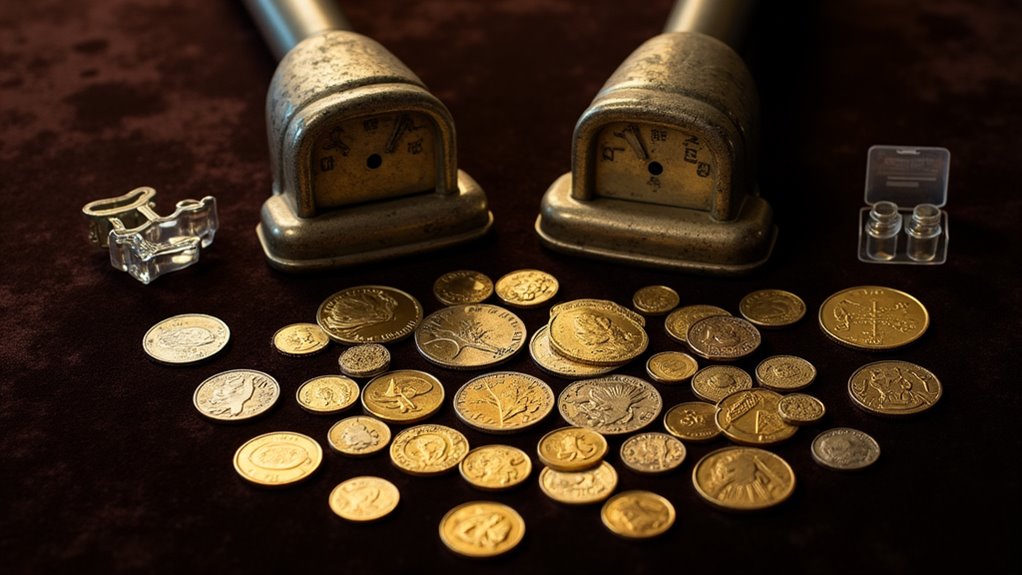
Gold’s universal allure transcends mere economics – it’s humanity’s ultimate flex. From ancient Egyptian pharaohs banking on golden immortality to Buddhist temples gleaming with enlightened wisdom, this precious metal screams power, divinity, and straight-up swagger across cultures. The Incas called it “sun sweat,” while Chinese traditions see it as good vibes incarnate. Modern bling might catch eyes, but gold’s cultural grip runs deeper than any vault. There’s way more to this glittering story than meets the eye.

Gleaming through the annals of human civilization, gold has woven itself into the very fabric of cultural identity across the globe. This precious metal transcends its physical properties, embodying divine connections, wealth, and spiritual significance in countless societies. From ancient Egypt‘s veneration of gold as the “flesh of gods” to its modern role as a symbol of economic stability, gold’s cultural impact remains undiminished through millennia. As noted in a brief history of gold, its allure has captivated societies from the earliest days of civilization, where it played a crucial role in trade and economy.
The religious significance of gold spans diverse faiths and traditions. In Buddhism, it represents the ultimate achievement of enlightenment, while Christian traditions incorporate gold into sacred vessels and crosses as a symbol of divine presence. Hindu culture associates this precious metal with Lakshmi, the goddess of prosperity, creating an interesting overlap between spiritual and material abundance. Today, ethical sourcing practices are increasingly crucial in ensuring that gold mining does not harm communities or the environment. Additionally, gold jewelry often serves as a form of spiritual protection, reflecting how cultures incorporate it into their belief systems. Sustainable practices in gold mining can help mitigate the ecological damage associated with gold extraction and ensure a responsible future.
Gold transcends earthly value, serving as a bridge between the material and divine across Buddhism, Christianity, and Hinduism.
Ancient civilizations were particularly captivated by gold’s celestial connections. The Incas and Aztecs poetically referred to it as the “sweat of the sun,” while Mesopotamian societies crafted elaborate golden artifacts for both royal and sacred purposes. Egyptian pharaohs took their gold obsession to the grave – literally – believing it would secure their immortality in the afterlife.

Ceremonial practices across cultures continue to highlight gold’s enduring significance. Indian and Chinese wedding traditions incorporate gold as a symbol of prosperity and divine blessings. The metal’s presence in rites of passage, from birth ceremonies to funerals, underscores its role in marking life’s pivotal moments. Traditional communities worldwide recognize gold as more than mere decoration – it’s a bridge between earthly existence and spiritual domains.
The association between gold and power has remained constant throughout history. European monarchs flaunted their authority through golden crowns and scepters, while Eastern cultures continue to use gold jewelry as a tangible display of family wealth. Modern Western society hasn’t abandoned this connection, with gold watches and accessories serving as contemporary markers of success and affluence.
In Asian traditions, gold transcends mere material value. Chinese culture views it as a conductor of positive energy and a shield against malevolent forces. Similarly, Southeast Asian societies embrace gold as a unifying element in their cultural practices, while Middle Eastern traditions link it to divine favor and prosperity.
The symbolism of gold in African kingdoms reflects both power and cultural heritage, while Indigenous American cultures integrated it into their spiritual narratives through artistic expression. This universal appreciation for gold’s symbolic value demonstrates its remarkable ability to bridge cultural divides, though each society interprets its significance through its unique cultural lens.

Despite modern society’s evolution, gold maintains its position as a powerful symbol of stability, prosperity, and spiritual significance across the world’s diverse cultures.
Frequently Asked Questions
How Is Gold Purified Traditionally in Different Cultures?
Ancient civilizations mastered gold purification through distinct methods.
Egyptians favored cupellation, heating ore to burn off impurities, while Greeks and Romans revolutionized the game with mercury amalgamation.
Asian cultures mixed spiritual beliefs with technical prowess, using acid leaching and careful heating.

Meanwhile, South American indigenous peoples rocked basic but effective smelting in clay furnaces.
Each culture basically wanted that sweet, pure gold – just with different flavors of technique!
What Role Does Gold Play in Modern-Day Religious Ceremonies?
Gold remains a powerhouse in modern religious ceremonies, commanding attention in everything from Christian chalices to Hindu temple decorations.
It’s not just about the bling – religious leaders use gold-plated artifacts to amp up the sacred vibes during rituals.

Hindu festivals like Diwali see gold purchases spike through the roof, while Jewish ceremonies sparkle with golden menorahs.
Even Buddhist temples rock that sweet gold leaf on statues.
Its basically everywhere in worship these days!
Why Do Some Cultures Consider Gold Jewelry Unlucky in Certain Situations?
Despite gold’s revered status, certain cultures view gold jewelry as unlucky in specific contexts.
For instance, some believe wearing gold during eclipses attracts negative energy, while others warn against wearing inherited gold pieces without proper cleansing rituals.
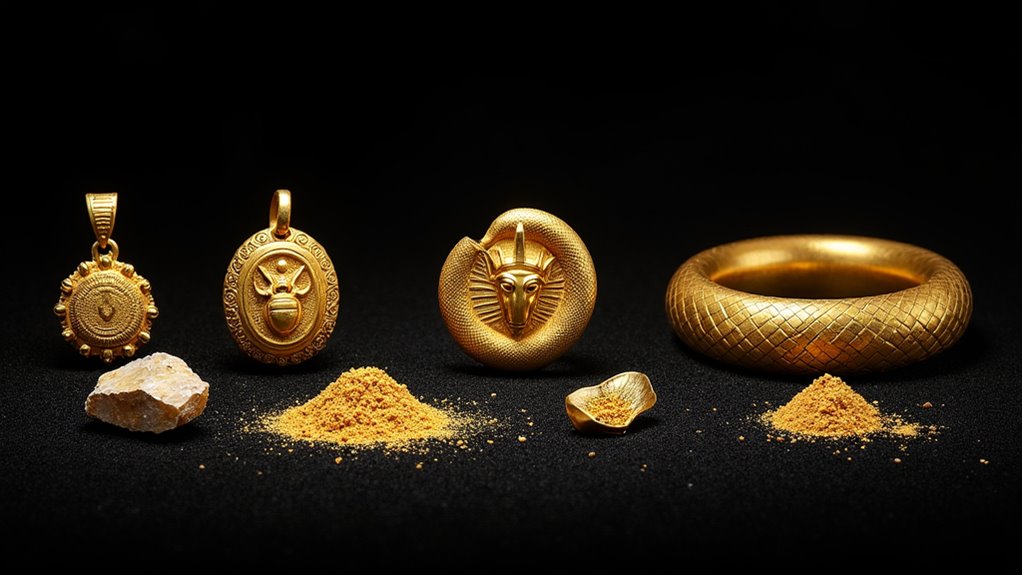
Mixing gold with silver is considered bad luck in some Asian traditions, and some Middle Eastern cultures caution against wearing gold while sleeping – they say it drains the wearer’s life force.
Pretty wild stuff!
How Did Ancient Civilizations Determine the Purity of Gold?
Ancient civilizations had several ingenious methods to test gold purity.
Fire assaying (1500 BCE) used high-temp oxidation with lead to separate precious metals.

Archimedes’ water displacement technique measured density and purity non-destructively.
The Lydians mastered salt-based refinement for pure coinage, while touchstone testing involved comparing gold streaks on dark stones.
These methods were remarkably accurate – who knew those ancients were such metallurgical wizards?!
Which Culture First Started Using Gold as Currency?
Lydia, located in modern-day Turkey, takes the crown as the first civilization to officially use gold as currency around 700 BC.
While ancient Egyptians dabbled with gold in trade earlier, the Lydians revolutionized commerce by minting standardized coins from Electrum (a natural gold-silver alloy).
King Alyattes kicked things off, but it was King Croesus who really changed the game by introducing pure gold coins called staters.
Talk about a golden innovation!