Gold wasn’t just shiny stuff in ancient Mesopotamia – it was everything. Between 4500-1750 BCE, this precious metal ruled as the ultimate flex of divine power and social status. From the Royal Tombs of Ur to temple ceremonies, gold transformed religious rituals, economic systems, and burial practices. Kings hoarded it, priests blessed with it, and artisans mastered techniques like filigree to craft stunning pieces. The golden legacy of Mesopotamia’s obsession still echoes through time.

Glitter and glory – that’s what defined gold in ancient Mesopotamia. This precious metal wasn’t just another shiny trinket; it was the ultimate status symbol that separated the elite from everyone else. The Mesopotamians went absolutely bonkers for the stuff, using it in everything from religious ceremonies to economic transactions that would make modern-day traders jealous.
The ancient Mesopotamians weren’t exactly sitting on mountains of gold – they had to hustle for it through trade routes stretching from the Indus Valley to Egypt. Talk about determination! They developed one of the earliest gold-based monetary systems, proving these folks knew their way around precious metals before most civilizations figured out which end of a plow to hold. This trade also contributed to the development of sustainable practices in their resource management, which would later influence modern concepts of ethical gold mining.
These ancient traders were hunting for gold before most societies mastered basic farming – now that’s getting your priorities straight!
You think modern religious institutions are fancy? The Mesopotamians took it to a whole new level. Temples were decked out in gold like ancient bling factories, with everything from ceremonial vessels to idols getting the golden treatment. The gods, apparently, shared humanity’s appetite for all things sparkly. And who could blame them? The craftsmanship was absolutely insane – just look at the Golden Lyre of Ur, which still drops jaws today. Additionally, gold was often used in sacred artifacts to enhance their spiritual value.

But here’s where it gets really interesting (and kinda creepy) – their obsession with gold didn’t stop at death. In fact, that’s when the real party started. Rulers were buried with enough gold to make a modern bank vault blush. The Royal Tombs of Ur revealed treasures that rival Tutankhamun’s tomb – we’re talking serious ancient wealth here, folks. These people literally took “you can’t take it with you” as a personal challenge.
The social impact of gold was no joke either. Kings and temples hoarded it like modern-day dragons, using it to flex their power and influence. It wasn’t just about looking fabulous (though that was definitely part of it) – gold was serious business, used in everything from taxes to tributes. And let’s be real – nothing said “I’m better than you” quite like a solid gold headdress.
The artisans of Mesopotamia weren’t messing around when it came to craftsmanship. They developed techniques like filigree that would make today’s jewelers sweat. Every piece told a story – whether it was adorning a priest during sacred ceremonies or accompanying a noble into the afterlife. These weren’t just pretty decorations; they were statements of power, prestige, and divine connection.
In essence, gold was the thread that wove together Mesopotamia’s social, religious, and economic fabric. It wasn’t just a precious metal – it was their version of a Swiss bank account, Instagram status symbol, and religious icon all rolled into one gleaming package. And honestly? Not much has changed in 4,000 years. Furthermore, gold’s divine association with the gods in Mesopotamian beliefs highlighted its importance in both daily life and the afterlife.
Frequently Asked Questions
How Did Ancient Mesopotamians Purify and Refine Their Gold Deposits?
Ancient Mesopotamians mastered several gold purification techniques, with cupellation being their go-to method.
They’d heat impure gold in porcelain vessels until it reached a scorching 1,948°F – hot enuf to separate the good stuff from impurities!

Clay furnaces, powered by charcoal, did the heavy lifting.
They’d also get crafty with lead-alloying tricks to draw out unwanted elements, while touchstones helped test purity through color-matching.
Pretty genius for ancient times!
What Tools and Techniques Were Used to Mine Gold in Mesopotamia?
Ancient Mesopotamians were hardcore gold hunters, using surprisingly effective tools for their time.
Stone hammers and chisels did the heavy lifting, while fire-setting cracked those stubborn rocks open. They got crafty with wooden sluice boxes to separate gold from sediment, and reed pipes boosted fire temps for smelting.

In those narrow mine shafts (barely 2 feet wide!), workers used mortars and grinding stones to crush ore into workable bits.
Did Mesopotamians Trade Gold With Other Ancient Civilizations Outside Their Region?
Mesopotamians actively traded gold with several major civilizations, establishing robust networks across regions. They maintained significant trade relationships with the Indus Valley, importing their ceremonial gold pieces as early as 3300 BCE.
Egyptian gold, particularly from Nubian mines, flowed into Mesopotamian markets through well-established routes. Since Mesopotamia lacked substantial local gold deposits, they relied heavily on these international connections to meet their gold demands for religious and royal purposes.
How Did Common People View Gold Compared to the Elite Class?
The stark contrast was mind-blowing!
While elites flaunted their golden bling as divine status symbols, common folk could barely get their hands on the stuff. For them, gold was more myth than metal – something to gawk at in temples or on their rulers’ necks.

The average Joe had to make do with copper trinkets, while the fancy-pants nobles hoarded the yellow metal like it was going outta style.
Talk about ancient FOMO!
What Role Did Gold Play in Mesopotamian Religious Ceremonies and Offerings?
Gold played a central role in Mesopotamian religious ceremonies as a bridge between mortal and divine domains.
Temples used gold-covered statues and vessels during daily rituals like the “feeding of the gods,” while priests utilized golden utensils for sacred offerings.
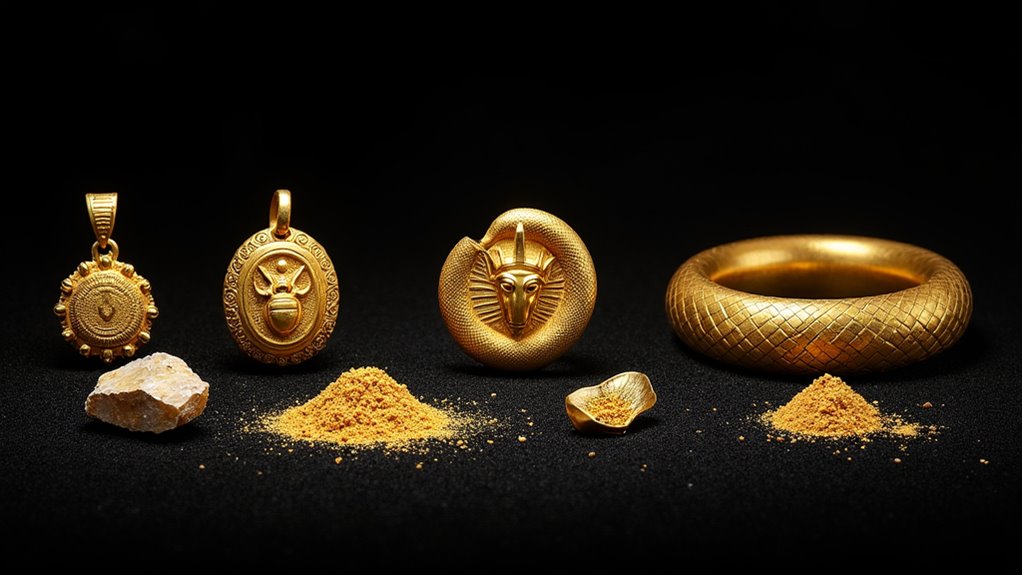
The precious metal was essential in the Mîs-pî ritual, where gold-adorned idols were “awakened” to receive offerings.
In festivals and processions, gold-draped effigies symbolized divine presence and immortality.