Ancient civilizations wielded gold as the ultimate flex of wealth and divine connection. From Egyptian burial masks to temple walls dripping with gold leaf, rulers flaunted their power through this precious metal. Religious institutions got in on the action too, using gold’s incorruptible nature to represent spiritual purity. Artists mastered techniques like repoussé without modern tools, creating intricate designs that served both practical and symbolic purposes. There’s more to this glittering tale of humanity’s oldest obsession.

Throughout the ancient world, gold’s seductive gleam did more than just catch the eye – it captured humanity’s imagination and became the ultimate flex of power, wealth, and divine connection. Ancient rulers weren’t subtle about flaunting their precious metal swagger, incorporating gold into everything from ceremonial masks to temple walls. This wasn’t just about looking fancy – it was a calculated power move that screamed “I’m basically a god” to anyone who dared question their authority.
Ancient rulers turned gold into the OG flex, making sure everyone knew who was boss through their dazzling displays of wealth.
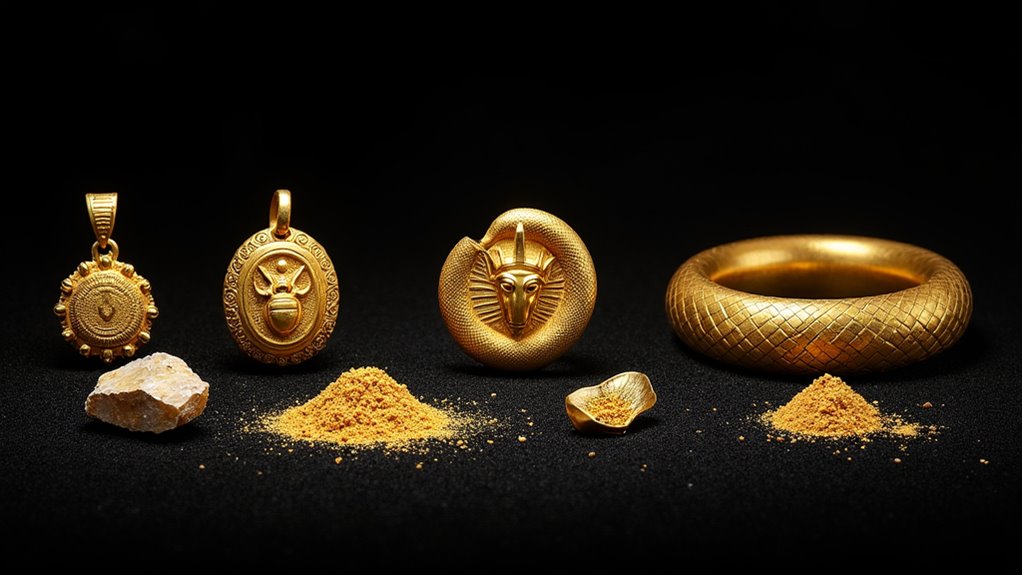
The ancient elites took their gold game to next-level heights, wearing it like modern-day influencers rock their designer bling. Necklaces, rings, and bracelets weren’t just pretty accessories – they were portable wealth statements that could buy your way outta trouble if things went south. These pieces often became family heirlooms, passed down through generations like some sort of ancient trust fund that you could actually wear. Gold was often associated with divine association, amplifying its value in society and serving as a key element in the iconic gold mines that shaped economies.
Religious institutions weren’t about to let the ruling class have all the fun. Temples and sacred spaces got decked out in gold everything, from statues to altar pieces. Those Egyptian burial masks? Talk about going out in style! The Pharaohs basically turned themselves into golden Instagram filters for the afterlife. The shiny metal’s incorruptible nature made it the perfect metaphor for spiritual purity and eternal life, as seen in gold in ancient religious art.

Architecture got the Midas touch too, with gold leaf and fire gilding techniques transforming ordinary buildings into statements of absolute baller status. Imagine walking into a palace where the ceiling literally glowed with reflected light – that’s some serious ancient flex right there. Persian artisans were especially extra, combining gold with glazed tiles to create surfaces that probably made their rivals’ jaws drop faster than modern-day crypto prices.
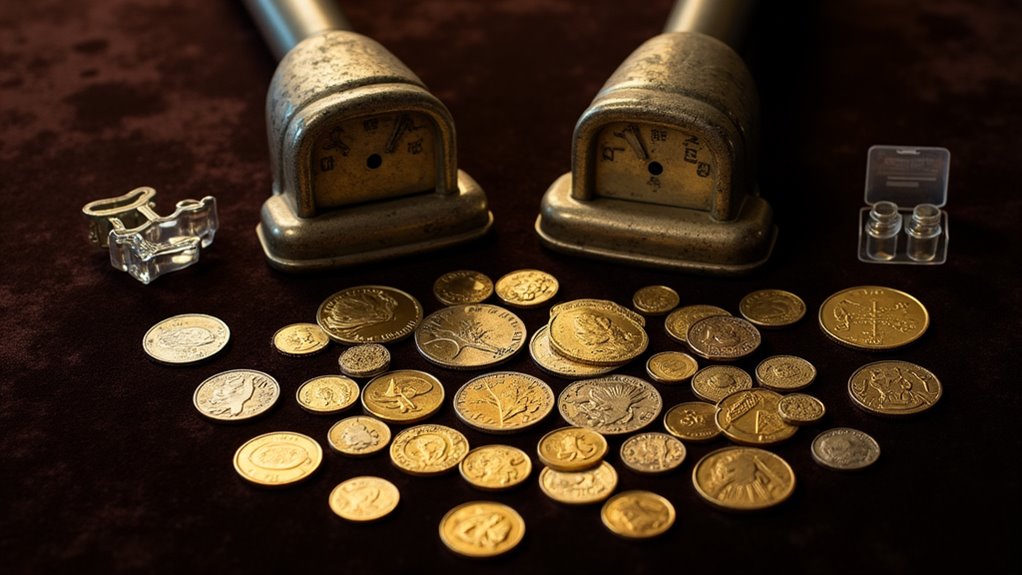
But gold wasn’t just about the show – it got down to business in practical applications too. The Romans were like “Why not put this stuff in our teeth?” pioneering some ancient dental bling that actually worked. Rich folks ate off golden plates because… well, why wouldn’t you if you could? And when it came to trade, gold coins became the OG cryptocurrency, trusted across borders and cultures.
The craftsmanship these ancient artists achieved is mind-blowing, especially considering they didn’t have modern tools. They mixed gold with other metals to create alloys, hammered it into impossibly thin sheets, and created detailed designs that would make modern jewelers sweat. Through repoussé and chasing techniques, they transformed flat surfaces into three-dimensional masterpieces that told stories of gods, heroes, and probably some ancient drama we’ll never fully understand.
This precious metal became the ultimate storyteller of ancient civilizations, preserving their narratives in a form that couldn’t rust away like iron or corrode like bronze. Talk about leaving a legacy that literally glitters through the ages!
Frequently Asked Questions
How Did Ancient Civilizations Determine the Purity of Their Gold?
Ancient civilizations were surprisingly savvy when it came to gold testing! They wielded four main methods: fire assaying (the gold standard, pun intended), where they’d melt gold with lead to isolate impurities; touchstone testing, which involved scratching gold on black stones; specific gravity measurements (thanks, Archimedes!); and good ol’ visual checks.
Fire assaying was their go-to for precision, while touchstones became the ancient world’s pocket-sized gold tester.
What Tools Were Used to Create Intricate Gold Designs in Ancient Times?

Ancient goldsmiths wielded an impressive arsenal of specialized tools. Hammers and anvils formed the basics, while chisels carved intricate details.
The real magic happened with soldering tools – those blowpipes were essential for filigree work! Crucibles melted gold for casting, while specialized implements enabled techniques like granulation (those tiny gold spheres!) and repoussage.
The lost-wax technique was a game-changer, letting artisans create complex designs thru careful mold-making.
Which Ancient Culture First Developed the Technique of Gold Plating?
The Central Asians were the first to crack the gold plating code – specifically with mercury gilding (aka fire gilding).
But here’s the kicker: they weren’t exactly shouting it from the rooftops! The technique spread westward like wildfire, reaching Egypt and Rome where it really took off.

Those crafty Romans even gave it their own spin, developing electrochemical displacement plating around the 1st century CE.
Pretty metal, right? 🔥
How Did Ancient Artisans Prevent Gold Theft During the Crafting Process?
Ancient artisans operated under intense scrutiny to prevent gold theft.
Workshops maintained rigid security protocols – weighing gold before and after crafting, documenting every speck of material, and keeping detailed records.

The work was cleverly divided among different craftsmen, ensuring no single person had complete access.
Plus, religious beliefs and social prestige acted as powerful deterrents – nobody wanted to risk divine wrath or lose their standing!
What Alternative Metals Did Ancient Cultures Use When Gold Wasn’t Available?
Ancient cultures got pretty creative when gold wasn’t in their grasp. They turned to silver and electrum (nature’s own gold-silver blend) for their fancy stuff.
Bronze and copper were total workhorses – especially in Mesopotamia and Egypt where they crafted everything from statues to jewelry.
When things got really tight, they’d reach for iron, pewter, or even that sneaky Pinchbeck alloy.
Shakudo was Japan’s slick solution, mixing copper n’ gold for that dark, mysterious look.