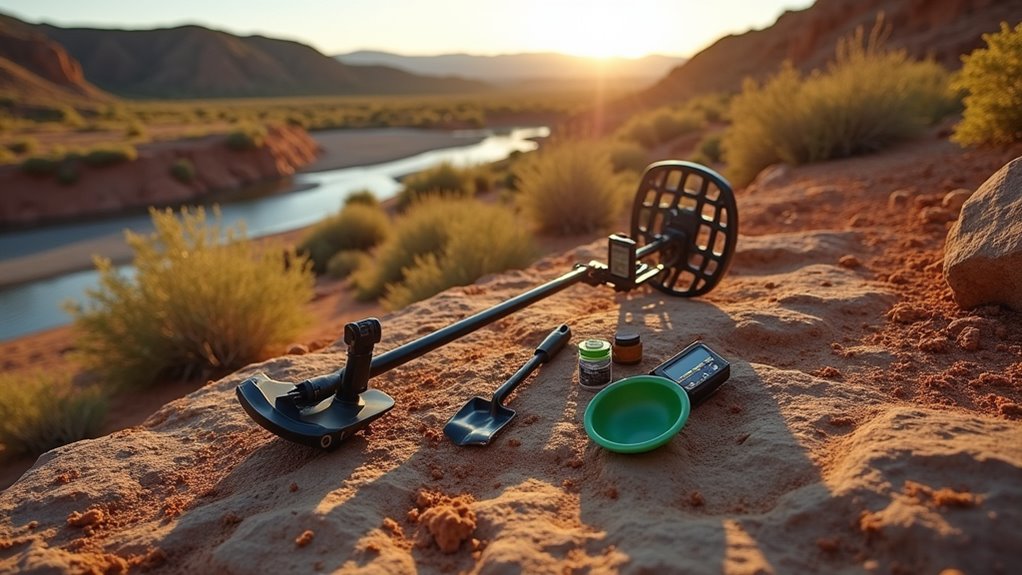
The Klondike Gold Rush kicked off with a bang in 1896 when three prospectors stumbled upon gold in Canada’s Yukon Territory. What followed was pure mayhem – 100,000 wannabe millionaires scrambling north through brutal conditions, though only 40,000 actually made it. The real winners? Not the miners, but the clever merchants selling picks, pans, and supplies! Indigenous communities paid a devastating price while Dawson City exploded from 500 to 17,000 residents. This gold fever changed everything.

The stampede that shook the continent began with three men and a creek. On August 16, 1896, Skookum Jim, George Carmack, and Tagish Charlie struck gold near Rabbit Creek in Canada’s Yukon Territory. When news hit Seattle and San Francisco in 1897, it lit a powder keg of gold fever that would send shockwaves through a depression-weary America.
Holy smokes, did people ever lose their minds! An estimated 100,000 wannabe millionaires packed their bags and headed north, though only 40,000 actually made it to the goldfields. Talk about a reality check – most of these starry-eyed prospectors didn’t find enough gold to fill a tooth cavity. But hey, the real winners? Those genius entrepreneurs who figured out selling shovels was way more profitable than actually digging with em’.
Getting to the Klondike was about as fun as getting punched in the face repeatedly. Prospectors had to tackle the brutal Chilkoot Trail or White Pass Trail from Alaska, lugging nearly a ton of supplies (thanks to those pesky Canadian regulations requiring a year’s worth of food). In fact, the leading nations in gold production today include countries like China and Australia, showcasing the global significance of gold mining. The global gold market was heavily influenced by the influx of new miners and the subsequent demand for gold.
Pack a ton of gear, brave deadly mountain trails, and freeze your tail off – welcome to your Klondike adventure.

Imagine this: months of climbing treacherous mountains, battling hypothermia, and probably questioning every life decision that led to this moment. The rush also led to significant land conflicts as prospectors encroached on the territories of indigenous peoples.
Dawson City exploded from a measly 500 residents to a whopping 17,000 in just two years. But don’t let those numbers fool you – this wasn’t exactly paradise. Think more along the lines of fires, mud, disease, and prices so high they’d make a modern-day Silicon Valley resident blush.
Still, the saloons were packed with miners either celebrating their strikes or drowning their sorrows. Usually the latter.
The economic ripples were felt far and wide. Seattle transformed into a gold rush supply superhub, while newspapers had a field day sensationalizing every nugget and mishap. In many ways, this economic transformation mirrored similar patterns observed in other gold rushes around the world, including those in Africa.

But not everyone struck it rich – the indigenous Hän people got royally screwed, losing their lands and getting hammered by new diseases. Meanwhile, smart business folks were making bank charging astronomical prices for basic supplies. Classic supply and demand, am I right?
By 1898, the party was pretty much over. Placer claims were drying up faster than a puddle in Death Valley, and miners started heading home with lighter pockets and heavier hearts.
Wages plummeted, the labor market got more crowded than a rush-hour subway, and the whole region’s economy went into a nosedive. Talk about a gold rush hangover!
The Klondike Gold Rush might’ve been shorter than a TikTok video in historical terms, but it left an indelible mark on North American history. It proved that sometimes the biggest winners aren’t the ones with the pickaxes – they’re the ones selling them.

And maybe, just maybe, that’s the real golden lesson here.
Frequently Asked Questions
How Did Indigenous Peoples React to the Sudden Influx of Gold Prospectors?
Indigenous peoples faced devastating disruption when prospectors flooded their lands. They adapted by becoming guides and laborers, but suffered massive resource depletion and disease outbreaks.
Traditional hunting grounds were destroyed, forcing longer treks for food. While some found economic opportunities trading with miners and selling crafts, most experienced cultural marginalization and exploitation.
The influx marked a turning point that forever altered their way of life.
What Happened to Most Gold Rush Towns After the Rush Ended?

Most gold rush towns experienced dramatic population crashes once the easy gold ran out.
Take Dawson City – plummeted from 30k to just 2,000 folks by 1912!
These boom-towns turned ghost towns practically overnight as miners packed up for greener pastures.
Without sustainable economies beyond mining, they just couldn’t survive.

The few that made it, like Dawson, had to totally reinvent themselves – usually through tourism and historical preservation.
Pretty wild how fast fortunes changed!
Were There Any Significant Technological Innovations Developed During the Klondike Gold Rush?
The Klondike Gold Rush sparked major tech breakthroughs that changed mining forever.
Steam-powered drills and shovels revolutionized how miners tackled those frozen deposits, while hydraulic mining jets blasted through tons of gravel like it was butter!

The real game-changer? Steam thawing technology that finally gave miners a fighting chance against that stubborn permafrost.
These innovations didn’t just boost efficiency – they laid the foundation for modern mining as we understand it today.
How Did Women Participate in the Klondike Gold Rush Economy?
Women were major players in the Klondike’s economic boom, crushing it in ways most folks don’t realize!
They dominated hospitality and services, running lucrative hotels, laundries, and roadhouses. Belinda Mulrooney became legendary, turning $5k into a fortune through smart business moves.
While only 2-6% actually mined gold, women killed it as entertainers (hello, Klondike Kate!), entrepreneurs, and service providers.
They adapted traditional roles into gold rush moneymakers!
What Environmental Impact Did the Klondike Gold Rush Have on the Region?
The Klondike Gold Rush wreaked absolute havoc on the Yukon’s pristine wilderness.
Miners stripped forests bare for fuel and construction, leaving scars still visible today. Rivers got absolutely hammered – toxic chemicals and mining debris turned crystal-clear waters into muddy soup.
Wildlife took a massive hit too, with moose and caribou populations plummeting from overhunting.
The environmental legacy? Total disaster. Those nineteenth-century prospectors didn’t exactly care about sustainability, that’s for sure!