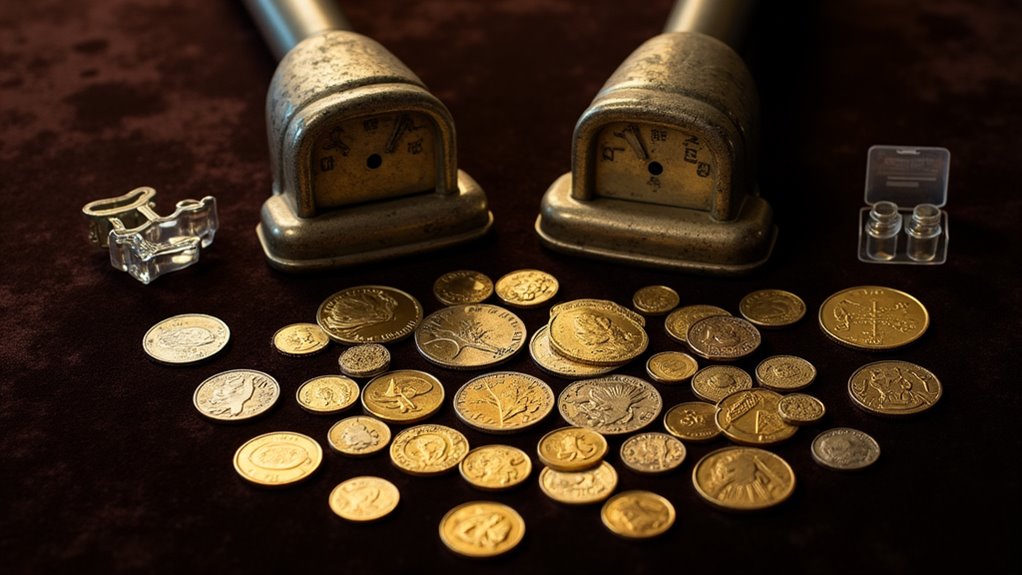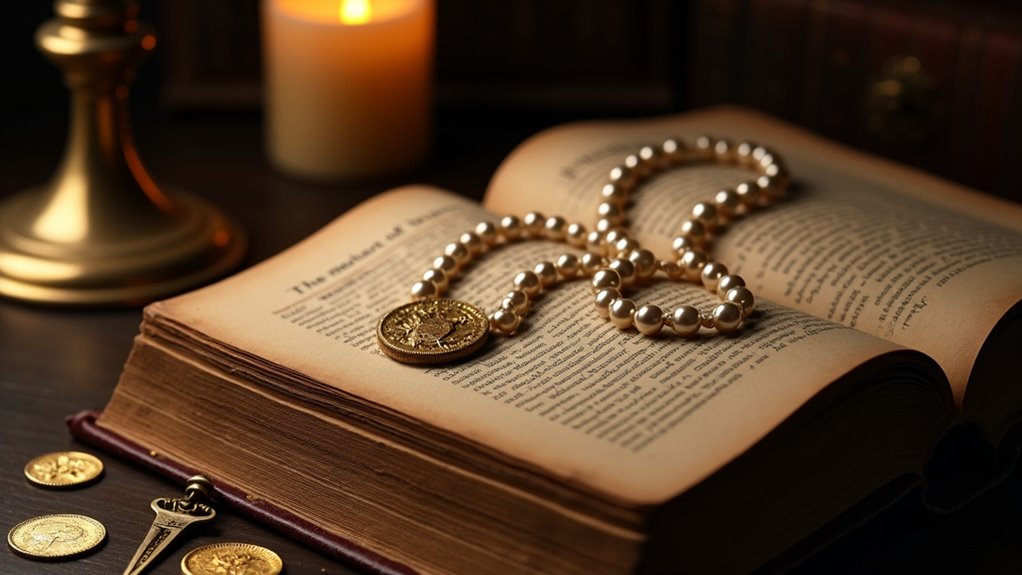

Gold captivates literature’s greatest minds as a symbol of desire, greed, and moral decay. From Shakespeare’s golden casket in “The Merchant of Venice” to Fitzgerald’s critique of wealth in “The Great Gatsby,” the precious metal reflects humanity’s fatal flaws. Ancient tales like “Rumpelstiltskin” and “The Goose That Laid Golden Eggs” warn of greed’s consequences, while poets from Tennyson to Frost use gold to represent beauty’s transience. The glitter of literary gold beckons with deeper truths beneath its surface.

Glitter, greed, and glory – gold’s seductive shimmer has captivated writers throughout literary history, weaving its way into countless classics as a powerful symbol of humanity’s deepest desires and fatal flaws. From Shakespeare’s calculating merchants to Fitzgerald’s glittering Jazz Age excess, literary giants have wielded gold as a metaphorical sledgehammer, smashing through society’s obsession with wealth and status.
Shakespeare’s genius really shines (pun totally intended) in “The Merchant of Venice,” where that infamous casket scene turns gold into a savage commentary on appearance versus reality. The golden casket, all sparkly and tempting, ends up being the wrong choice – how’s that for a metaphor that hits you over the head? Meanwhile, King Lear’s ranting about justice gets real interesting when you notice how gold keeps popping up as a symbol of everything that’s wrong with his kingdom, reflecting how gold can also serve as a hedge against inflation during times of economic distress. Historically, gold’s value has remained stable and has often increased during periods of rising prices, reinforcing its status as a reliable asset for central bank reserves.
The American literary scene couldn’t resist gold’s allure either. Fitzgerald went all-in with “The Great Gatsby,” using gold to paint a portrait of the American Dream gone horribly wrong. Every golden detail in that novel screams “look at all this fake wealth!” And speaking of fake, Twain’s “Huckleberry Finn” uses gold to expose the hypocrisy of a “civilized” society that’s actually rotten to the core.

Fairy tales and folklore take a different approach, using gold as both temptation and reward. Take “Rumpelstiltskin” – spinning straw into gold sounds amazing until you realize the price tag involves your firstborn child. Yikes. Then there’s “The Goose That Laid the Golden Eggs,” basically screaming “don’t let greed make you stupid!” at generations of kids.
Poetry gets particularly fancy with its golden metaphors. Tennyson’s “Lady of Shalott” uses gold to represent beauty that’s totally out of reach, while Keats goes full philosophical in “Ode on a Grecian Urn,” turning gold into some deep thoughts about immortality and art. Even Robert Frost couldn’t resist throwing some golden symbolism into his nature poems, usually to remind us that everything beautiful eventually fades.
Religious and mythological literature takes gold to divine heights, literally. The Bible’s packed with golden imagery, from the streets of heaven to that infamous golden calf that got everyone in trouble. Greek mythology gave us the Golden Fleece quest, while Buddhist texts use gold to represent enlightenment – because apparently, spiritual wisdom sparkles. In times of economic uncertainty, gold has historically served as a hedge against inflation, illustrating its enduring value across cultures and eras.
Modern writers keep coming back to gold as the ultimate literary device for exploring humanity’s relationship with wealth, power, and morality. Whether it’s driving the plot of a treasure hunt or serving as a metaphor for corruption, gold’s symbolic value in literature remains as precious as the metal itself. Just don’t expect any actual investment advice from these stories – they’re more interested in crushing souls than building portfolios.
Frequently Asked Questions
How Did Ancient Authors Obtain Their Knowledge About Gold Mining Techniques?
Ancient authors gained their gold mining knowledge through direct observation, participation in mining operations, and documentation of techniques passed down through generations.

They’d observe miners at work, talk to experts, and sometimes even owned mines themselves! Military campaigns also exposed writers to various mining methods across different regions.
Plus, they’d study earlier texts and records – though many of those haven’t survived to modern times.
Which Modern Authors Have Been Influenced by Classical Gold References?
Modern literary giants have pounced on gold’s timeless allure!
Tolkien’s One Ring and Collins’ Capitol showcase greed’s dark grip, while Gaiman weaves divine gold narratives in American Gods.

Riordan’s Percy Jackson breathes fresh life into classical myths, and Rowling’s Philosopher’s Stone echoes ancient immortality themes.
McCarthy and Atwood dive deep into wealth’s moral complexities, proving gold’s literary magnetism hasn’t lost its shine (yes, that’s a deliberate typo!) in contemporary fiction.
What Role Did Gold Play in Medieval Manuscript Production?
Gold played a pivotal role in medieval manuscript production as both a material and spiritual element.
Artisans used gold leaf, applied with gesso adhesives, to create luminous illuminations that symbolized divine light. The precious metal enhanced religious texts like gospels and psalters, demonstrating patron’s wealth while serving sacred purposes.

Skilled illuminators worked in teams, employing complex gilding techniques to create raised surfaces that could be intricately tooled and burnished for lasting beauty.
How Accurate Were Historical Descriptions of Gold Refining in Literature?
Historical accounts of gold refining varied considerably in their accuracy.
Technical manuals, particularly from the Renaissance period like “De Re Metallica,” offered surprisingly precise descriptions of smelting processes.
Ancient texts often nailed surface-enhancement techniques like fire-gilding.
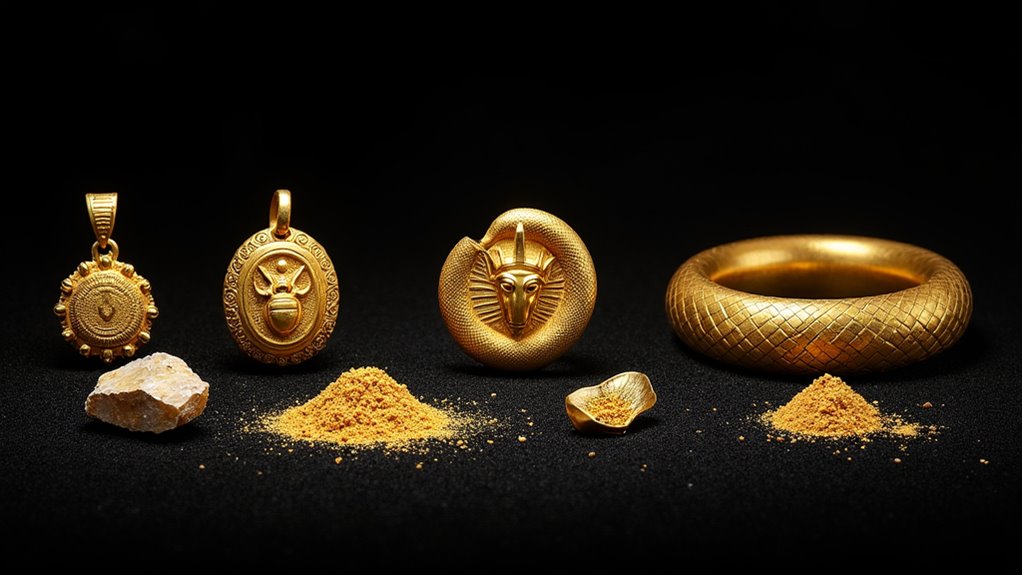
However, alchemical writings mixed factual processes (like aqua regia use) with mystical embellishments.
Islamic scholars deserve props – their medieval documentation of cupellation and amalgamation techniques was spot-on for their time.
Did Cultural Differences Affect How Gold Was Portrayed Across Different Literary Periods?
Cultural differences drastically shaped gold’s literary portrayal across civilizations.
Eastern texts emphasized spiritual enlightenment and inner wealth, while Western literature often focused on material power and divine authority.

Medieval Europe saw gold as both religious symbol and earthly might, whereas Asian works used it to reflect nature’s impermanence.
Ancient civilizations universally viewed it as sacred, but interpreted its meaning through their unique cultural lenses and belief systems.