The RBI’s got its gold game down to a science! Managing a whopping 879 tonnes split between domestic vaults (510.5 tonnes) and international facilities like the Bank of England (324 tonnes). They’ve been on quite the shopping spree, snagging 244 tonnes since 2020 – talk about a gold rush! This strategic stockpiling helps stabilze the economy, hedge against inflation, and reduce dollar dependency. The real kicker? India’s rapidly bringing its shiney stash back home, with more power moves ahead.

In a glittering display of financial muscle-flexing, India’s central bank has been on an absolute gold-hoarding tear, stashing away a whopping 879 tonnes of the yellow metal in its vaults as of January 2025. The Reserve Bank of India (RBI) ain’t messing around – gold now makes up 8.41% of its total forex reserves, with the stash split between domestic vaults and overseas facilities. This strategic positioning places India among top holders globally.
Let’s talk numbers, and holy smokes, they’re juicy! The RBI’s been on a buying spree that’d make King Midas blush, snagging 244 tonnes between 2020 and 2024. In Q4 2024 alone, they grabbed 22.54 tonnes, making India the second-biggest buyer globally. Talk about going for gold!
India’s gold-buying rampage puts Midas to shame, with the RBI scooping up a staggering 244 tonnes in just four years.
But here’s where it gets interesting – the RBI’s playing a crafty game of “bring it home.” They’ve hauled 214 tonnes back to Indian soil in just two years, including a massive 102-tonne transfer on Dhanteras 2024 (nice timing, folks!). Now, 510.5 tonnes sits cozy in domestic vaults, while 324 tonnes hangs out abroad – mostly in the Bank of England‘s fancy underground bunkers. The transfer required special aircraft and security to ensure safe transport to India.

The strategy? It’s all about that hedge, baby. The RBI’s diversifying faster than a squirrel prepping for winter, using gold as a shield against inflation, currency wonkiness, and those pesky geopolitical headaches. Plus, let’s be real – it’s a pretty sweet way to thumb their nose at dollar dependency. National gold reserves play a crucial role in maintaining a country’s financial stability, and this is particularly evident in major gold holders who leverage their reserves for economic strength. Additionally, gold serves as a core reserve asset that can bolster national confidence during turbulent economic times, as central banks seek to enhance security and liquidity. Moreover, gold reserves provide a trust anchor that reinforces the nation’s creditworthiness in the eyes of investors.
Storage-wise, the RBI’s playing it smart, splitting their precious cargo between Mumbai’s fortified vaults and international facilities. The Bank of England’s still got 314 tonnes in its custody, with a tiny bit chillin’ at the BIS and the Fed. It’s like having your gold cake and eating it too – security at home, market access abroad.
The economic impact? It’s like having a financial superhero cape. These reserves help the RBI manage liquidity, steady the economic ship during storms, and offset those nerve-wracking foreign portfolio outflows. And with gold prices predicted to hit a mind-bending $3,000 per ounce by late 2025 (yeah, we’ll see about that), the strategy’s looking pretty darn shrewd.
Looking ahead, the RBI’s showing no signs of slowing down its gold shopping spree. They’re riding the same wave as other central banks worldwide, who’ve apparently decided that gold’s the new black.

Whether this massive accumulation proves genius or just expensive decoration remains to be seen, but one thing’s crystal clear – India’s determined to keep its place in the global gold game. And honestly? They’re crushing it.
Frequently Asked Questions
How Often Does RBI Conduct Physical Audits of India’s Gold Reserves?
The RBI keeps its gold audit schedule under tight wraps – classic central bank move!
While there’s no public playbook, experts reckon physical checks happen annually or every couple years.
The bank’s probably doing more frequent spot-checks on domestic stash (hey, gotta keep that 876 tonnes safe!), but overseas holdings likely get less attention.

With 60% now stored in India after that massive UK gold haul, we’re betting those audit numbers are ticking up!
What Security Measures Protect India’s Gold Reserves From Theft or Tampering?
India’s gold reserves benefit from multiple layers of hardcore security.
The RBI maintains high-tech vaults in Mumbai and Nagpur, protected by 24/7 armed guards and state-of-the-art systems.
When moving the precious stuff, they use special aircraft and classified logistics.

Theirs cybersecurity measures encrypt sensitive data and limit access.
International holdings get extra protection in places like the Bank of England’s legendary bullion warehouse, established way back in 1697!
Can Indian Citizens Invest Directly in Rbi’s Gold Reserves?
No, Indian citizens cannot directly invest in RBI’s gold reserves – full stop.
The central bank’s precious metal stash remains strictly off-limits to public investment.

While gold bugs might dream of getting their hands on those gleaming RBI vaults, they’ll have to settle for alternatives like Sovereign Gold Bonds, ETFs, or good ol’ physical gold.
The reserves serve monetary policy purposes only – no exceptions, no backdoors, no special access.
That’s just how it works, folks!
Does RBI Lease Its Gold Reserves to Generate Additional Income?
The RBI isn’t playing the gold leasing game – period. Unlike some central banks that lease their precious metals for extra cash, India’s central bank keeps its 823.1 tonnes of gold locked up tight.
The majority’s split between domestic vaults (309.03 tonnes) and overseas holdings (514.07 tonnes).
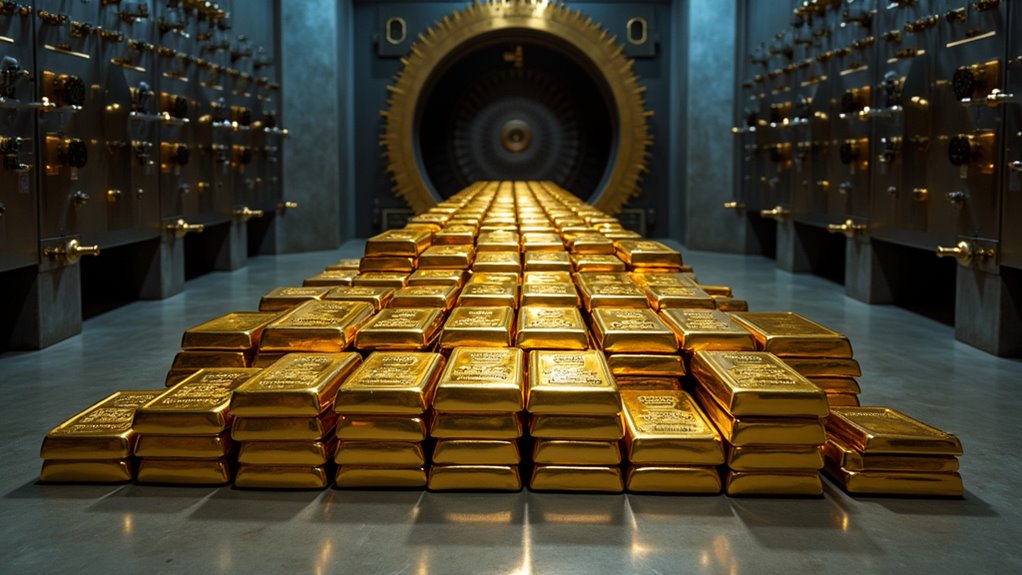
RBI’s strategy? They’re actually doing the opposite – bringing more gold home from abroad, with 130 tonnes already repatriated from the Bank of England since 2022.
How Does RBI Determine the Optimal Ratio Between Gold and Forex Reserves?
RBI analyzes multiple factors to strike that sweet balance between gold and forex holdings.
They’re juggling economic risks, currency volatility, and global uncertainties like a financial circus act. The central bank’s risk models crunch numbers on inflation trends, dollar strength, and potential revaluation losses to determine ideal ratios.
Market conditions and geopolitical tensions also influence their decisions. While there’s no fixed formula, RBI aims to maintain enough gold to hedge without sacrificing liquidity.