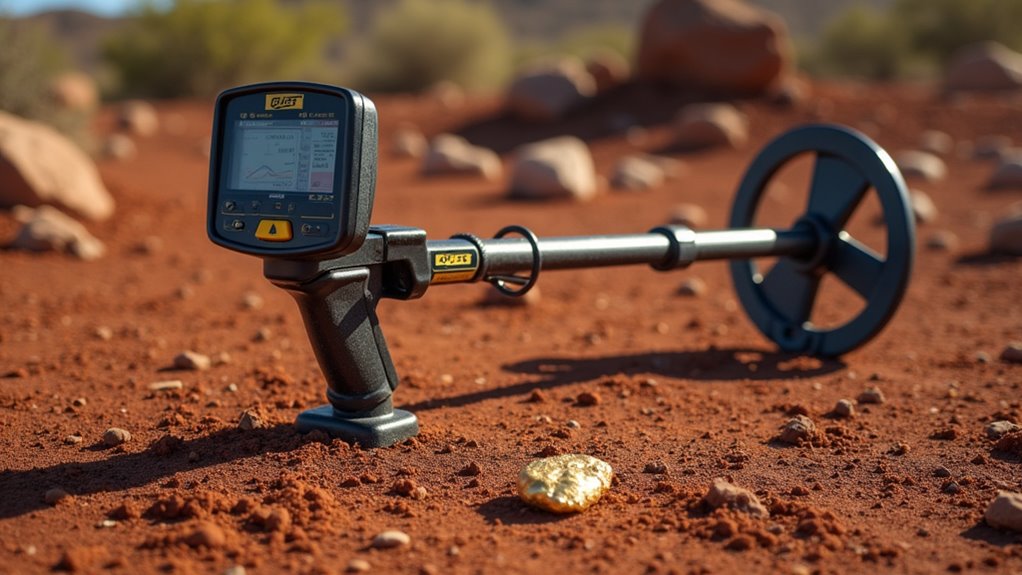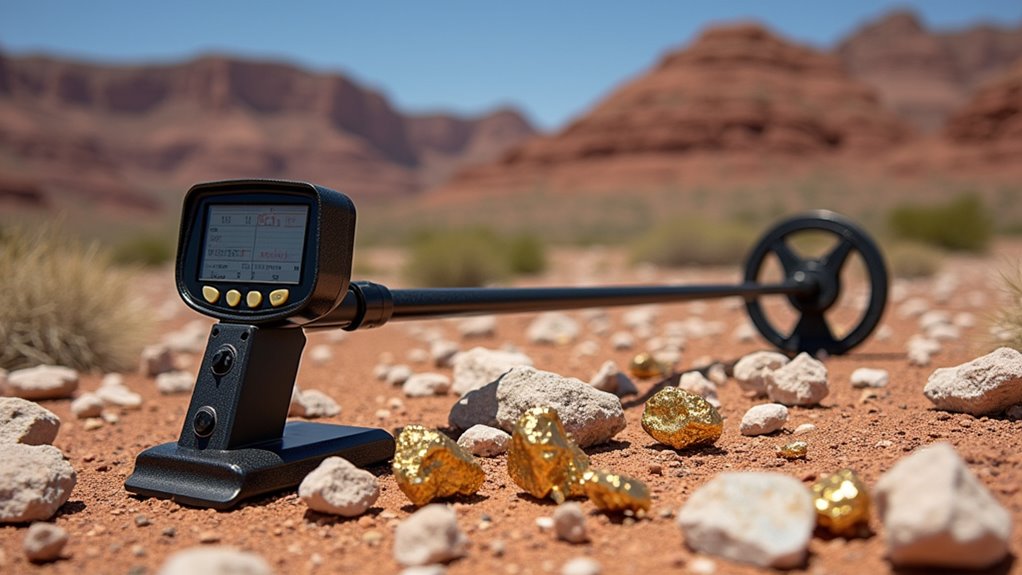
Alluvial gold isn’t some fancy geological term – it’s literally just bits of gold that got knocked loose from rocks and washed downstream.
Rivers and streams do the heavy lifting, eroding gold-bearing rocks and scattering precious nuggets along riverbeds, creek bends, and ancient waterways.
You’ll find this glittery stuff in places like Alaska, California, and across Australia’s goldfields. While some lucky bastards struck it rich, most prospectors barely found enough to buy their next meal. There’s way more to this golden story than meets the eye.

Alluvial Gold

Nature’s glittering gift to fortune-seekers, alluvial gold has sparked more chaos and greed than just about any other mineral on Earth. We’re talking about those shiny bits of metal that Mother Nature’s been kind enough to wash out of hard rock and scatter across riverbeds and ancient waterways.
It’s basically geological hand-me-downs, eroded from primary deposits and tumbled through streams until it settles in alluvial deposits alongside other heavy minerals.
The formation process is pretty straightforward, even if it drives prospectors mental trying to track it. Water erosion tears gold from its original source, usually some uphill outcrop, then carries it downstream like nature’s own conveyor belt. The heavier-than-average metal eventually settles in places where water slows down – think river bends, gravel bars, and ancient stream beds.
That’s why smart miners follow the water’s path backwards to strike it rich. This process of deposition occurs because low-flow areas create ideal conditions for gold accumulation. Mining operations commonly employ dry blowers in arid regions where water is scarce. In fact, understanding gold extraction techniques can significantly enhance recovery rates during mining operations.

You’ll find this stuff scattered across the globe, but some spots have hit the geological jackpot.
Alaska, California, and the Australian goldfields have coughed up enough alluvial gold to fund small nations. The Klondike region turned ordinary blokes into millionaires overnight, while places like Siberia and South Africa are still yielding impressive hauls. Anywhere with historical volcanic action or significant tectonic activity is worth a closer look.
The gold itself comes in all shapes and sizes – from microscopic specks that’ll drive you cross-eyed to nuggets big enough to name. The further it travels from its source, the smaller and smoother it gets, beaten down by centuries of tumbling through river systems. Its purity varies depending on where it originally came from, but that hasn’t stopped countless prospectors from trying their luck with a pan and a dream.
Speaking of panning, it’s just one way to get your hands on this stuff. While old-timers swirled their pans in creek beds, modern operations use everything from sluice boxes to massive dredging equipment.

Some outfits even blast entire hillsides with high-pressure water, though environmentalists aren’t exactly chuffed about that approach. The damage to river systems and local ecosystems is real, and don’t even get started on the mercury contamination from dodgy artisanal mining operations.
Despite the environmental concerns, alluvial gold mining isn’t going anywhere. It’s too important to local economies, too accessible to small-scale miners, and too deeply embedded in human history. From the California Gold Rush to today’s commercial operations, this naturally processed treasure continues to drive development and spark dreams of instant wealth.
Just remember – for every success story, there’s a thousand broken backs and empty pockets.
That’s the thing about gold fever – it doesn’t care about odds.
Frequently Asked Questions
What Equipment Do I Need to Start Panning for Alluvial Gold?
Let’s cut through the fluff – here’s what ya need to get crackin’ with gold panning:
Essential gear includes a decent gold pan (10-14 inches), shovel for diggin’, and classifier to sift out rocks.
Chuck in a snuffer bottle and vials for collecting those precious flakes.
Smart prospectors also grab rubber boots and gloves – nobody likes wet feet or blistered hands.
Want better results? A sluice box‘ll boost your chances. Simple as that.
How Much Can I Earn From Alluvial Gold Mining?
Let’s cut to the chase – earnings from alluvial gold mining are all over the map.

In Papua New Guinea, miners raked in K640 million in 2021.
Nigerian operations are seeing wild profits – 300-500% returns in some areas. Daily take at Tutugo Village hits ₦125,000.
But here’s the kicker – profits depend hugely on gold prices (currently $3,000/oz), production costs, and wether you’re operating legally.
No guarantees in this game.
Are Permits Required for Collecting Alluvial Gold in Public Areas?
Here’s the hard truth – you can’t just grab a pan and start scooping gold from public waterways.
Most places require permits, even for recreational prospecting. The rules vary wildly between jurisdictions and can be a real headache to navigate.
Some areas might let you pan without paperwork, but don’t count on it. Breaking permit laws can lead to nasty fines or worse.
Best to check local regs before getting ya hands dirty.
What Is the Average Purity of Alluvial Gold Deposits?
Alluvial gold purity’s all over the bloody map. Most deposits sit between 20K and 22K (83-92% pure), but there’s plenty of variation.
Aussie nuggets are the overachievers, often hitting 23K+, while Alaskan gold‘s usually at the bottom of the barrel.
Globally, you’re looking at 50-95% pure, depending where ya dig. Distance from source rock makes a difference – the further it travels, the purer it gets. Simple as.
How Deep Do You Typically Need to Dig for Alluvial Gold?
The depth for alluvial gold varies wildly – from surface level to bloody deep.
Shallow deposits might only need a few inches of digging, while moderately deep deposits require 10-30 feet of work.
Deep lead deposits can force ya down 100+ feet!
Blame it on ancient riverbeds getting buried under layers of crud over time.
Mother Nature’s not making it easy – she’s thrown sand, gravel, and even lava flows on top.