Successful armature gold prospecting isn’t rocket science, but it demands the right gear.
A 14-inch green pan with 90° riffles remains the bare minimum for any wannabe prospector. Smart operators pair it with classifiers and sluice boxes – forget those ancient wooden ones. Metal detectors? VLF and pulse induction models can make the difference between striking it rich or going home empty-handed. Chuck in some concentrators and a snuffer bottle, and you’re actually in business. The real secrets to prospecting success go way deeper than just the tools.

Every wannabe prospector dreams of striking it rich, but most are clueless about the gear they actually need. Let’s face it – those shiny catalogues full of overpriced equipment won’t make you the next gold baron. What you really need is the right mix of basic, proven tools that actually work.
Gold pans are your starting point – and don’t let anyone tell you different. A 14-inch pan, preferably in green to make that elusive yellow metal pop, is the backbone of any prospector’s kit. The innovative 90° riffled design keeps your gold secure while panning. Sure, you could splurge on a fancy metal version, but a plastic one works just fine.

The built-in ridges do half the work for you, which is brilliant when you’re knackered after hours of swirling dirt around. The pans’ gravity separation method has remained virtually unchanged since the California Gold Rush days. Using a gold pan effectively can greatly increase your chances of finding gold deposits in any stream or river.
A plastic gold pan with ridges does the job just fine – no need for fancy metal ones to find your fortune.
Sluice boxes are where things get serious. These long, narrow beauties create sweet spots where gold particles love to hang out. Throw some miners moss in there, and you’ve got yourself a proper gold-catching setup. Aluminium ones are tops – lightweight and durable. Wood? Leave that to the historical reenactors.
Now, here’s where most rookies stuff up – they skip the classifiers. Big mistake. These screens are absolute lifesavers when it comes to sorting material. Without them, you’re just making life harder for yourself. Different mesh sizes mean you can process material properly, instead of mucking about with rocks that’ll never yield anything worthwhile.
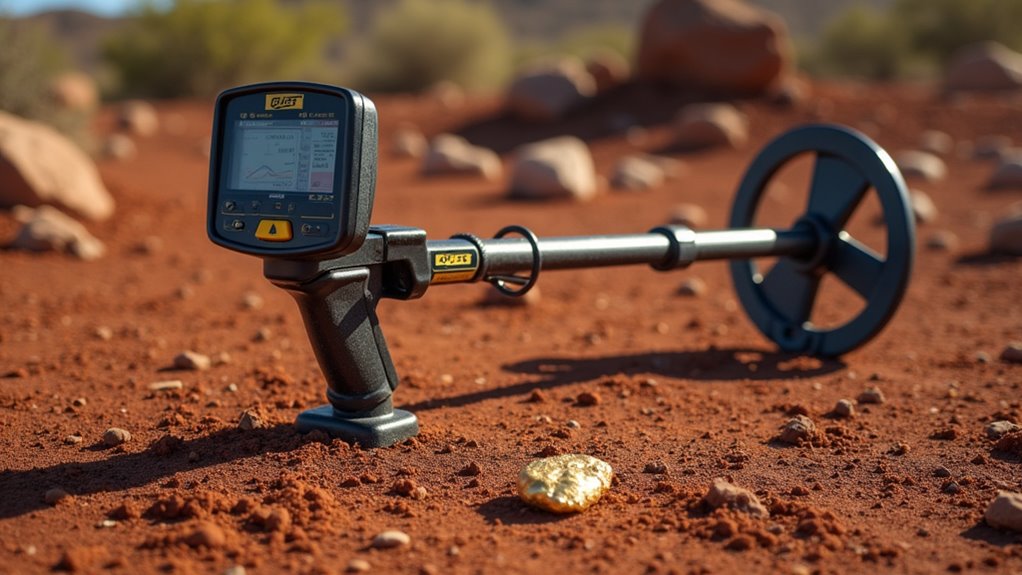
Metal detectors are a game-changer, but crikey, the choices are enough to do your head in. VLF detectors are grand for general prospecting, while pulse induction models will sniff out those tiny nuggets that make your heart race. Just don’t cheap out on this one – a proper gold-specific detector is worth every cent.

For the serious prospector, gold concentrators are bloody brilliant. Spiral wheels and blue bowls might look like fancy toys, but they’re proper workhorses when it comes to processing volume. They’re perfect for when you’ve got more material than patience, which is most of the time, lets be honest.
Hand tools might seem basic, but they’re essential kit. A good rock hammer, shovel, and some crevice tools will save your bacon more times than you can count. Chuck in a snuffer bottle for those fine particles, and you’re sorted.
And if you’re ready to step up your game, a highbanker combines the best of everything – classifier, sluice box, and water pump all in one neat package.
The truth is, successful prospecting isn’t about having every gadget under the sun. It’s about having the right tools and knowing how to use them properly. Skip the gimmicks and focus on the gear that’s proven itself over time. Your bank account will thank you, and you might actually find some gold instead of just looking like a tool yourself.
Frequently Asked Questions
What Are the Best Locations to Find Gold in North America?
North America’s gold hotspots are no secret – California’s Sierra Nevada and American River still deliver the goods, just like during the ’49 rush.
Alaska’s keepin’ it real with Crow Creek and Nome Beach. Colorado’s San Juan Mountains are proper loaded too.

Let’s not forget Nevada’s legendary Comstock Lode near Virginia City. Montana’s Confederate Gulch and Georgia’s Dahlonega round out the top spots for treasure hunters keen to strike it rich.
How Much Does It Cost to Start Gold Prospecting as a Hobby?
Starting gold prospecting ain’t cheap, mate. Basic setup runs $100-200 for essentials like pans, shovels, and classifiers.
But serious hobbyists should budget $500-1000 for proper gear including sluice boxes and metal detectors.
Don’t forget those pesky permit fees and claim costs – another $100-300 yearly. Plus travel and camping gear adds up quick.

Bottom line: expect to drop $1000-2000 to get started proper. No shortcuts in this game.
Do I Need a Permit or License for Gold Prospecting?
do your homework, or your gold rush could turn into a legal nightmare.
What Time of Year Is Best for Gold Prospecting?
The best time for gold prospecting? Mother Nature’s just dropped some serious hints.
After heavy rains is prime time – floods expose fresh deposits and concentrate that precious yellow stuff downstream.

Low water levels in summer are gold too (pun intended), making it easier to access normally submerged spots.
Spring snowmelt’s a winner in mountainous areas, bringing fresh material down from the peaks.
But here’s the kicker – with proper gear, any season works.
How Can I Distinguish Real Gold From Fool’s Gold?
Real gold’s soft – you can actually scratch it with a copper coin.
Pyrite? Hard as nails, mate. Gold’s got this rich yellow glow that never dulls, while pyrite looks more like cheap brass and gets tarnished.
The dead giveaway? Smack it with a hammer. Gold’ll bend and dent, but pyrite shatters like glass. Easy peasy.