America’s richest gold spots aren’t just hiding in California’s played-out rivers anymore. Sure, the American River still tempts weekend warriors, but smart prospectors are hitting Nevada’s Carlin Trend and Alaska’s Nome beaches where the real treasure lies.
Colorado’s Pikes Peak region keeps delivering decent finds, while North Carolina’s Reed Mine proves the East Coast isn’t totally worthless. Local prospecting clubs have the inside track – and trust me, there’s way more to this story than just panning in streams.

While everyone dreams of striking it rich, the reality is that gold prospecting isn’t just about luck – it’s about knowing where to look. The American West still holds some of the most promising territory for modern-day prospectors, with California leading the charge.
The Golden State isn’t called that for nothing – from the historic American River where it all began in 1848 to the Yuba and Feather Rivers, these waterways continue coughing up yellow metal for those willing to get their hands dirty.
Strike it rich in California’s legendary rivers, where determined prospectors still pan prosperity from gold-rich waters dating back to 1848.

Let’s be real though – Nevada’s the true heavyweight champion of gold production in the U.S. The Carlin Trend isn’t some tourist trap; it’s a serious goldmine that keeps on giving. While big mining operations dominate the landscape, clever prospectors can still find their slice of the action on public lands managed by the Bureau of Land Management. Just don’t expect to waltz into an abandoned mine – that’s a quick way to end up as tomorrow’s cautionary tale. Essential safety equipment like helmets and first aid kits should always be part of your prospecting gear.
Alaska’s no slouch either, mate. Nome’s beaches are literally scattered with gold, washing up from interior mountains like nature’s own ATM. The Crow Creek Gold Mine near Anchorage lets tourists play prospector for a day, but the real action’s in the Fairbanks region where seasoned gold hunters combine panning, sluicing, and metal detecting to maximise their chances. Beginners can get started at Gold Daughters Alaska for just $20 per person.
Colorado’s got some serious potential too, especially around Pikes Peak and Cripple Creek. The Arkansas River area’s become a hot spot for weekend warriors trying their luck at striking it rich.
Sure, most of em’ won’t quit their day jobs, but at least they’re having a crack at it. The local prospecting clubs actually know their stuff – they’ve got claims and intel that could save you months of aimless wandering.

North Carolina might surprise you – it’s actually home to America’s first documented gold discovery at Reed Gold Mine back in 1799. The Uwharrie National Forest still yields gold in its streams, though you might need patience of a saint to make it worth your while.
Montana’s another dark horse, with Libby Creek offering free gold panning without the bureaucratic nonsense of permits.
Here’s the thing about finding gold – it’s not rocket science, but it ain’t exactly child’s play either. Look for quartz veins showing those telltale golden flakes, or black sand deposits that often signal paydirt. Granite bedrock cracks are natural gold traps, and ancient river channels can be absolute goldmines (pun intended).
But the real secret?

Follow the historical mining activity. Those old-timers weren’t idiots – they knew where to look, and chances are there’s still plenty they missed.
Just remember, the biggest nuggets aren’t always the ones you can see – sometimes they’re the lessons you learn along the way.
Frequently Asked Questions
What Equipment Do I Need to Start Gold Prospecting?
Starting gold prospecting ain’t rocket science, mate. Grab these basics: a sturdy 14-inch gold pan (cheap but essential), classifier sieve to sort the junk, and a decent shovel that won’t fall apart.
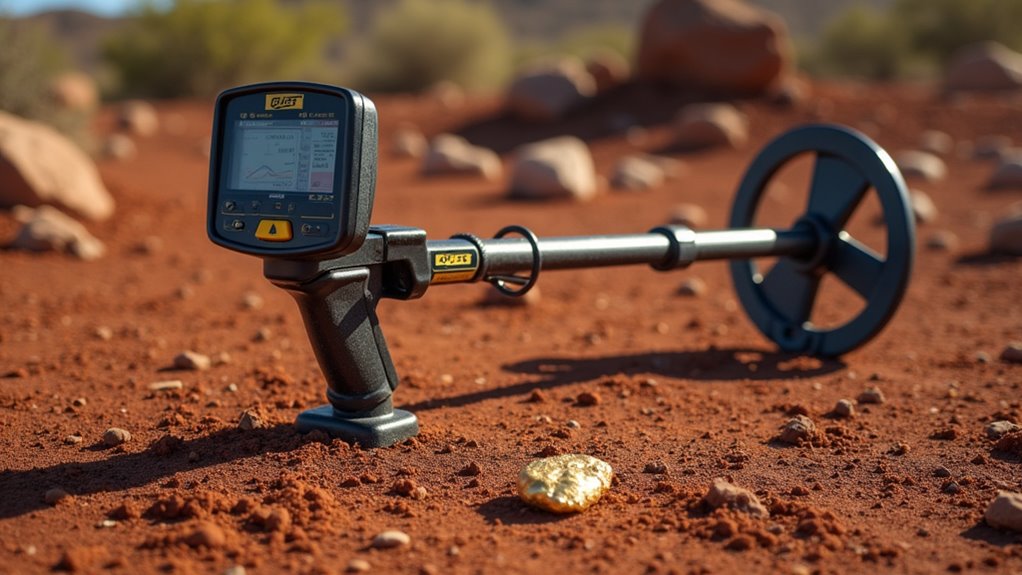
Chuck in a snuffer bottle for nabbing those tiny gold bits. Serious prospectors might splash out on fancy gear like sluice boxes or metal detectors, but rookies should stick to the basics.
Don’t forget ya gumboots and gloves – prospecting’s dirty work!
How Can I Tell if I’ve Found Real Gold?
Found something shiny? Let’s get real. True gold won’t tarnish, has that classic yellow shine, and feels heavy as hell.
Do the basic tests – scratch it on ceramic (leaves a gold streak), try biting it (yeah, seriously – it should be soft), or drop some vinegar on it (won’t react).
Still not sure? Proper gold sinks in water and resists nitric acid.

When in doubt, get a pro to check it – beats fooling yourself with fool’s gold.
Do I Need a Special Permit or License for Gold Panning?
Yep, most likely. The red tape‘s real, folks. Federal lands want permits, states have their own rules, and private property needs written permission – no exceptions.
Bit of a pain, but beats getting slapped with fines or worse.
Quick tip: BLM and Forest Service lands usually allow recreational panning with basic permits. State regs vary heaps though.
Best to check local laws before getting ya feet wet. Don’t be that person who cops a fine for skipping paperwork.
What Is the Best Time of Year to Prospect for Gold?
Spring and early fall are prime gold prospecting seasons – no doubt about it.
Spring’s got the snowmelt action exposing fresh deposits, while fall’s low water levels reveal hidden treasures.
But here’s the kicker – post-flood prospecting can be a goldmine (pun intended).
Those raging waters stir things up, exposing new deposits that’ve been locked away.
Smart prospectors know nature’s doing half the work for ’em after a good storm.
How Much Can I Expect to Earn From Recreational Gold Prospecting?
Let’s get real – recreational gold prospecting won’t make you rich.
Most hobbyists pocket a measly $10-50 worth of gold per day, if they’re lucky. Factor in gear costs and travel expenses, and you’re probably losing money.
Sure, there’s the odd jackpot story (like that 6-pound nugget some lucky bastard found in 2014), but don’t quit your day job.
It’s more about the thrill of the hunt than making bank.