Borax is kicking mercury’s toxic behind when it comes to gold extraction. This safer alternative delivers 50-70% more gold yield while protecting miners from nasty health effects like tremors and brain damage. Over 15,000 Filipino miners have already ditched mercury for borax, proving it’s not just eco-friendly hype. The process is cheaper, cleaner, and more efficient – period. Anyone still clinging to mercury needs to wake up and smell the future of sustainable mining.

Every gold miner worth their weight in precious metal knows mercury‘s a nasty piece of work – yet for decades, it’s been the go-to method for extracting gold from ore. But here’s the kicker: there’s a better way that’s been hiding in plain sight, and it’s about as exotic as your laundry room cabinet. Enter borax, the unsung hero of clean gold extraction that’s been quietly revolutionizing mining practices in the Philippines for over 30 years.
Let’s cut through the nonsense – mercury amalgamation is yesterday’s news, and it’s killing both miners and the environment. Borax, that humble mineral compound, is stepping up to show mercury the door. The process is dead simple: crush the ore into powder, pan it down to the heavy stuff, mix it with three times the volume in borax, add a splash of water, and heat until everything’s molten. The borax works its magic by lowering melting points and creating a fluid slag layer that sends impurities packing while the gold, being the heavyweight champion it is, sinks to the bottom. Borax modifies slag during the smelting process for better separation. This method aligns with the growing trend toward sustainable practices in artisanal mining.
Ditch the toxic mercury – borax is the new gold standard, making extraction safer and more efficient for miners everywhere.
The numbers don’t lie – miners using the borax method are pulling 50-70% more gold from the same ore. This sustainable approach has gained significant traction, with 15,000 artisanal miners in Luzon now exclusively using this method. That’s not just a win for their wallets; it’s a knockout punch to mercury’s toxic legacy. No more poisonous vapors wafting through mining communities, no more contaminated watersheds, and no more miners developing tremors and losing their marbles from mercury exposure. It’s almost ridiculous that we didn’t switch sooner.
The equipment list is invigoratingly basic: a crucible or clay bowl, some heat (charcoal or torch), borax, basic panning gear, and a bit of soap to keep the water tension in check. Compare that to the expensive and dangerous mercury setup, and you’ve got yourself a no-brainer.
In the refining process, borax keeps showing off – it acts as a flux, reduces equipment wear and tear, and gives better control over the whole smelting show.
Here’s the real tea: the mining industry’s been dragging its feet on adopting cleaner methods, clinging to mercury like it’s some kind of security blanket. But the tide’s turning, and borax is leading the charge toward sustainable small-scale mining. The Philippines figured this out three decades ago, and it’s about time the rest of the world caught up.
When you’ve got a method that’s safer, cheaper, more effective, and doesn’t poison everything it touches, you’d have to be dense as lead not to make the switch.
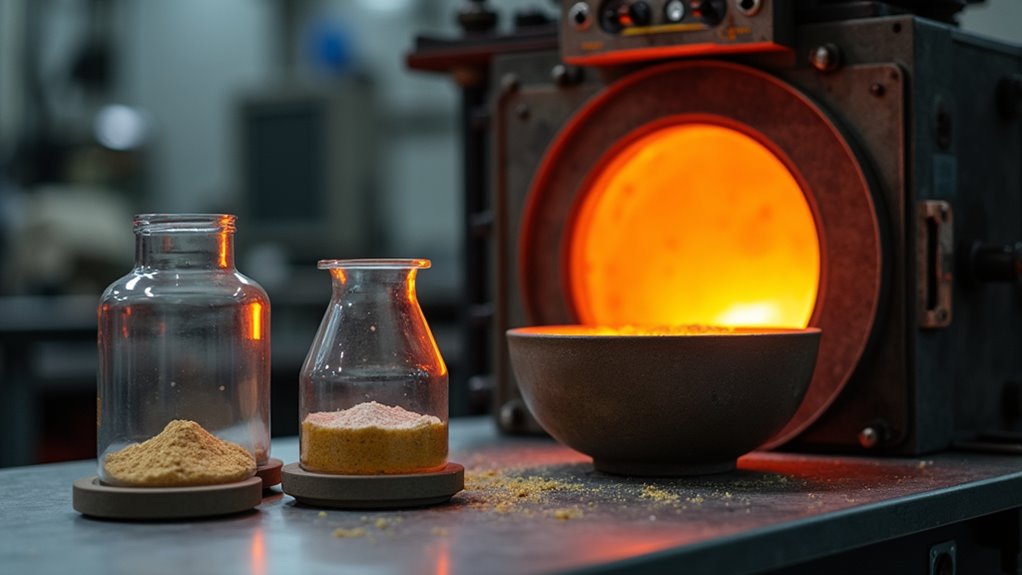
The evidence is crystal clear – borax is the future of artisanal gold mining. It’s not just about protecting miners’ health or saving the environment, though those are pretty damn good reasons. It’s about embracing a better way of doing things, even if it means admitting we’ve been doing it wrong all this time.
Frequently Asked Questions
What Safety Equipment Is Required When Using Borax for Gold Refining?
Refining gold ain’t a walk in the park – you better gear up right.
Basic must-haves: safety goggles to protect those eyeballs from nasty splashes, heat-resistant gloves (cuz nobody likes burnt fingers), and a proper respirator to avoid inhaling toxic fumes.
Don’t forget protective clothing – long sleeves and pants are non-negotiable.

And for heaven’s sake, wear closed-toe shoes! One spill could ruin your whole day… and foot.
How Long Does the Borax Gold Refining Process Typically Take?
The borax gold refining process is pretty quick compared to old-school mercury methods.
Takes about 2-3 hours total, but here’s the breakdown: milling the ore can be 30 mins to 24 hrs depending how stubborn it is.
Panning takes maybe 30 mins tops.

The actual borax heating part? Lightning fast – 5-10 mins.
Throw in some cooling time and BAM – you’ve got your gold button.
Way faster than that mercury nonsense!
Can Borax Be Reused Multiple Times in the Gold Refining Process?
Yes, borax can absolutely be recycled multiple times in gold refining.
It’s not a one-and-done deal. Smart miners save serious cash by reusing their borax – though it does lose some oomph after each use.

Here’s the catch: you gotta store it right and watch for contamination from previous batches.
After a few cycles, the effectiveness drops enough that it’s time for fresh stuff.
But hey, getting multiple uses outta one batch? That’s just good business sense.
What Is the Minimum Amount of Gold Needed for Borax Refining?
There’s no hard minimum for borax refining, but let’s get real – tiny amounts are a pain to work with.
You’ll want at least a gram of high-grade concentrate to make it worth your while. Anything less is just asking for headaches.
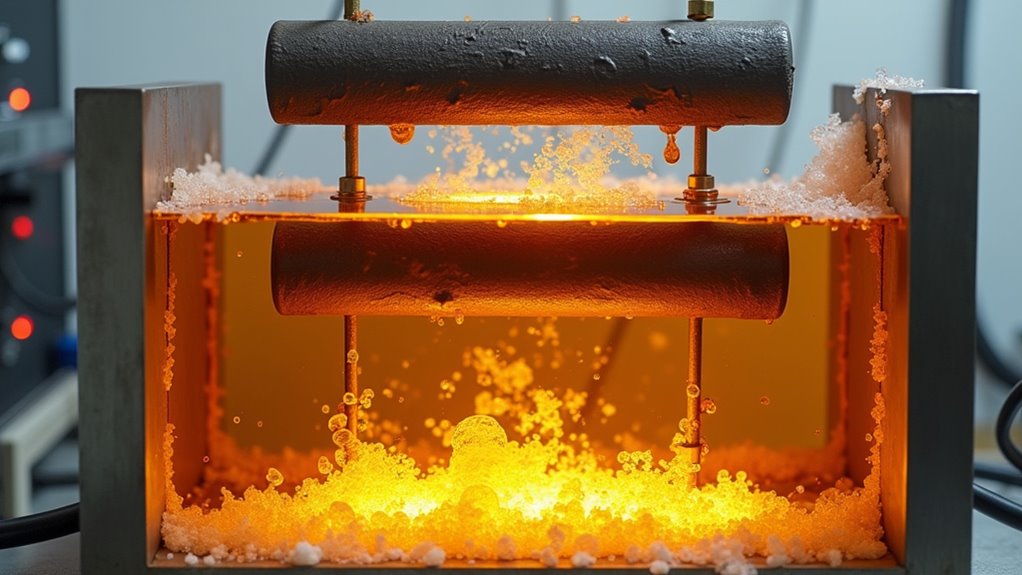
The pros recommend 20 oz/ton concentration for decent results.
Basic math: one shot glass of gold material needs about 1.5 shots of flux.
Go smaller? Sure, but good luck getting those microscopic bits to melt together properly.
At What Temperature Does Borax Work Best for Gold Extraction?
Borax hits its stride between 900-1100°C – that’s the sweet spot for gold extraction.
Sure, it melts at 743°C, but it doesn’t really get its mojo working until things heat up.
Around 1000°C is where the magic happens – borax turns into this killer flux that strips away impurities like nobody’s business.
Go below 900°C and you’re just wasting time.
Above 1200°C? Now you’re just showing off and risking gold loss.