
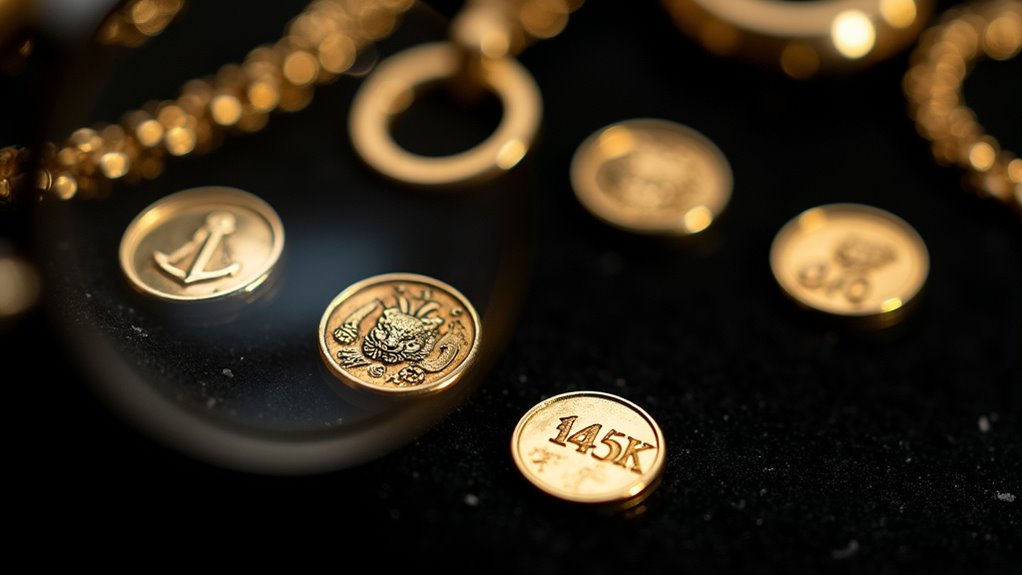
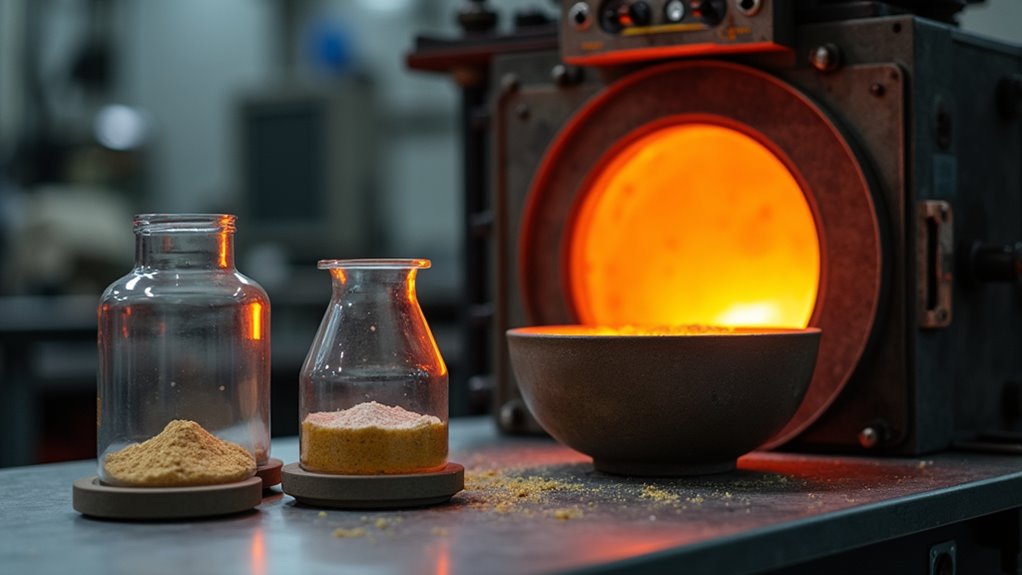
Modern gold refining isn’t for amateurs playing with pots and pans. The real deal requires serious equipment: high-temp furnaces hitting 1,200°C, specialized crucibles that laugh at normal cookware, and testing gear that separates the pros from the wannabes. XRF analyzers and fire assay equipment guarantee purity ain’t just a guess. Throw in some electrolytic cells and fume hoods for the chemical magic, plus finishing tools to make it market-ready. This barely scratches the surface of what it takes to turn raw gold into pure treasure.

Getting serious about gold refining isn’t for the faint of heart or light of wallet. Let’s face it – you’re gonna need some serious hardware to turn that glittery junk into pure, gleaming perfection. The cornerstone of any respectable operation is the furnace setup, and you better believe these bad boys mean business. We’re talking temperatures that’ll make Hell look like a winter getaway – 1,000 to 1,200°C to be exact. Safety interlocks prevent dangerous operation when pressure levels get too high.
Want pure gold? Better have deep pockets and nerves of steel. This ain’t your average hobby – it’s hardcore metallurgy.
Electric induction furnaces are the control freaks’ choice, while gas-fired systems handle the heavy lifting for bigger operations. The process starts with converting raw materials into thin gold flakes using specialized machines.
You can’t just throw gold into any old container and hope for the best. That’s where crucibles come in, and they’re not your grandma’s cooking pots. Made from graphite or ceramic that laugh in the face of those insane temperatures, these vessels come with fancy pouring spouts that’ll make handling molten gold almost look easy.

Some folks splurge on platinum-lined versions when they’re chasing that ultra-pure stuff, but lets be real – thats a flex most refiners don’t need.
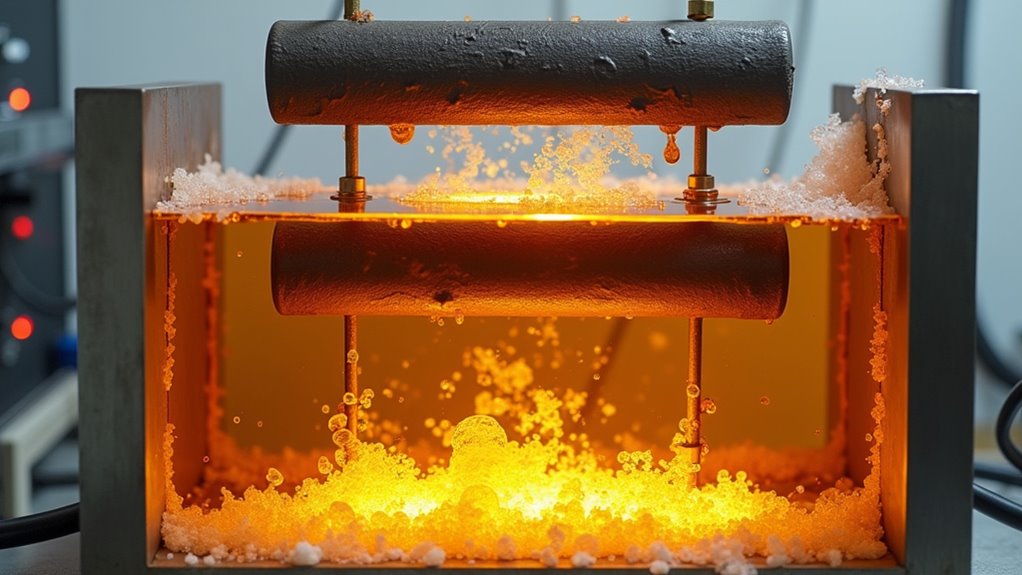
The science gets real interesting with electrolytic cells, especially in the Wohlwill process. Imagine this: impure gold hanging out as an anode, pure gold chillin’ as a cathode, and the whole thing swimming in solutions that’d make your chemistry teacher nervous.
Modern cells are basically running on autopilot with fancy controls, because nobody’s got time for manual adjustments in this century.
The chemical side of things is where it gets downright nasty. You need containers that won’t dissolve when you’re playing with acids like aqua regia, plus fume hoods that’ll keep you breathing something other than toxic gas.
And don’t even think about skimping on the safety gear – unless melted metal facials are your thing. Heat-resistant everything is the name of the game, from gloves to face shields, and chemical suits that make hazmat teams jealous.
Testing equipment separates the pros from the pretenders. XRF analyzers give you instant results, while fire assay equipment tells you exactly what’s what.
Some old-timers still swear by touchstone kits, but in todays world, you need atomic absorption spectrometers to catch those pesky trace elements that’ll mess up your whole operation.
The finishing touches require their own arsenal – tongs that could wrestle an alligator, ingot molds for those satisfying bars, and stamping machines to make it official.

Rolling mills and granulation systems turn that refined gold into whatever form the market demands. It’s a complex dance of equipment and expertise, and anyone who tells you different is probably still panning in their backyard kiddie pool.
Frequently Asked Questions
How Long Does It Typically Take to Refine Gold Using Modern Equipment?
Modern gold refining ain’t your grandpa’s slow-burn process anymore.
Automated systems can blast through 20-70 oz daily, hitting 99.95% purity in just 3-8 hours flat.
Sure, traditional aqua regia still drags on for 3 days, but who’s got time for that?

The fancy new touchscreen setups cut refining time by up to 70%.
That’s efficiency on steroids, folks – continuous processing, minimal babysitting, maximum results.
What Safety Certifications Are Required to Operate Gold Refining Equipment?
Operating gold refining equipment requires multiple hardcore certifications – no exceptions.
Handlers need OSHA hazmat training, chemical safety certs, and equipment-specific credentials from manufacturers. Fire safety and emergency response certifications are non-negotiable.

PPE training’s also mandatory – mess up with protective gear and you’re toast. Plus, most jurisdictions demand annual recertification.
It’s intense, but when you’re dealing with dangerous chemicals and molten metals, it better be.
Can Home-Based Refiners Legally Purchase Industrial Gold Refining Equipment?
Yes, home-based refiners can legally purchase industrial gold refining equipment in the US, but there’s a catch – or several.
While buying the hardware is technically allowed, good luck actually using it at home. Zoning laws, environmental regs, and chemical storage restrictions make industrial-scale refining practically impossible in residential areas.
Plus, you’ll need permits up the wazoo. Better stick to small-scale hobby equipment unless you’ve got industrial space.
What Is the Minimum Quantity of Gold Needed for Efficient Refining?
The gold refining game ain’t for small-timers. You need at least 20 oz/ton in your concentrate to make it worth the hassle.
Sure, some folks try with less, but they’re usually throwing money down the drain. Big players like Republic Metals handle tons daily – that’s where the real efficiency kicks in.
Small-scale refiners might scrape by with less, but let’s be real – without proper concentration, you’re just wasting chemicals and time.
How Often Should Gold Refining Equipment Undergo Maintenance and Calibration?
Gold refining equipment demands rigorous maintenance – no cutting corners here.
Daily temperature checks and visual inspections are non-negotiable. Weekly cleanings keep crucibles and furnaces from getting gunked up.
Monthly calibrations of pressure gauges and quarterly electrical checks ain’t optional either.
Skip maintenance? Watch profits literally melt away when equipment fails mid-refine.
Smart refiners know: stick to the schedule or pay the price later.


