The Miller Process is the gold industry’s no-nonsense workhorse for refining. Developed in 1867, it’s dead simple: melt gold, blast it with chlorine gas, and watch the impurities float away or vaporize. Sure, it only hits 99.95% purity and can’t handle platinum metals, but it’s fast, cheap, and gets the job done in hours. Two-thirds of refined gold goes through this process – there’s a reason it’s been the go-to method for over 150 years. The devil’s in the details of this fascinating process.

Nearly every gold bar you’ve ever laid eyes on went through the Miller Process – a brutally effective refining method that’s been the industry standard since 1867. Francis Bowyer Miller wasn’t messing around when he patented this chlorine-based purification system. It’s simple, fast, and gets the job done without the fancy bells and whistles of modern alternatives. And let’s be honest – when you’re handling literal tons of gold, efficiency matters more than perfection.
The process is almost embarrassingly straightforward: melt the gold, blast it with chlorine gas, and watch the magic happen. The chlorine doesn’t give a damn about the pure gold, but it absolutely devours everything else. Those pesky impurities form chlorides that either float to the top like unwanted scum or just vaporize into thin air. What’s left? Gold that’s 99.5-99.95% pure. Not too shabby for a 19th-century invention. A protective layer of borax and silica covers the molten gold during the entire process. The process operates at temperatures that are at or above gold’s melting point to ensure proper separation of impurities, which makes it more efficient compared to other industrial gold refining methods.
Sure, it’s not perfect. The Miller Process throws up its hands when it comes to platinum group metals, and you can forget about achieving that coveted 99.99% purity. But here’s the kicker – it’s processed roughly two-thirds of all refined gold by 1995. That’s a lot of shiny metal passing through a system that’s fundamentally unchanged since the American Civil War.
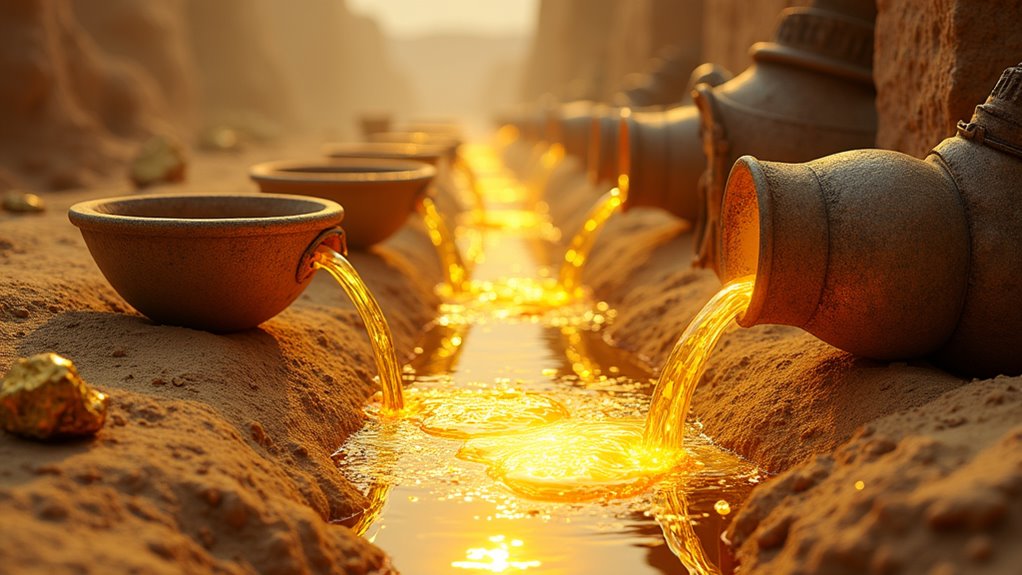
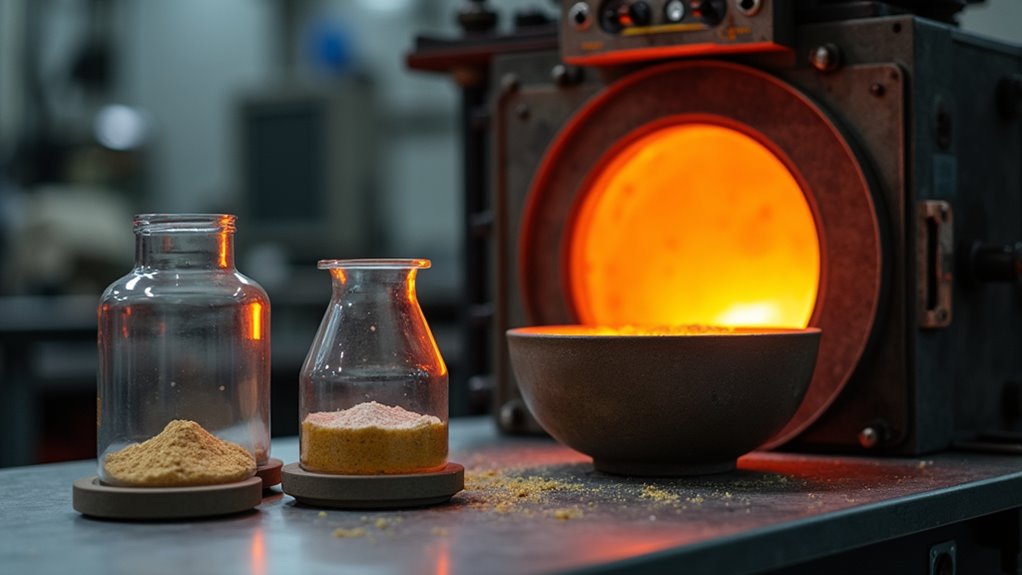
The setup looks like something out of an industrial fever dream: furnaces hot enough to melt gold, chlorine gas injection systems, and crucibles that could survive the apocalypse. It’s not exactly backyard operation material. But for mints and refineries worldwide, it’s their bread and butter. The process takes just a few hours, costs less than alternative methods, and pumps out market-ready gold bars faster than you can say “London Good Delivery.”
Environmental concerns? Yeah, there’s those – chlorine gas isn’t exactly eco-friendly. And the whole operation demands precise control over temperature and gas flow. One slip-up, and you’ve got a costly mess on your hands. But that hasn’t stopped refineries from embracing Miller’s method for over 150 years.
The real genius lies in its versatility. Need to process different gold alloys? No problem. Want to combine it with other refining methods? Go ahead. Many refineries use it as their first step before moving on to fancier techniques. It’s like the reliable workhorse of gold refining – not the prettiest or most sophisticated option, but it gets the job done every single time.
And in an industry where millions of dollars are at stake, that’s exactly what you need. The Miller Process might be old school, but it’s proof that sometimes the simplest solution is the best one.
Frequently Asked Questions
What Safety Equipment Is Required for the Miller Process?
Here’s the brutal truth about safety gear needed – no cutting corners.
You’ll need heavy-duty respirators with chlorine filters because that stuff will wreck your lungs.
Chemical-resistant everything – gloves, aprons, the works. Fire extinguishers better be close by, and those emergency showers aren’t just for show.
Gas detectors, spill kits, and first aid supplies are non-negotiable.
Skip any of these? Good luck explaining that to OSHA.
How Much Does It Cost to Set up a Miller Process Facility?
Setting up a Miller process facility ain’t cheap – we’re talking serious cash here.

Basic startup costs start around $500k, but that’s bare bones. A decent setup runs $1-3 million, while fancy pants operations can hit $9 million.
You’ll need deep pockets for equipment like melting furnaces ($50-100k), gas systems ($20-40k), and safety gear ($10-20k).
Plus, don’t forget yearly operations cost about $500k-1mil. Its definately not a budget-friendly endeavor!
What Are the Environmental Impacts of Miller Process Gold Refining?
The Miller Process is an environmental nightmare, plain and simple.

It spews toxic chlorine gas, dumps chloride waste like there’s no tomorrow, and burns through energy like a Hummer on steroids.
The process leaves behind contaminated slag that can poison groundwater and soil, while pumping greenhouse gases into the air.
At just 99.5% purity, all this environmental damage doesn’t even deliver perfect results.
Talk about a raw deal for Mother Earth!
Can the Miller Process Be Used for Small-Scale Gold Refining Operations?
No way. The Miller process is total overkill for small-scale operations.
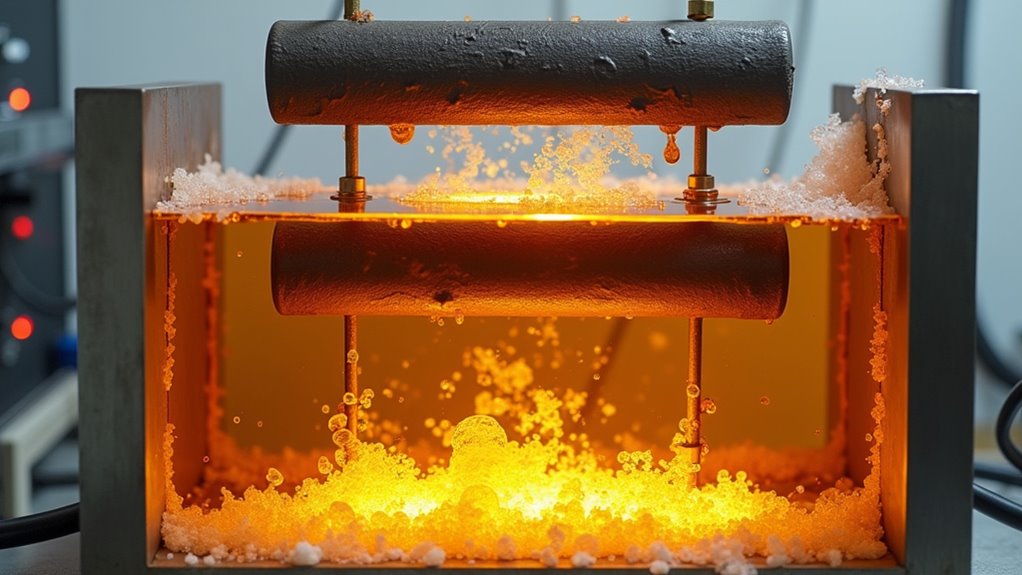
It’s like using a sledgehammer to crack a nut. The process demands massive capital investment, specialized equipment, and strict safety protocols for handling toxic chlorine gas. Small refiners would hemorrhage money trying to maintain this beast.
Plus, the setup’s just too dangerous without proper infrastructure. Smart small-scale refiners stick to simpler methods like inquartation or aqua regia – way more practical for their needs.
How Long Does the Complete Miller Process Take From Start to Finish?
The complete Miller process is surprisingly quick – just a few hours for the core refining phase.
But let’s get real: prep work adds significant time. From crushing ore to initial concentration, you’re looking at several days of setup.

The actual chlorination takes 4-6 hours tops. Post-refining cool-down and testing needs another day.
All in? About 3-5 days total, depending on how organised your operation is.