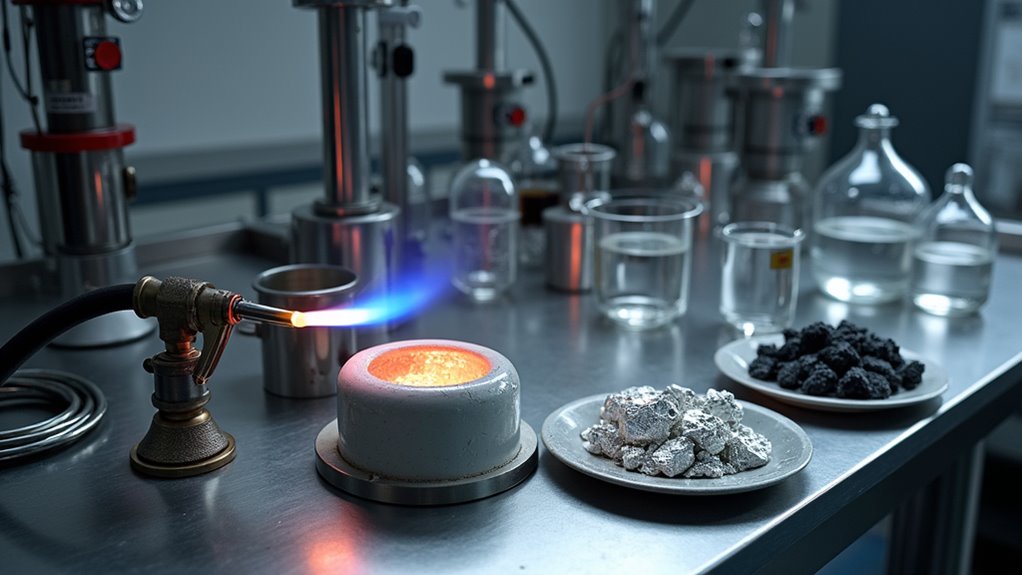

Modern labs turn impure gold into ultra-pure stuff through a shockingly simple process. They dunk an impure gold bar in a gold chloride solution, zap it with electricity, and watch the magic happen. Pure gold deposits onto a cathode while impurities get left behind like losers in a game of metallic musical chairs. The whole thing takes about a day and hits 99.999% purity – because apparently, 99.99% just isn’t good enough for today’s standards. Stick around to reveal the scientific sorcery behind this golden transformation.

Getting pure gold isn’t as simple as melting down your ex’s wedding ring. Modern labs use a process called electrolytic refining that’s about as complex as your last relationship – but way more predictable. Let’s explore how these labs turn questionable gold into the pure stuff that makes jewelers weak in the knees.
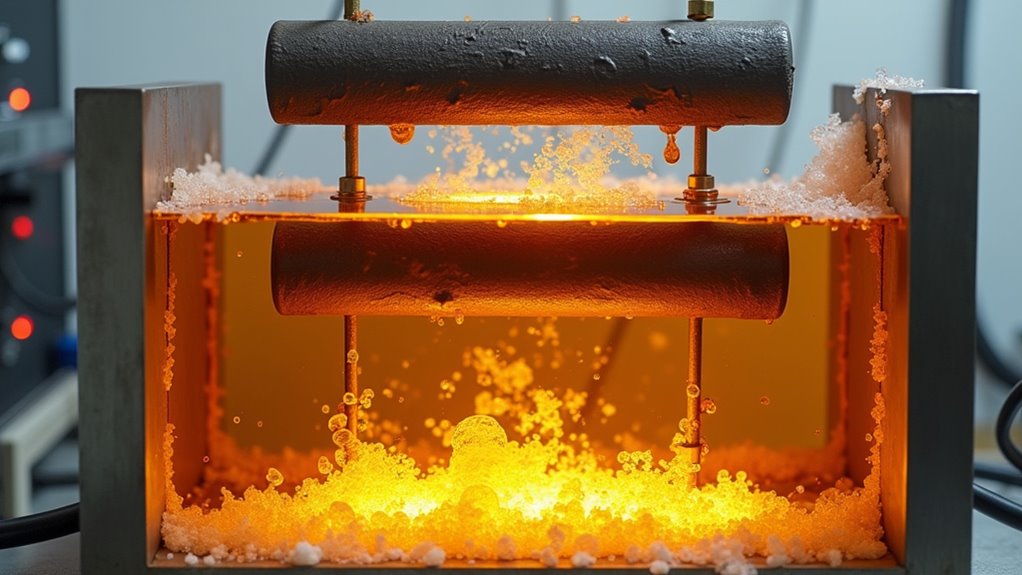
Picture this: an impure gold bar gets dunked into a tank filled with gold chloride solution that’s spicier than your grandma’s secret recipe, thanks to a healthy dose of hydrochloric acid. This bad boy serves as the anode, while a sheet of pure gold plays the role of cathode. Gold cyanide solutions can also be used as effective electrolytes in the process. Prior crushing and grinding is often necessary to prepare the gold for effective refining. Crank up the heat to a toasty 60-70°C, and you’ve got yourself a party.
The magic happens when you zap this setup with electricity – we’re talking 400-500 amperes per square meter of pure electrical attitude. The impure gold dissolves like your faith in humanity, releasing gold ions into the solution. Meanwhile, at the cathode, these ions get their act together and deposit as pure gold. It’s basically like a really expensive game of musical chairs, except the losers are impurities like silver and platinum that get left behind.
Electrolysis works like high-stakes musical chairs – impure gold dissolves, pure gold reforms, and impurities lose their seat at the party.

Here’s where it gets interesting (or boring, depending on your love for chemistry). The whole shindig takes about 24-36 hours, with electrodes spaced about 3 cm apart like awkward teenagers at a school dance. The voltage stays low – just 1-3 volts per vat – but don’t let that fool you. This process is precise enough to achieve up to 99.999% purity, which is probably purer than your intentions. Electrolytic refining methods are widely adopted in both lab and industrial settings due to their effectiveness.
The real drama happens with the impurities. Silver throws a fit and turns into insoluble silver chloride, while platinum group metals hang around in solution like uninvited party guests. Copper accumulates until someone finally decides to change the electrolyte – kinda like changing the oil in your car, except this oil costs more than your monthly rent.
Safety-wise, this isn’t your backyard science project. The process spits out chlorine gas like a dragon with acid reflux, so proper ventilation is essential. Lab techs suit up in protective gear that makes them look like they’re prepping for chemical warfare rather than refining gold.
And let’s not forget about waste management – because that spent electrolyte needs special treatment before it can rejoin society.
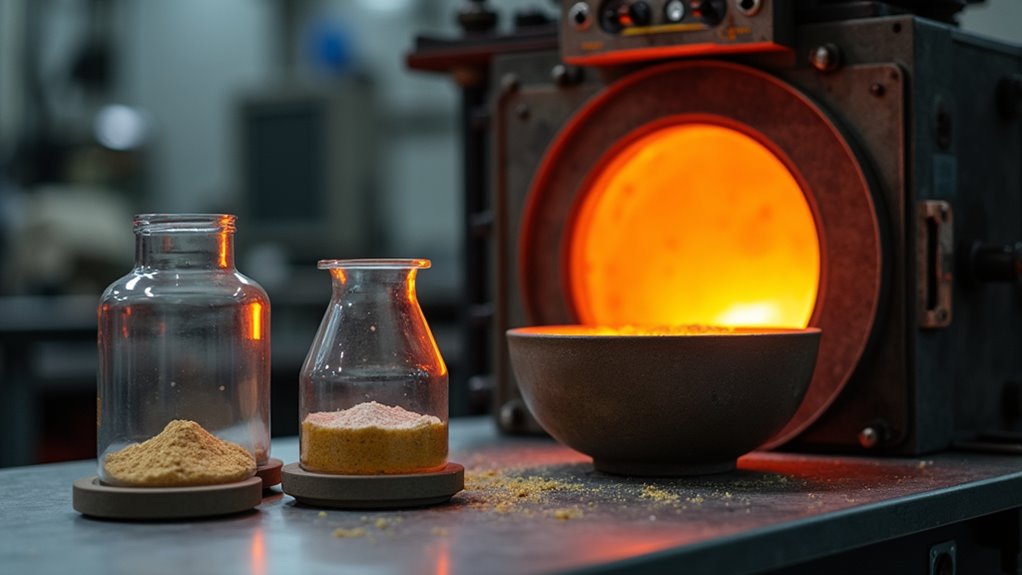
The end result? Sheets of gold so pure they’d make King Midas jealous. But remember, this isn’t some get-rich-quick scheme you can pull off in your garage. It’s a precise, controlled process that requires specialized equipment, expertise, and enough safety protocols to make an OSHA inspector smile.
And that’s the tea on modern gold refining – less alchemy, more science, but just as valuable as ever.
Frequently Asked Questions
What Safety Certifications Are Required to Operate an Electrolytic Gold Refining Facility?
Let’s cut through the red tape – running an electrolytic gold refining facility isn’t for amateurs.
You’ll need OSHA certs for hazmat handling (duh), ISO 45001 for workplace safety, and NFPA 2112 for fire-resistant gear.

But that’s just the start. The real kickers are environmental compliance stuff like ISO 14001 and hazardous waste permits.
Plus, you better have RJC certification and RMAP conformance, or you’re basically running a sketchy operation.
How Much Does a Complete Electrolytic Gold Refining Setup Cost?
A complete electrolytic gold refining setup ain’t cheap – we’re talking anywhere from $10,000 to $100,000+.
Basic DIY setups start around $5,000, but that’s cutting corners dangerously. Pro-grade systems like the REFINEIT-2KMK will set you back $50k easy.

Add in permits, safety equipment, and facility costs, and you’re looking at some serious cash. Plus those pesky ongoing expenses for chemicals and power. Not exactly pocket change, folks!
What Happens to the Other Precious Metals During Gold Refining?
During gold refining, precious metals go their separate ways – like a messy divorce.
PGMs hang out in the solution until they hit double gold’s concentration, then get kicked out through precipitation.
Silver’s antisocial – forms chloride and sulks in the anode slimes.

Base metals like copper just lounge in the electrolyte, turning it swamp-green.
Pretty much everything ends up either dissolved or in those pesky slimes for later recovery.
Can Small-Scale Jewelers Use Electrolytic Refining in Their Workshops?
Yes, small-scale jewelers can absolutely rock electrolytic refining.
Modern compact systems like REFINEIT make it doable right in their workshops. It’s a game-changer – takes just 24 hours to produce pure 24k gold.

No more toxic fumes or messy traditional methods. Best part? It pays for itself in weeks with a 2% profit margin.
Plus, it catches those bonus precious metals hiding in scrap gold. Pretty sweet deal for the little guys.
How Long Does the Entire Electrolytic Gold Refining Process Typically Take?
Let’s get real – the electrolytic gold refining process ain’t quick. From start to finish, you’re looking at 2-5 days total.
Here’s the breakdown: 4-8 hours for initial setup and prep work, then the actual electrolysis runs a brutal 24-36 hours straight.
After that, there’s another 12-24 hours of post-processing shenanigans like filtering, melting, and quality testing.
Yeah, patience is definitely required for this metallic marathon.