The Wohlwill process is basically gold refining on steroids. Developed by Emil Wohlwill in 1874, this electrochemical beast transforms 95% pure gold into an absurd 99.999% purity using a chloroauric acid bath and electric current. While it’s slower and pricier than the Miller process, nothing else comes close to this level of refinement. Sure, it’s high-maintenance and fussy as hell, but that’s the price of perfection. The deeper you go, the more fascinating this metallurgical marvel becomes.

When it comes to getting that perfect golden glow, nobody did it quite like Emil Wohlwill. Back in 1874, this Hamburg-based genius revolutionized gold refining with a process that would make modern alchemists drool. Let’s be real – before Wohlwill came along, getting super-pure gold was about as likely as finding a unicorn in your backyard. His late 19th century invention transformed the industry forever.
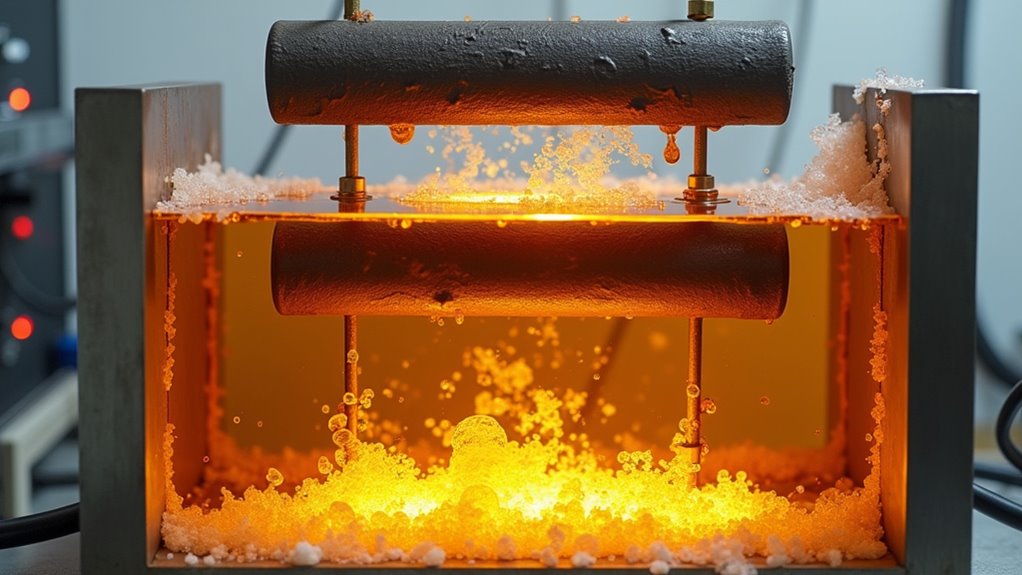
The process itself? It’s basically a fancy electrochemical bath for gold. Imagine this: you’ve got your somewhat impure gold anode (around 95% pure, which apparently wasn’t good enough for Wohlwill), a cathode made of pressed 24k gold sheets, and an electrolyte bath of chloroauric acid that’s basically gold dissolved in aqua regia. Throw some electricity into the mix, and boom – magic happens. This electrolytic gold refining technique is essential for achieving ultra-pure gold.
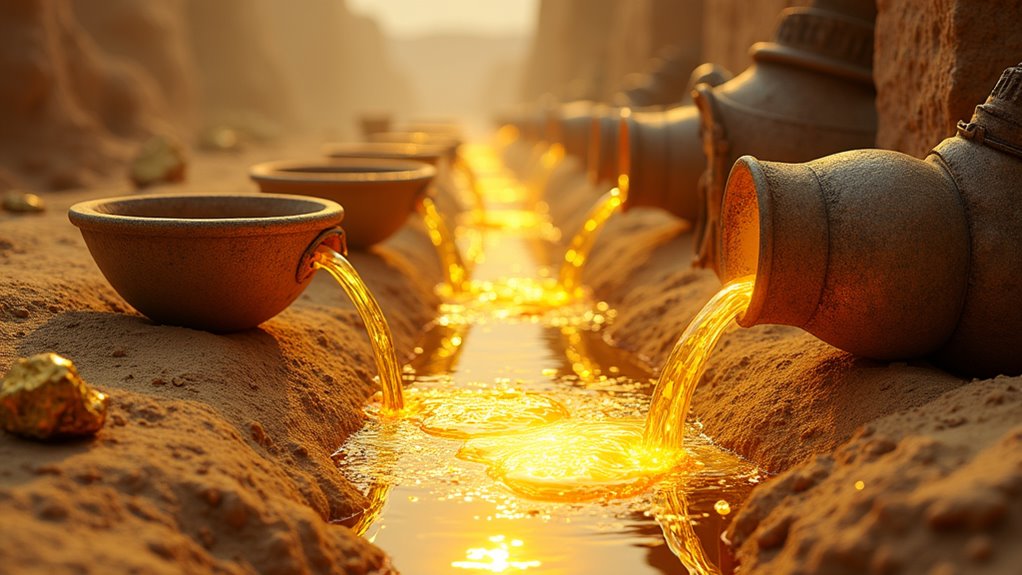
Here’s where it gets interesting – and by interesting, I mean mind-numbingly precise. The gold from the anode dissolves under electric current and takes a little swim through the electrolyte before deciding to settle down on the cathode. Meanwhile, all those pesky impurities either float around in the solution or sink to the bottom like the losers they are. The whole dance continues until the anode completely dissolves, which takes about two days. Because apparently, perfection can’t be rushed. The good news is that this is a reversible process, allowing refiners to recover their precious gold if needed.
Precision takes patience: watch gold particles waltz through acid for 48 hours while impurities get left behind at the party.
And perfect it is. We’re talking 99.999% purity levels here, folks. That’s so pure it makes the Miller process (with its measly 99.5% purity) look like amateur hour. No wonder this process is the go-to method for producing investment-grade bullion and fancy-pants jewelry. When you need gold that’s purer than your grandmother’s intentions, Wohlwill’s your guy.
But hold onto your hats, because there’s a catch – isn’t there always? This process is about as high-maintenance as a Hollywood diva. It’s expensive, complex, and requires enough gold inventory to make Fort Knox jealous. Plus, if you try to use gold that’s too impure or contaminated with silver, the whole thing goes sideways faster than a politician’s promises.
The real kicker? Despite being the gold standard (pun absolutely intended) for purity, the Wohlwill process isn’t even the most commonly used method. Most refiners stick to the Miller process because it’s cheaper and faster. But when nothing but the absolute purest will do – we’re looking at you, high-tech industry – Wohlwill’s process remains the undisputed champion. After all, sometimes you need gold that’s purer than your thoughts after a meditation retreat.
Let’s face it – Wohlwill might have been obsessed with purity, but his process changed the game. And while it might be more complicated than explaining cryptocurrency to your grandparents, it’s still the best way to get gold that’s practically perfect in every way. Mary Poppins would be proud.
Frequently Asked Questions
What Are the Environmental Impacts of the Wohlwill Process?
Let’s cut to the chase – the Wohlwill process is an environmental nightmare.
It guzzles massive amounts of energy, requires tons of precious gold resources, and loves spewing hazardous waste. The process creates toxic chemical cocktails with hydrochloric acid and chlorine gas that could make your hair curl.
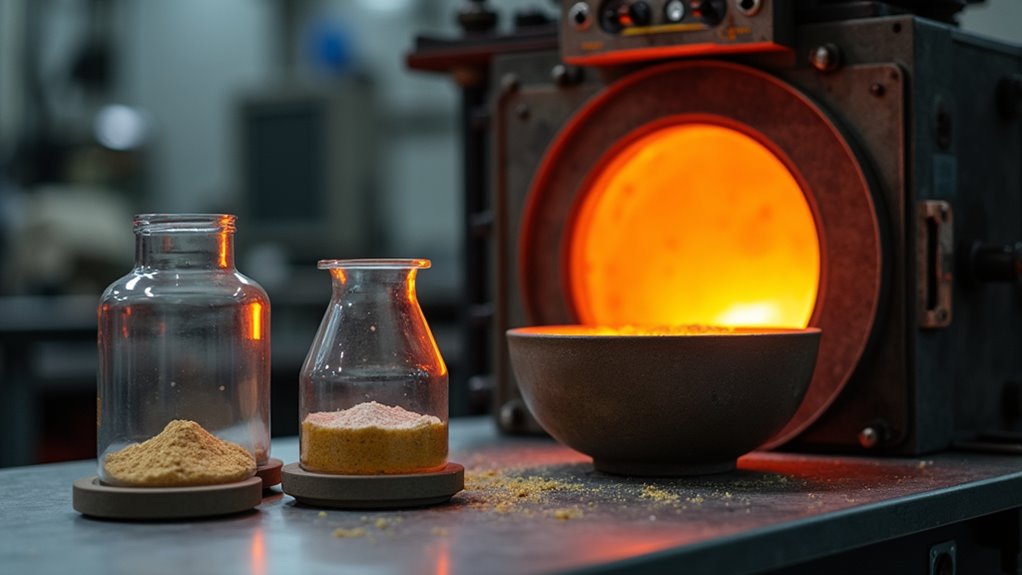
Plus, it’s a water-wasting monster that generates contaminated sludge.
Sure, some mitigation exists, but let’s be real – this ain’t winning any green awards.
How Much Does It Cost to Set up a Wohlwill Refining Facility?
Setting up a Wohlwill refining facility ain’t cheap – we’re talking serious cash here. The bare minimum? Around $19.1 million.
That covers basic equipment ($10M), land ($1M), construction ($5M), machinery ($3M), and environmental compliance ($0.1M).

And that’s just getting started! Operational costs pile on another $900k minimum for licenses, safety systems, tech, training, and marketing.
Want a bigger facility? Double or triple those numbers. Ouch.
Are There Alternative Methods That Can Achieve Similar Gold Purity Levels?
Yeah, there are several methods that can match or even beat Wohlwill’s purity levels.
Electrolysis is the heavy hitter, reaching up to 99.999% purity when done right. Chemical purification‘s pretty impressive too – hit’s 99.9999% with proper technique.

Even the Aqua Regia method gets to 99.99% pure gold.
But here’s the kicker – each method has its own quirks and costs. Some need nasty chemicals, others require precise control.
Pick your poison based on your setup.
What Safety Precautions Are Required When Operating Wohlwill Process Equipment?
Operating Wohlwill equipment isn’t child’s play – this process uses nasty electrolytes and acids that’ll eat through flesh like butter.
Vital safeguards include hardcore ventilation systems, acid-resistant everything (from containers to PPE), and proper electrical grounding.
Workers better suit up in chemical-resistant gear from head to toe. Spill containment‘s essential, and everyone needs emergency response training.
Skip these precautions, and you’re basically running a death trap.
How Long Does the Entire Wohlwill Process Take to Complete?
The complete Wohlwill process isn’t exactly a sprint – it’s more like a gold refining marathon.
The main electrolysis takes 24-36 hours just to dissolve those massive anodes.

Add in cathode removal, melting, and dealing with those pesky platinum metals, and you’re looking at 2-3 days total.
Some facilities, like the Philadelphia Mint, stretch it to a week when processing thousands of ounces.
Not exactly quick and dirty, but hey – perfection takes time.