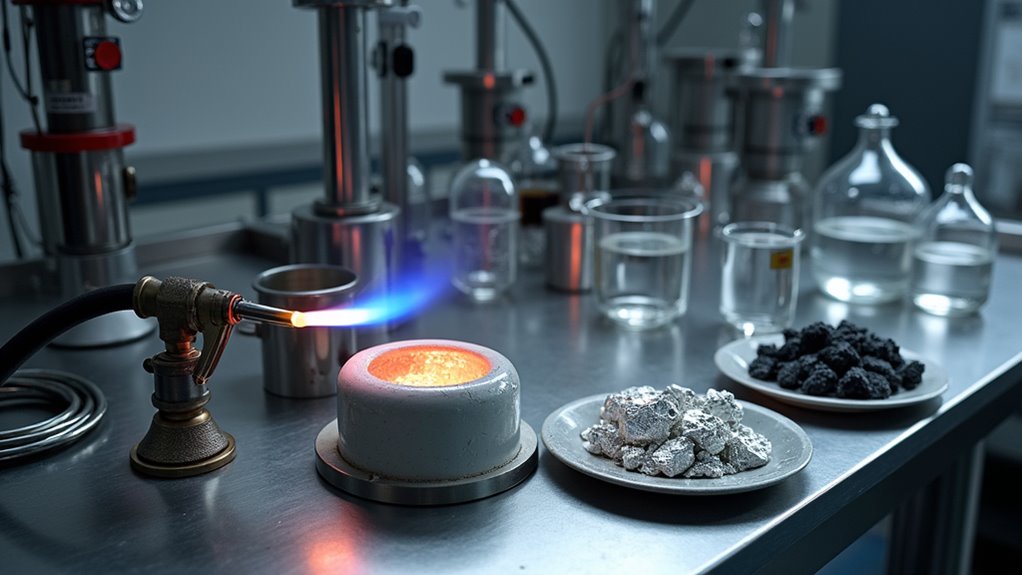
Gold refining ain’t your grandpa’s dirty backroom operation anymore. Modern refiners are ditching those stone-age methods for revolutionary tech like hydrometallurgical processes, nano-sensors, and robot-driven systems that hit 99.99% purity. Biodegradable solvents and organic acids are replacing nasty chemicals, while solar power and smart grids slash energy waste. The industry’s green makeover isn’t just eco-friendly – it’s a profit-driving force that’s turning heads. There’s more to this shiny transformation than meets the eye.
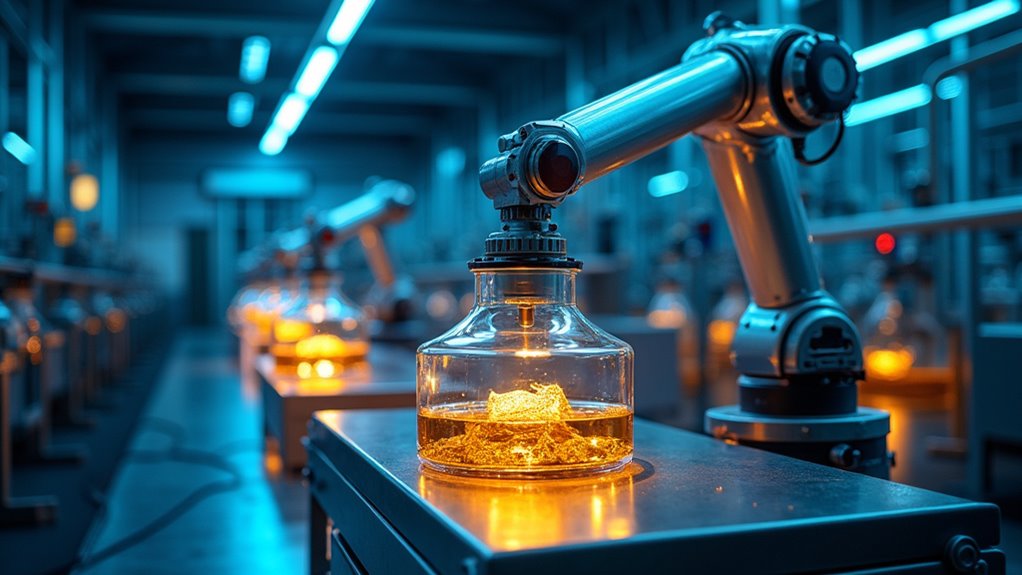
Gold refining is shedding its dirty reputation faster than a snake loses last season’s skin. The industry’s transformation isn’t just a PR stunt – it’s a full-blown technological revolution that’s making traditional methods look like stone-age tools. Gone are the days when refiners had to choose between efficiency and environmental responsibility. Now they can have their gold cake and eat it too.
The gold industry’s green revolution isn’t just for show – it’s rewriting the rulebook on how to refine precious metals responsibly.
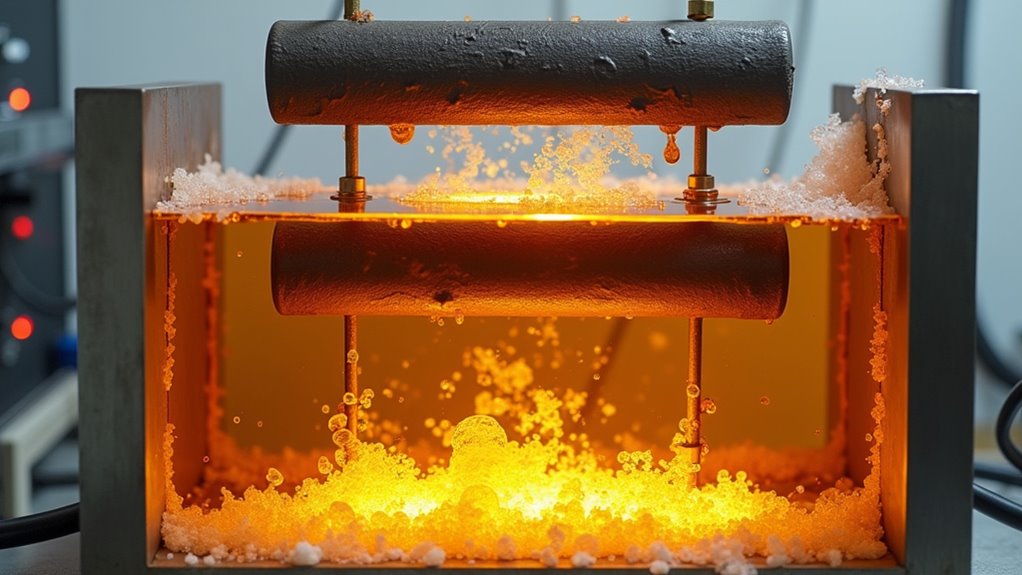
Let’s get real – the old-school refining processes were about as eco-friendly as a coal-powered unicycle. But today’s hydrometallurgical processes and bioleaching techniques are changing the game. These methods aren’t just greener; they’re actually better at getting the job done. And speaking of getting things done, robots are taking over the dirty work – thank goodness. They’re more precise than a surgeon’s hands and never complain about overtime. Modern electrolytic refining systems can achieve unprecedented purity levels reaching 99.99% in gold processing. The latest developments require critical evaluation of competing methodologies to ensure optimal results. Electrolytic gold refining has become a standard for achieving such purity, demonstrating the effectiveness of innovative approaches.
The real game-changer? Chemical alternatives that don’t make Mother Nature cry herself to sleep. Biodegradable solvents and organic acids are replacing the nasty stuff that used to give refiners headaches – literally. Even the notorious cyanide is getting kicked to the curb, with new gold extraction methods that won’t poison everything in sight. It’s about damn time.
But wait, there’s more (and it’s actually worth reading about). Nanotechnology is making waves bigger than a tsunami in a teacup. These tiny particles are doing massive work – increasing processing speeds, improving separation efficiency, and making the whole operation smoother than a freshly polished gold bar. Nano-sensors are keeping watch like helicopter parents at a teenage party, ensuring everything stays on track.
The analytical tech is getting fancy too. Laser-induced breakdown spectroscopy sounds like something from a sci-fi movie, but it’s real and it’s spectacular. XRF spectrometry is giving refiners x-ray vision into their processes, while blockchain technology is making sure nobody’s pulling any funny business with the supply chain. Traceability? Check. Accountability? Double check.
Energy efficiency is the cherry on top of this technological sundae. Solar-powered refining systems are proving that you don’t need to burn the planet to purify its precious metals. Smart grid integration and heat recovery systems are making sure no joule goes to waste. Even the lighting is getting an upgrade – LEDs are replacing those energy-hungry old bulbs.
The future of gold refining isn’t just bright – it’s blindingly brilliant. With zero-emission technology and closed-loop systems becoming the norm, the industry is finally cleaning up its act. And the best part? These innovations aren’t just good for the environment; they’re good for the bottom line too. Who says you can’t make money while saving the planet? The gold refining industry is proving that sometimes, you can have your environmental cake and eat it too – just don’t forget to wash your hands first.
Frequently Asked Questions
How Long Does Modern Gold Refining Typically Take From Start to Finish?
Modern gold refining typically takes 1-3 days, start to finish. That’s it. No fancy bells and whistles needed.
Sure, some refiners brag about faster methods, but let’s get real – rushing purity is stupid. The timeline depends on what you’re starting with and how pure you want it.
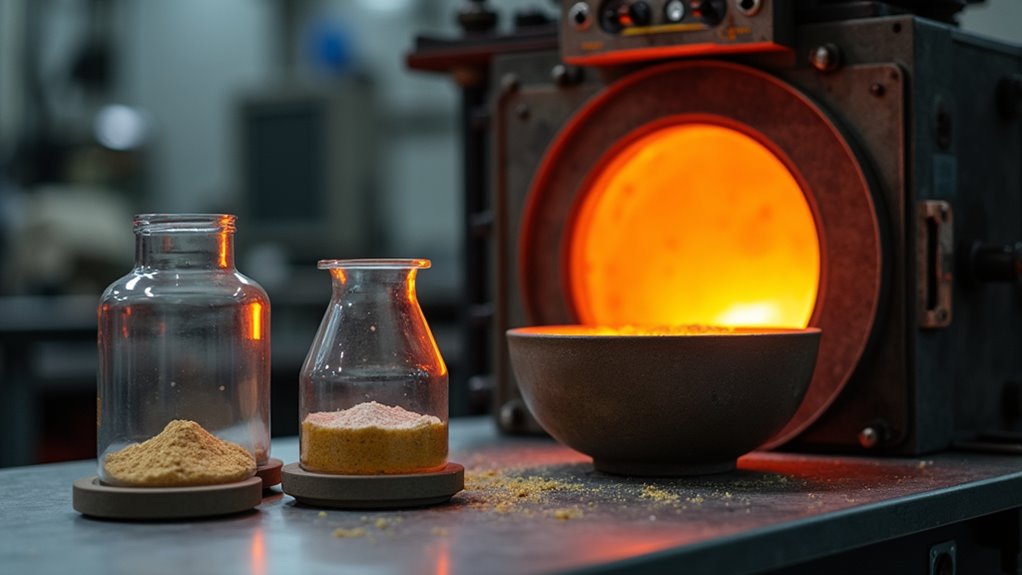
Chemical processing takes hours, electrolysis needs a full day. Want it done right? Deal with the wait. Quality ain’t quick.
What Safety Certifications Are Required to Operate Advanced Gold Refining Equipment?
Operators need multiple certifications – no cutting corners here.
The basics: OHST or CHST for technical operations, plus equipment-specific certs from manufacturers (yeah, they’re control freaks about their fancy toys).
Most facilities demand ISO 45001 compliance too.

But here’s the kicker – cyanide handling certification is non-negotiable for modern refineries.
Miss any of these, and you’re not touching that million-dollar equipment.
Safety first, profits second.
Can Artificial Intelligence Improve the Accuracy of Gold Purity Testing?
Absolutely – AI is revolutionizing gold purity testing and making traditional methods look prehistoric.
The tech combines XRF analysis with machine learning to hit accuracy rates above 99%, while catching fraudsters trying to pass off fake bling. It can analyze up to 20 elements simultaneously and spits out results in real-time.

No more waiting around or relying on someone’s “expert eye” – AI gets it done faster and better than humans ever could.
What Is the Environmental Impact of New Gold Refining Technologies?
Modern gold refining tech is actually cleaning up its act – finally.
Chemical usage is way down thanks to eco-friendly alternatives replacing nasty stuff like mercury. Energy efficiency‘s getting a major boost from renewable sources and smarter equipment.
Even waste management‘s stepped up, with better recycling and filtration systems catching harmful byproducts.

Sure, mining still ain’t perfect, but these new technologies are making it less of an environmental nightmare than before.
How Much Does It Cost to Set up a Modern Gold Refining Facility?
Setting up a modern gold refining facility isn’t cheap – we’re talking serious cash here.
Initial investment typically ranges from $1M for basic operations to a whopping $200M+ for large-scale facilities.
The biggest costs? Crushing equipment (30-50% of total capital), with jaw crushers running $500K-2M and cone crushers hitting $1M-5M.
Plus, you’ll need land, utilities, and skilled workers.
Let’s face it – this ain’t a backyard operation.