Lab nerds obsess over perfect purity while industrial refiners chase that sweet mass production. Small-scale setups use fancy electrolytic methods to hit insane purity levels, but good luck scaling those up – heat distribution goes haywire and reactions get weird at kilo-scale. Meanwhile, industrial operations crush it with 99.9% purity using robots and automation to keep costs down. Both approaches have their place, but the real gold lies in understanding how they complement eachother.

While amateur gold refiners might romanticize their small-scale setups, the reality is that lab-scale and industrial gold refining are two entirely different beasts.
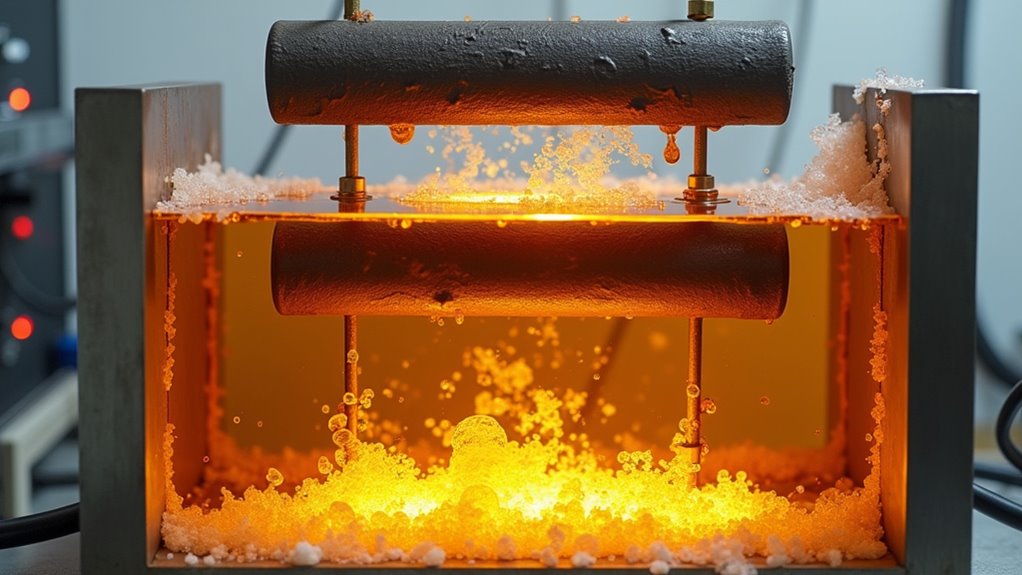
Let’s be honest – those cute little crucibles and beakers might give you more control, but they’re not exactly paying the bills. Lab-scale operations are basically the artisanal coffee shops of the refining world – precise, pretty, and priced through the roof. Batch processing in laboratories allows for quick adaptations to refining methods, often utilizing electrolytic refining techniques to achieve high purity levels.
Industrial refiners don’t have time for that precious perfectionism. They’re running massive furnaces and electrolytic cells that could eat your entire lab setup for breakfast. Sure, they might sacrifice some of that obsessive control, but they’re cranking out pure gold by the kilogram while lab techs are still adjusting their safety goggles. The industrial boys have figured out how to hit 99.9% purity consistently, which ain’t too shabby considering the volumes they’re pushing through. The fire assay method remains the gold standard for accuracy, proven to be 20 times more precise than alternative techniques.
Here’s where it gets interesting – scaling up isn’t just about buying bigger equipment. Those lab processes that work like a charm with a few grams? They throw absolute tantrums when you try to scale them up. Suddenly you’re dealing with heat distribution issues, reaction kinetics gone wild, and enough regulatory paperwork to wallpaper a mansion. The environmental concerns alone could give an EPA inspector nightmares.
The economics tell the real story though. Lab-scale refining is like buying designer clothes – you’re paying premium prices for that boutique experience. Meanwhile, industrial operations are the wholesale kings, driving down costs through automation and sheer volume. They’ve got robots doing jobs that lab technicians would spend hours fussing over. It’s not exactly romantic, but neither is trying to explain to investors why your gold costs twice as much to refine.
Industrial refiners are the Walmart of gold processing – massive scale, lower costs, and robots doing the heavy lifting while labs play boutique jewelry store.
Both methods have their place, though. Labs are where the magic of innovation happens. They’re the testing grounds where new processes are born and old ones get optimized. Without lab-scale experimentation, industrial refiners would still be using techniques from the 1800s. The flexibility to tweak procedures and run rapid experiments is worth its weight in, well, gold.
The truth is, these two approaches need each other. Industrial scale operations provide the economic backbone that keeps the industry alive, while lab-scale refiners push the boundaries of what’s possible. They’re like siblings who constantly bicker but ultimately make each other better.
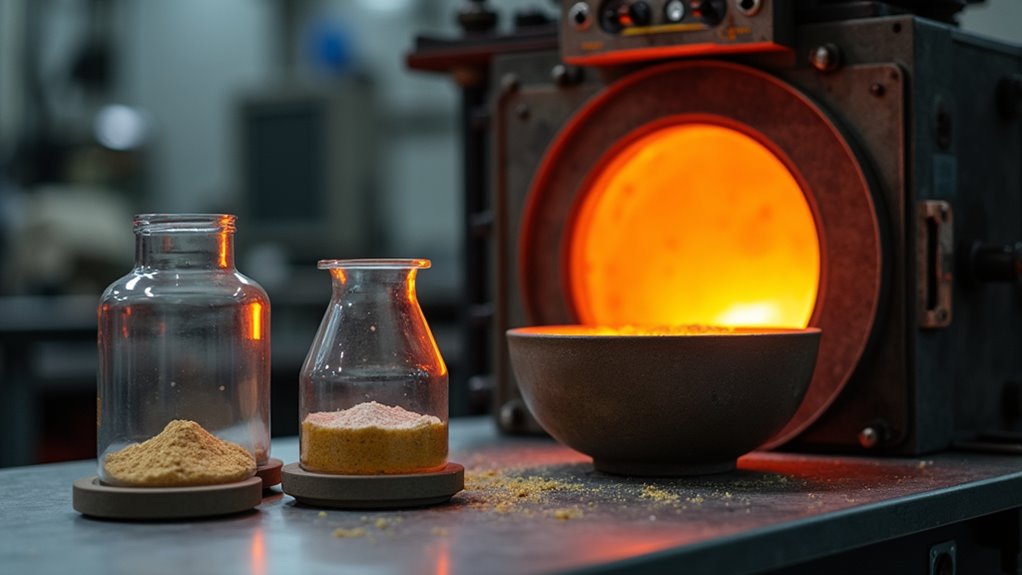
Just don’t expect them to admit it – especially not those industrial types who think anything smaller than a metric ton is just playing around. But hey, at least the lab folks can console themselves with their slightly higher purity rates while the industry giants count their considerably larger profits.
Frequently Asked Questions
How Does Environmental Regulation Impact Different Scales of Gold Refining Operations?
Environmental regulations hit gold refiners differently based on size.
Big players easily absorb compliance costs, investing in fancy tech and expertise.
Meanwhile, small operations get crushed – they’re scrambling to meet the same strict rules without deep pockets.

Sure, everyone faces tough standards on waste, emissions, and water.
But let’s be real – these regs basically hand the industry to large corps on a silver… er, gold platter.
What Are the Safety Certifications Required for Industrial Gold Refining Facilities?
Industrial gold refineries can’t just wing it – they need serious safety creds. ISO 45001 is the big one, covering workplace safety management.
OSHA compliance isn’t optional either. Refiners must have Refinery Safety Tech certificates and specialized training for hazmat handling.

The Responsible Jewellery Council certification adds another layer.
Let’s be real – without these certifications, facilities are basically ticking time bombs waiting to explode. No shortcuts allowed in this game.
Can Lab-Scale Refining Methods Be Scaled up for Commercial Production?
Lab-scale refining methods can’t simply be copy-pasted to industrial production – that’s a rookie mistake.
While the basic chemistry stays the same, scaling up is a whole different beast. You’ll need major equipment upgrades, process modifications, and serious cash.

Plus, what works perfectly in a controlled lab environment might fail spectacularly when dealing with tons of material.
Smart companies run extensive pilot tests before going full-scale. No shortcuts here.
How Do Insurance Requirements Differ Between Lab and Industrial Refining?
Insurance requirements are worlds apart between lab and industrial refining.
Lab operations typically get basic coverage under $100k – chump change compared to industrial facilities needing multi-million dollar policies.
Why? Simple math: bigger operations = bigger risks.
Industrial refiners face stricter security protocols, more intense documentation requirements, and specialized risk assessments.
Labs can get by with standard shipping insurance, while industrial facilities need extensive coverage that’s way more complex.
What Career Paths Exist in Laboratory Versus Industrial Gold Refining?
Lab rats and factory floor kings – two totally different beasts in gold refining.
Lab careers focus on the nerdy stuff: assayers analyzing purity, metallurgists cooking up new techniques, and techs running endless tests.
Meanwhile, industrial paths are all about the big show: refinery managers running the circus, process engineers optimizing everything, and operators keeping those massive machines humming.
One’s microscopes and beakers, the other’s industrial-strength everything.