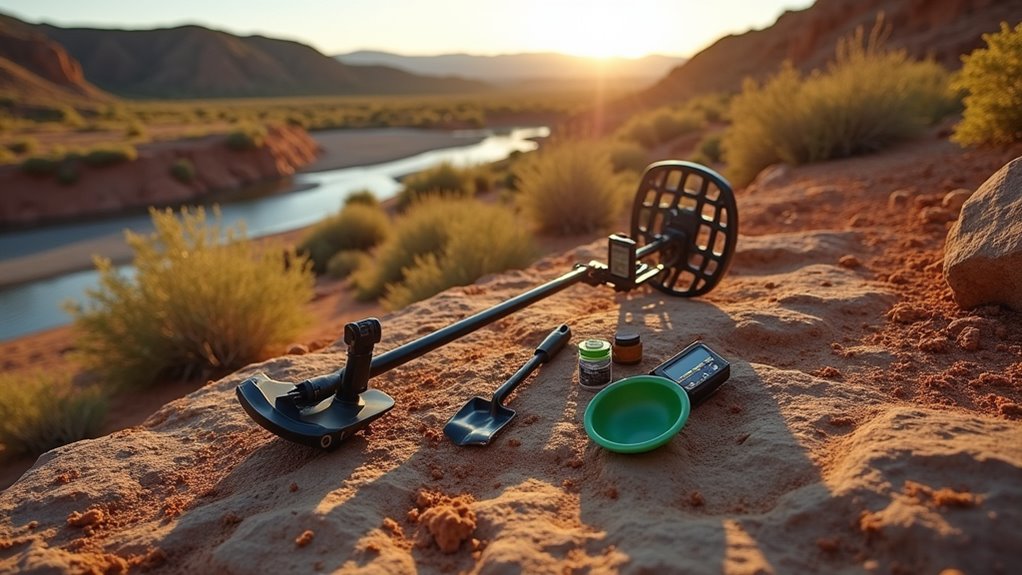
Gold miners have relied on two nasty poisons to extract their precious metal: mercury and cyanide.
Mercury’s been leaving toxic trails since the 1800s, with millions of pounds dumped into waterways like Nevada’s Carson River. Cyanide came along in the 60s as the “cleaner” option – what a joke. While it’s more efficient, pulling up to 97% of gold from ore, both chemicals have wreaked environmental havoc.
There’s plenty more dirt to uncover about these toxic extractors.

Mining gold is a dirty business, and the industry’s longstanding love affair with cyanide and mercury proves it. For well over a century, these two toxic nasties have been the go-to methods for separating precious metal from worthless rock, leaving behind a legacy of environmental devastation that’ll make your head spin.

Let’s talk mercury first – the old-school favourite since the mid-1800s. This silvery demon binds with gold in equal parts to form an amalgam, which is then heated to vaporise the mercury and leave the gold behind. Sounds simple enough, about 15 million pounds of mercury ended up in Nevada’s Carson River from the Comstock mills alone.
The inefficient process resulted in the loss of up to 3 million ounces of gold. That’s a whopping amount of poison that’s still causing grief today, mate.
That silvery devil mercury might extract gold like a charm, but it’s left toxic fingerprints across landscapes for generations to come.
Then there’s cyanide, the new kid on the block that the U.S. Bureau of Mines championed in the 1960s. Sure, it’s bloody efficient – dissolving up to 97% of gold from crushed ore – but at what cost? Whether it’s sprayed over massive ore piles in heap leaching or mixed in tanks, this stuff is about as friendly as a brown snake in your boots.
Recent studies show that gold extraction decreases significantly when temperatures rise from 20°C to 50°C during the process. When it escapes into the environment, and it does (billions of gallons since the 1970s), it’s a proper disaster for humans and wildlife alike. In response to these issues, the industry is exploring eco-friendly practices that can reduce pollution and improve waste management.

The environmental impacts are enough to make you sick – literally. Both chemicals persist in groundwater and travel far from their source. Mercury’s particularly nasty, building up in the food chain and getting more toxic as it goes.
Meanwhile, cyanide breaks down in sunlight but leaves behind toxic byproducts that contaminate aquifers. It’s a lose-lose situation that keeps on giving.
The industry’s not completely thick – they’re trying to sort it out. There’s some promising alternatives like thiosulphate and that fancy CSIRO process that doesn’t use either poison. Some clever cookies are even using old tyres to remove mercury from process water.
But here’s the rub: small-scale miners keep using mercury because it’s cheap and simple, while big operations stick to cyanide despite the risks.

Governments are finally getting their act together with tighter regulations. Mercury’s copped the boot in some places, and cyanide use is under increasing scrutiny worldwide. But let’s be real – we’re still dealing with the consequences of decades of poisoning our waterways.
The industry might bang on about proper pH control and safety measures, but when you’re playing with chemicals that can kill with one wrong move, maybe it’s time to admit there’s got to be a better way.
Frequently Asked Questions
What Alternatives Exist to Replace Cyanide and Mercury in Gold Processing?
Plenty of safer options exist to ditch those nasty chemicals. Thiosulphate leaching‘s the frontrunner – it’s just as effective but won’t kill ya.
The cyanide-glycine process is another decent alternative, recovering around 80% of gold. Eco-Goldex uses potassium ferricyanide and actually works better than the toxic stuff.

Plus there’s old-school methods like panning, sluicing, and shaking tables that don’t need any chemicals at all.
How Long Does Cyanide Remain Active in Soil After Gold Processing?
Here’s the hard truth about cyanide’s stubbornness in soil – it’s not a simple story.
Sure, free cyanide breaks down within days under ideal conditions, but that’s not the whole picture. Some forms stick around like unwanted houseguests.
Metal-cyanide complexes can lurk for 25+ years, while contaminated groundwater keeps causing drama for decades.

Environmental factors like pH and temperature play havoc with degradation rates.
Basically, it’s complicated and often worse than mining companies admit.
Can Gold Processed With Mercury Be Distinguished From Other Extraction Methods?
Yeah, spotting mercury-processed gold isn’t rocket science. The stuff’s usually duller than its clean cousins and has this telltale porous look under a microscope.
Lab nerds can nail it down with fancy X-ray tests that show mercury traces up to 0.5% – way higher than gold extracted properly.
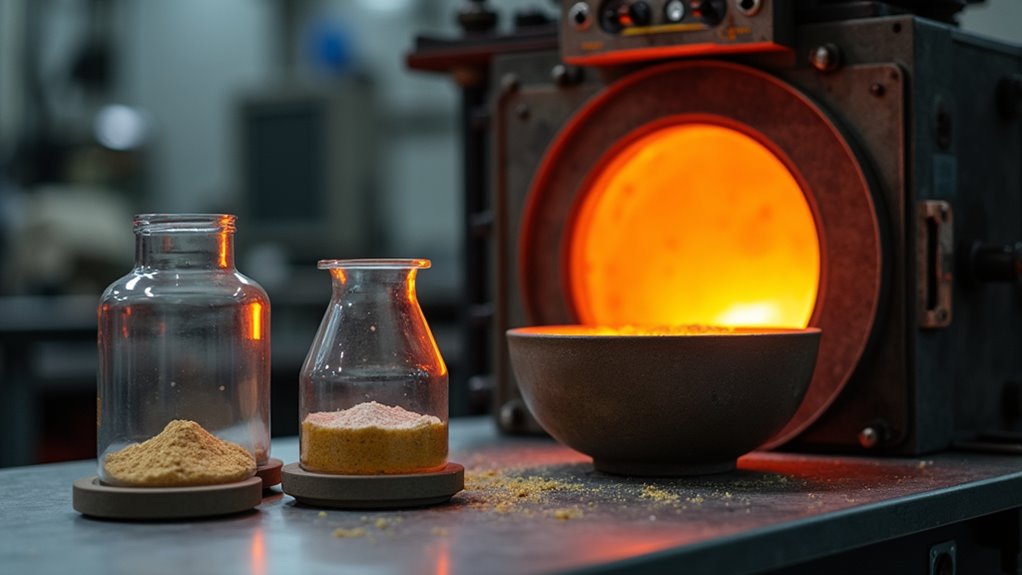
Plus, the environmental footprint‘s a dead giveaway – if there’s mercury in the soil and water nearby, you’ve probably got your answer.
What Safety Equipment Is Required When Handling Cyanide in Gold Processing?
Working with cyanide ain’t a joke – this stuff kills fast. Essential safety gear includes full-face respirators, chemical-resistant suits and gloves, plus rubber boots.
But personal gear’s just the start. You need proper ventilation, HCN detectors everywhere, emergency showers, and antidote kits ready to go.
Smart operations also use pH monitors and automatic shutoffs. Skip any of this, and you’re basically playing Russian roulette with your life.
How Do Different Countries Regulate Cyanide and Mercury Use in Mining?
Different countries handle mining chemicals like it’s the wild west. The Minamata Convention got 50+ nations to promise mercury reduction, but enforcement’s patchy at best.
Philippines went hard – total mercury ban in 2012. Meanwhile, most rely on voluntary codes for cyanide.
Let’s be real – without teeth in these regulations, dodgy operators keep doing whatever they want. Money talks, environmental protection walks. Classic bureaucratic half-measures at work.