Placer gold isn’t rocket science – it’s just Mother Nature’s way of doing the heavy lifting.
When gold-bearing rock erodes, the dense yellow stuff gets washed downstream and settles in predictable spots like river bends and waterfall bases. Smart prospectors follow the black sand and garnets, using everything from basic pans to fancy sluice boxes. While you probably won’t strike it rich, there’s still plenty of sparkly bits waiting in creek beds and ancient beaches.
Time to grab a pan and test your luck.

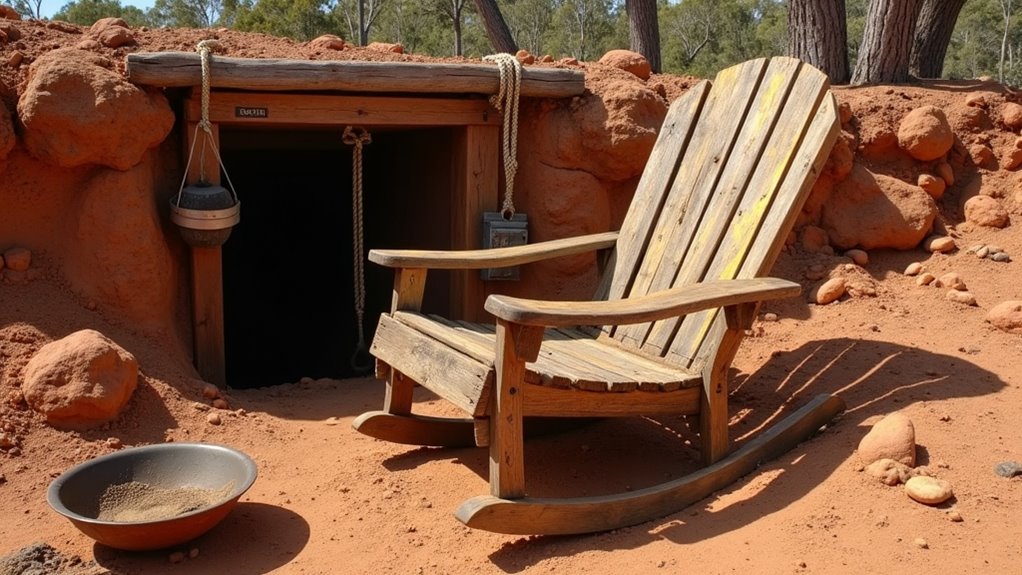
Gold is nature’s most persistent show-off. It glints and gleams its way through geological time, laughing at other minerals as they crumble and fade. While most rocks give up and weather away, gold just keeps on trucking, moving from its source rock through various geological processes until it settles somewhere new. That’s placer gold for ya – the ultimate geological drifter. The best way to get started is through sniping and prying techniques in promising locations.

What makes placer gold so bloody special is its ridiculous density. This stuff is heavier than your average rock by a long shot, which means when water, wind, or glaciers move it around, it tends to sink and collect in predictable places. Think of it like nature’s own game of pinball, with gold bouncing around until it finds the perfect pocket to call home.
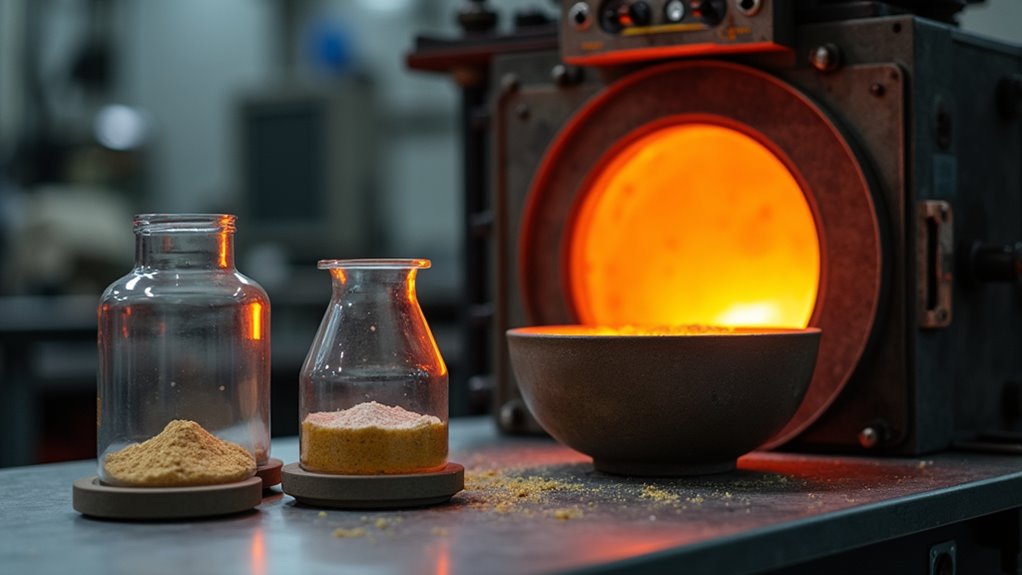
The most productive deposits are found in creek and riverbar placers. The process of gold ore processing reveals how these deposits are refined into pure gold.
You’ll typically find the yellow troublemaker hanging out with its mates – black sand (that’s magnetite and other iron oxides), garnets, and chunks of quartz. These minerals are like gold’s entourage, following it around and helping prospectors figure out where the good stuff might be hiding.
The gold itself ranges from tiny specks that’ll drive you mental trying to collect, to chunky nuggets that’ll make your heart skip a beat.

The best spots to look for placer gold are pretty straightforward if you know what you’re doing. River bends are prime real estate – especially the inside curves where the water slows down and drops its heavy cargo. Waterfalls are another hot spot; gold gets trapped at the base where the water crashes down. Ancient beach terraces can be goldmines too, literally, where waves once concentrated the precious metal over millions of years.
Getting the stuff out of the ground isn’t exactly rocket science, but it ain’t exactly easy either. Some folks still swear by the trusty gold pan, while others go all-in with sluice boxes or dredges. In dry areas, you might see people dry washing, which is basically using air instead of water to separate the gold. And then there’s hydraulic mining, which is just a fancy way of saying “blast the hillside with water and hope for the best.”
Throughout history, placer gold has been responsible for some of humanity’s biggest tantrums – we call them gold rushes. These discoveries have sent people into absolute frenzies, abandoning their jobs and families to chase the dream of striking it rich. The irony is that while everyone’s busy looking for placer deposits, these often lead prospectors to discover the motherload – the original source of the gold itself.
Let’s be honest – finding placer gold today isn’t going to make you a millionaire overnight. But it’s still a significant contributor to global gold production, and more importantly, it’s probly the only chance us regular folks have of finding gold without needing a mining corporation’s budget.
Frequently Asked Questions
What Equipment Do I Need to Start Gold Panning?
Let’s cut through the BS – you don’t need fancy gear to start gold panning.

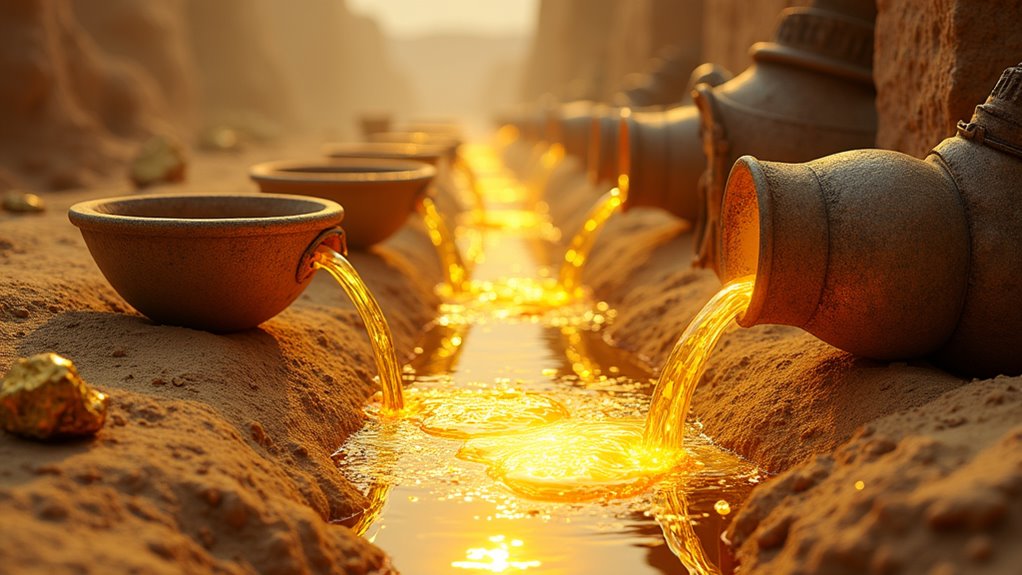
Grab a proper gold pan (14-15 inches), a basic shovel, and classifier sieve to sort material.
Chuck in a snuffer bottle for collecting those tiny bits and a bucket for hauling dirt.
That’s ya bare bones setup right there.
Some rookies go overboard with kit they don’t need.
Start simple, learn the basics, then worry bout the fancy stuff later.
Can I Legally Keep Gold I Find on Public Land?
Yes, but it’s not that simple, mate. The legality depends entirely on where you’re digging.
Federal lands? Generally sweet – small amounts are yours to keep under “casual use” rules.
State lands? That’s where it gets messy. Each state’s got their own weird rules. California’s chill with stream gold, but Oregon’s a total buzzkill – they won’t let you keep anything.

Private land? Better get permission or you’re nicking someone else’s treasure.
How Much Can I Earn From Placer Gold Mining?
Let’s get real – placer mining earnings are all over the map. Some miners barely cover their petrol costs, while others strike it rich.
Recent data shows Alaskan placer miners making anywhere from pocket change to serious dough, with most falling somewhere in between.
Sure, gold’s at record highs ($3,000/oz in 2025), but don’t quit ur day job just yet.
Success depends on location, equipment, experience and pure dumb luck. It’s a gamble, mate – just like any mining venture.
Are Special Permits Required for Gold Prospecting?
Yep, permits are definitely required for gold prospecting in most places – that’s just how it is.
The government wants their piece of the action. Public lands need state permits, private property needs written permission (obvs), and some areas are completely off-limits like National Parks.
Though a few states let casual panners off the hook, most recreational prospectors need proper paperwork.
Don’t risk it mate – getting caught prospecting illegally ain’t worth the hassle.
What Time of Year Is Best for Placer Gold Mining?
Fall is hands-down the sweet spot for placer gold mining. Water levels drop, exposing more riverbed real estate without spring’s crazy flooding or summer’s tourist circus.
Plus, the weather’s actually bearable – no heat exhaustion or frozen fingers to deal with.
Spring’s a close second though – fresh snowmelt stirs things up nicely.
But honestly, any season can work if you’re smart about it. Just gotta adapt your technique to Mother Nature’s mood swings.