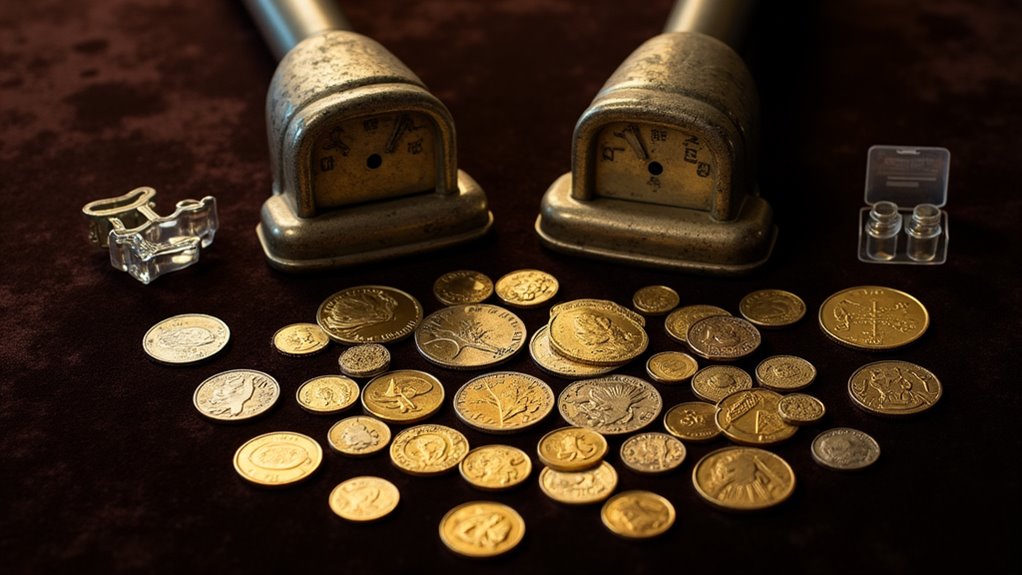
Gold dominated ancient religious art as humanity’s bridge to the divine. The gleaming metal adorned Egyptian pharaohs’ death masks, symbolizing their transformation into immortal beings, while Byzantine churches dazzled worshippers with golden mosaics that captured sacred light. Mesoamerican cultures linked gold to sun deities, and medieval Christian artisans gilded everything from altarpieces to saints’ halos. This precious metal’s universial appeal transcends time – and there’s way more to this glittering story.

Since time immemorial, gold has dazzled humanity with its divine shimmer, transforming religious art across ancient civilizations into something far beyond mere decoration. From the sun-drenched temples of ancient Egypt to the dim-lit Byzantine churches, gold served as the ultimate bridge between the earthly and divine domains, capturing humanity’s eternal quest for spiritual transcendence.
The Ancient Egyptians went absolutely bonkers for gold in their religious expressions. They believed the precious metal literally embodied the flesh of their gods – especially Ra, the sun deity who blazed across the sky in golden splendor. Tutankhamun’s iconic death mask wasn’t just about flexing royal wealth; it represented the pharaoh’s transformation into an immortal being. Every glinting surface in Egyptian tombs served as a cosmic insurance policy for the afterlife, reflecting the ethical gold mining practices that ensure sustainable sourcing of this precious metal. The significance of gold in their culture also underscores its role as a store of value, similar to how it functions in central bank reserves.
Byzantine artists took gold to spectacular new heights, quite literally. Their church interiors exploded with golden mosaics that seemed to capture divine light itself. When candlelight danced across these surfaces, the effect was absolutely ethereal – worshippers found themselves immersed in what felt like heaven on Earth. The gold backgrounds of Christian icons weren’t just fancy decorating; they created otherworldly spaces where saints could properly commune with the faithful.

Ancient American civilizations had their own fascinating relationship with the yellow metal. In both Mesoamerica and the Andes, gold was intrinsically linked to the sun deity and supernatural power. Religious leaders decked themselves out in golden ornaments and masks that transformed them into living conduits of divine authority. These weren’t just pretty trinkets – they were powerful tools for connecting with the supernatural domain.
Medieval Christian artisans mastered the art of using gold to elevate the sacred. They gilded everything from altar pieces to gospel books, creating radiant halos around holy figures that seemed to emit actual divine light. The techniques they developed were seriously impressive – from applying whisper-thin gold leaf to crafting intricate filigree work that adorned reliquaries housing saints’ remains.
What’s particularly fascinating is how gold’s religious symbolism transcended cultural boundaries. Whether in Egypt, Byzantium, the Americas, or medieval Europe, gold consistently represented divine light, immortality, and spiritual purity. The technical skills required to work with it were equally mind-blowing – ancient metalsmiths developed sophisticated methods for gilding, casting, and hammering gold into forms that still captivate us today. In ancient Egypt, gold was often used in royal symbolism, emphasizing the divine right of pharaohs to rule.
Through the clever manipulation of this precious metal, artists created environments where the faithful could glimpse eternity, if only for a moment, in gold’s eternal gleam.
Frequently Asked Questions
How Was Gold Mining Conducted in Ancient Civilizations?
Ancient civilizations were absolute beasts at gold mining!

From basic placer mining (think panning in rivers – so old school) to hardcore underground operations, they killed it.
Romans? Total pros with their hydraulic mining and mercury tricks.
Egyptians and Greeks? Fire-based refining masters.
Everyone used basic tools like picks and pans, but they got creative with water wheels and Archimedes’ screws for those pesky flooded mines.

Pretty impressive stuff!
What Tools Were Used to Craft Religious Gold Artifacts?
Ancient artisans wielded an impressive arsenal of specialized tools to craft religious gold artifacts.
They used hammers and chisels for shaping, while flint blades tackled intricate details. Furnaces heated gold for malleability, and casting molds created complex forms.
Small drills and tweezers helped set gemstones, while polishing stones gave that signature shine.

The real game-changers were their engraving tools – those bad boys turned plain surfaces into masterpieces of religious symbolism.
How Did Ancient Cultures Determine the Purity of Their Gold?
Ancient civilizations relied on three key methods to test their gold’s purity.
Fire assaying, developed by Egyptians around 1500 BCE, used lead and bone ash crucibles to separate impurities.
The touchstone method compared scratch marks against known purity standards – not super precise but got the job done!
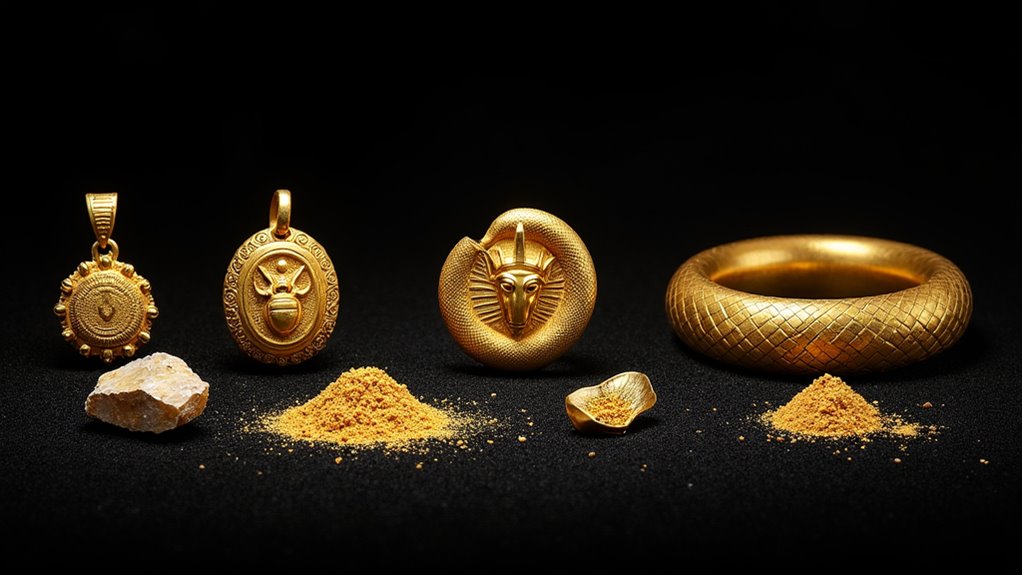
Finally, specific gravity testing, famously used by Archimedes, measured gold’s density by water displacement.
Each method had its quirks, but they kept those ancient gold traders honest.
Which Ancient Civilization First Used Gold in Religious Ceremonies?
The ancient Egyptians were likely the first to incorporate gold into religious ceremonies, dating back to around 3000 BCE. They believed gold was literally the “flesh of the gods” – talk about taking bling seriously!
While Mesopotamian civilizations also used gold in religious contexts around 2500 BCE, Egypt’s established religious gold traditions predate them.

The Pharoahs weren’t messing around – they went all-in on gold’s divine connection, making it central to their eternal life obsession.
How Did Ancient Cultures Protect Their Gold Religious Artifacts From Theft?
Ancient civilizations deployed multiple layers of security to protect their precious gold artifacts.
Physical measures included massive temple walls, armed guards, and hidden chambers with complex locks.
They also relied heavily on supernatural deterrents – cursing objects and spreading tales of divine punishment for thieves.
Cultural taboos and harsh legal penalties created additional barriers.
Some cultures even got crafty, alloying their gold to make it less tempting for would-be thieves.