Gold’s grip on royal power has been unshakeable through the ages. From medieval monarchs flaunting divine right with gilded crowns to Louis XIV’s jaw-dropping Versailles flex, precious metal transformed rulers into walking billboards of authority. Kings and queens weaponized gold in everything – from their dinner forks to palace walls. Even their faces stamped on coins turned currency into a power play. The glitter of aristocratic influence runs deeper than most realize.

Since time immemorial, gold has served as the ultimate flex of power among royalty and aristocracy, transforming ordinary crowns and scepters into dazzling symbols of authority that literally made peasants shield their eyes. From ancient civilizations to modern monarchies, gold has been the go-to element for anyone wanting to scream “I’m kind of a big deal” without saying a word. Kings and queens didn’t just wear their gold – they ate with it, using golden utensils that probably made their morning porridge taste like pure power.
Gold: the OG power move of kings and queens, turning basic accessories into royal flex statements since forever.
The religious angle? Oh, it was genius. Medieval monarchs figured out that nothing says “God’s chosen ruler” quite like a massive gold cross around your neck. Take Charlemagne’s crown – that bad boy wasn’t just a fancy hat, it was a statement piece screaming both “I’m the boss” and “Heaven says so.” Monarchs were basically walking billboards for divine right, and gold was their premium advertising material. The golden symbol of royal power has been an essential aspect of sovereignty throughout history.
But the flex didn’t stop at personal bling. These royal showoffs turned their entire cribs into gold museums. Envision this: you walk into a medieval castle, and BAM – gilded everything. Furniture? Gold. Wall decorations? Gold. Even the dang tapestries had gold thread woven through them because apparently regular fabric wasn’t fancy enough. And let’s not forget those heraldic symbols – family crests that basically said “we’ve been rich and important since forever, peasant.”

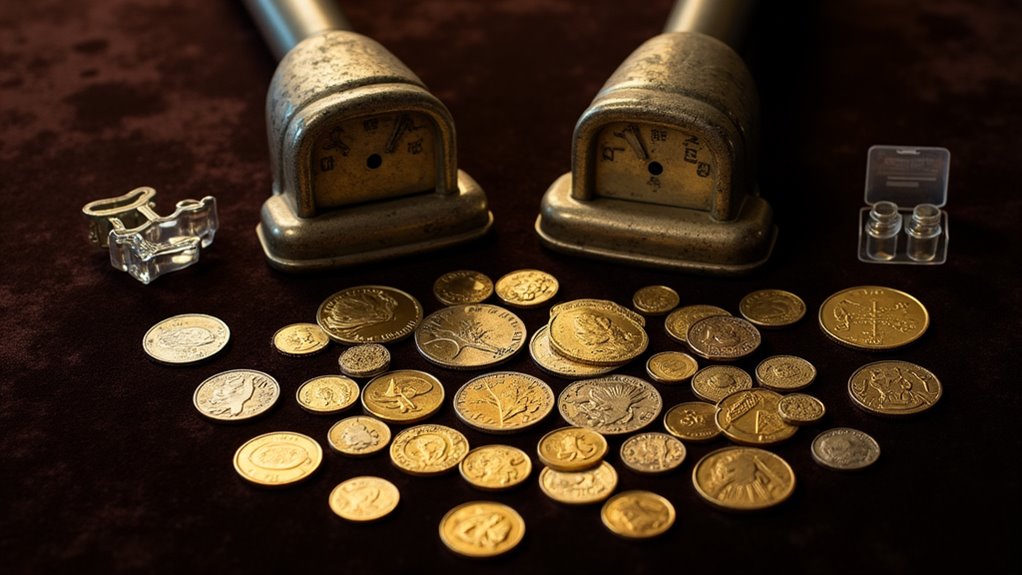
The economic power move was equally brilliant. Monarchs stamped their faces on gold coins like ancient Instagram influencers. The Tower of London wasn’t just a spooky prison – it was the OG mint, cranking out golden currency faster than you can say “royal prerogative.” King Louis XIV took it to another level, using his gold reserves to build Versailles, which was basically the 17th-century equivalent of building a rocket ship to Mars. Gold mining has evolved significantly, with leading gold mining companies focusing on sustainability practices to ensure responsible extraction. This strategic value of gold reserves has continued to shape national economies and influence global politics, reinforcing how gold’s role in monetary policy can enhance financial stability.
Ceremonies were where these rulers really showed off their gold game. Imagine rolling up to your coronation in a literally golden carriage, wearing a golden crown, holding a golden orb and scepter – subtle, right? Ancient American rulers weren’t any different, except they added some extra pizzaz with gold headdresses that would make modern Grammy outfits look understated.
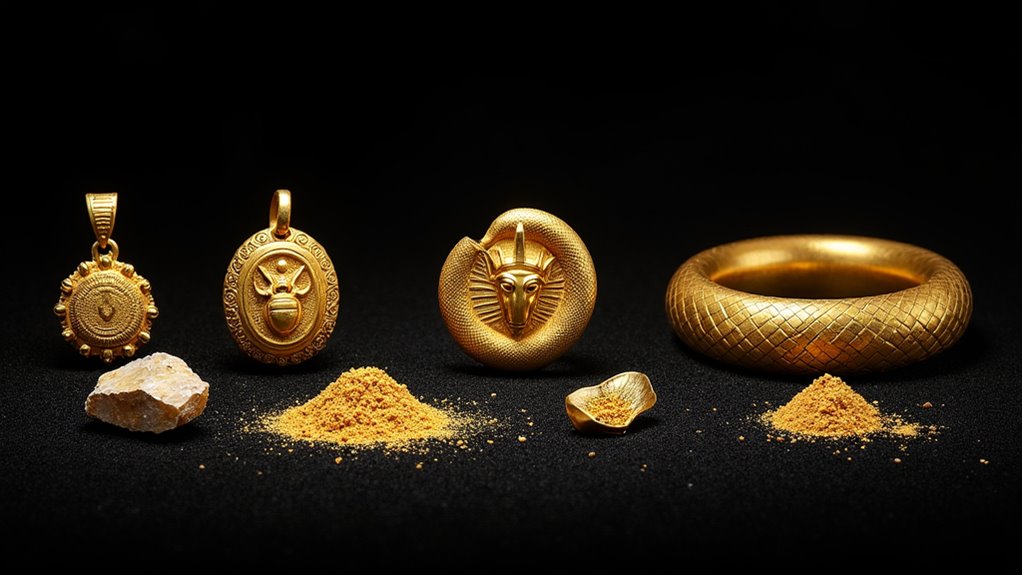
The aristocratic jewelry game was equally intense. Every piece told a story – usually something along the lines of “my family’s been crushing it for generations.” These weren’t just accessories; they were portable power statements that could fund a small kingdom if things went south. And they often did – nothing says “times are tough” like having to melt down great-grandma’s golden tiara to pay the army.
Frequently Asked Questions
How Much Gold Did Ancient Egyptian Pharaohs Personally Own?
While exact figures are tough to nail down (ancient bookkeeping wasn’t exactly Quickbooks!), Egyptian pharaohs owned mind-boggling amounts of gold.
Take Tutankhamun’s tomb – a “minor” king who died young – packed with 1.2 tons of pure gold!

The big-league pharaohs like Ramesses II? We’re talking tens of tons stored in royal treasuries.
Between personal jewelry, ceremonial items, and massive reserves, pharaohs controlled literally ALL of ancient Egypt’s gold wealth.
Which Royal Family Currently Possesses the Largest Gold Reserves?
The House of Saud currently holds the crown for largest royal gold reserves, controlling access to a whopping 323 tonnes through Saudi Arabia’s national reserves.
That’s slightly ahead of Britain’s Royal Family, who’ve got their fingerprints on 310 tonnes via the Bank of England.

While Gulf monarchies probably sit on massive private stashes, their secretive nature makes exact figures impossible to pin down – but Saudi’s definitely the gold king here!
How Was Gold Mining Controlled by Medieval European Monarchs?
Medieval monarchs maintained iron-fisted control over gold mining through an intricate system of royal rights.
They claimed ownership of mineral resources, issued mining permits, and demanded hefty royalties from free miners.
The Crown kept mines under strict oversight, while partnering with monasteries and feudal lords to manage distant operations.

Smart monarchs even invested in water-powered machinery to boost yields – talk about medieval efficiency!
What Ceremonies Required Specific Amounts of Gold in Royal Traditions?
Coronation ceremonies demanded precise amounts of gold, with the sacred ampulla requiring 24-karat gold to hold annointing oils.
Royal weddings traditionally used 22-karat gold rings, while jubilee medals specified 18-karat compositions.
The Golden State Coach consumed nearly 100kg of gold leaf in its construction!
State banquets required specific weights of golden tableware – typically 20-30 pieces weighing at least 2 ounces each for main table settings.
Did Royal Families Trade Gold Between Themselves as Diplomatic Gifts?
Royal families absolutely traded gold as diplomatic gifts – it was basically their go-to power move!
Monarchs would send elaborately crafted gold chains, jewelry, and ceremonial objects to forge alliances and flex their wealth.
James VI of Scotland was particularly fond of gifting gold chains to Danish diplomats, while Queen Victoria and King Rama IV exchanged fancy gold flasks.

These weren’t just presents – they were calculated displays of might that spoke louder than words ever could.