The Desert Fox spiral panning machine packs serious punch in a sub-10 pound package. This portable powerhouse processes up to 70 pounds of material hourly through seven spiral leads, snagging even those frustratingly fine particles that make prospectors pull their hair out. Running on 12V or solar, it’s a desert warrior that puts traditional panning to shame. Quick setup, adjustable settings, and duribility make it worth every penny – though that initial price tag might sting. There’s more gold in these details than meets the eye.

While most prospectors still swear by their trusty gold pans, the Desert Fox spiral panning machine is turning heads faster than a flash of color in black sand. This compact powerhouse, weighing in at under 10 pounds, packs seven spiral leads into a self-contained unit that’s revolutionizing how prospectors tackle their concentrates. The machine’s impressive design allows gold to be picked up seven times per revolution.
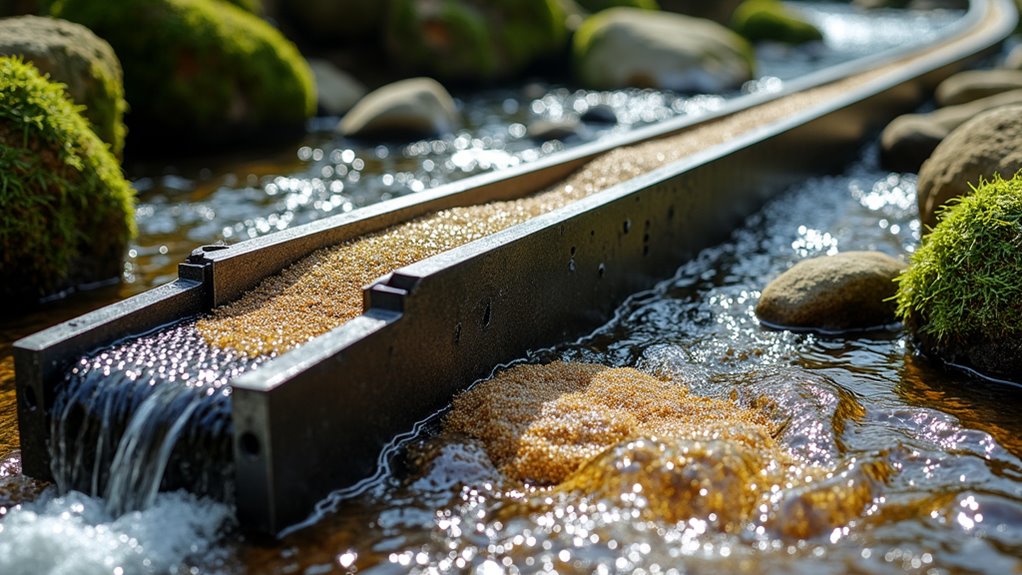
Let’s cut straight to the juicy stuff – this bad boy processes up to 70 pounds of material per hour, which makes traditional panning look like watching paint dry in the Mojave. The unit’s genius lies in its versatility, running on either 12V battery or solar panel, perfect for those remote expeditions where power sources are about as common as swimming pools in Death Valley. The machine operates efficiently on a small 4 amp battery that provides consistent power throughout the day. Additionally, the sluice boxes used in placer mining can complement the Desert Fox’s capabilities for enhanced recovery, allowing users to maximize their gold extraction efforts. In contrast, open pit mining methods can handle larger volumes of material but may not be as efficient for fine gold recovery. Notably, placer mining is often preferred for its effectiveness in extracting gold from alluvial deposits, which can be found in rivers and streams.
The setup’s a breeze, taking just minutes before you’re up and running. What really gets our gold fever rising is the machine’s ability to snag those frustratingly fine gold particles that love to play hide-and-seek with conventional panning methods. The adjustable water flow, speed, and angle settings let you dial in the sweet spot for whatever material you’re processing – though we’ll admit, catching those microscopic pieces might require some trial and error (and patience).
Fine gold can’t hide from this machine’s spiral prowess, though mastering its adjustable settings takes some practice and persistence.

Here’s where it gets interesting – the Desert Fox doubles as both separator and concentrator, making it a versatile workhorse for hard rock and placer operations alike. The storage case transforms into a water tank, which is basically genius for desert prospecting where water’s more precious than the gold itself. The center hole catches your precious finds, depositing them neatly into a catch cup – no more squinting at pan edges wondering if that’s gold or just your imagination playing tricks.
The learning curve isn’t nearly as steep as climbing out of a canyon with a full pack. The included manual and instructional video will have you running material like a pro before you can say “motherlode.”
Sure, the initial investment might make your wallet lighter than a feather, but considering the time saved and increased recovery rates, it’s potentially worth its weight in, well, gold.
Durability-wise, this machine’s built tougher than a desert tortoise’s shell, though the blue pan model’s drive pin might be its Achilles’ heel. Regular maintenance is straightforward – just keep it clean and stored properly, and it’ll serve you longer than your back can handle traditional panning.

For serious hobbyists and small-scale miners, the Desert Fox represents a significant leap forward in portable gold recovery technology, even if it does make your bank account wince at first glance.
Frequently Asked Questions
How Long Does the Desert Fox’s Motor Typically Last Before Needing Replacement?
The Desert Fox’s motor is a beast of reliability, typically running strong for 3-5 years under normal prospecting conditions.
Some lucky miners report their motors humming along for 10+ years – no joke!
But here’s the kicker: proper maintenance is essential.

Regular cleaning, smart operation (no monsoon mining!), and following manufactur’s guidelines can seriously extend motor life.
The 5-year warranty’s nice, but most users never need it.
Can the Desert Fox Be Used in Saltwater Environments?
While the Desert Fox can technically operate in saltwater, it’s like throwing a freshwater fish into the ocean – not ideal.
The unit wasn’t specifically designed for saltwater environments, though its corrosion-resistant materials offer some protection.
Dedicated prospectors can make it work with modifications like corrosion inhibitors and marine-grade grease, but they’ll need religious maintenance routines.
Performance takes a hit too, with reduced gold recovery efficiency in saltwater conditions.
What Is the Minimum Water Pressure Required for Optimal Operation?
The minimum water pressure sweet spot starts at the lowest setting that effectively separates light material from gold.
While exact PSI isn’t specified (classic manufacturer move!), the 450 GPH pump provides enough oomph for most ops.

Users should dial it up from minimum until material flows cleanly – but not so high that fine gold gets blasted away.
The magic happens when pressure, wheel angle, and rotation speed dance together in perfect harmony.
Are Replacement Parts Readily Available for the Desert Fox?
Replacement parts for the Desert Fox are widely available through multiple channels. Authorized dealers like MetalDetector.com stock essential components, while specialized retailers offer everything from battery replacements to spiral pans.
The manufacturer’s five-year warranty covers certain parts, and most repairs require only basic tools. Drive belts, pump seals, and mechanical components can be easily sourced through online retailers or local prospecting shops – no sweat!
Can the Desert Fox Be Modified for Use With Different Sluice Materials?

The Desert Fox’s versatility shines when it comes to sluice modifications. Operators can swap out matting materials – riffle configurations, expanded metal, or miners moss – to match specific recovery needs.
The standard spiral wheel accepts aftermarket alternatives, while DIY enthusiasts sometimes add custom catch systems.
Here’s the kicker: proper material classification still matters, regardless of modifications. Some prospectors even rig up their own trommel attachments for enhanced pre-screening.