Gold crowns and regalia have dazzled as the ultimate flex of royal power for millennia. From Louis XIV’s golden swagger to Britain’s iconic St. Edward’s Crown, these precious artifacts symbolize divine right to rule and cultural identity. Today, these priceless treasures chill in ultra-secure spots like the Tower of London and Munich’s Residenz Treasury. Ancient or modern, royal gold still commands attention at state events – and there’s way more to this glittering story of power and prestige.

Glitter and grandeur – the timeless allure of gold has made it the undisputed king of royal regalia throughout history. From ancient Egypt to modern-day Britain, monarchs have draped themselves in this precious metal to assert their divine right to rule and showcase their earthly might. Its brilliance, durability, and rarity have made it the perfect medium for crafting symbols of sovereign power that have withstood the test of time. In many pre-Columbian cultures, gold was not only a symbol of wealth but also held sacred significance in religious contexts, often used in ritualistic practices to honor deities.
From pharaohs to parliaments, gold remains the ultimate flex of royal power and divine authority.
The use of gold in royal crowns spans millennia, with some of the most spectacular examples emerging during the reign of Louis XIV, who knew a thing or two about flexing royal muscle. The Sun King’s obsession with gold wasn’t just about looking fancy – it was a calculated display of French dominance that had Europe shook. Fast forward to today, and the British Crown Jewels still dazzle visitors with pieces like St. Edward’s Crown, which rocks enough gold to make Fort Knox jealous. Gold has also historically served as a hedge against economic uncertainty, further enhancing its value as a royal symbol.
But it’s not just about the yellow stuff – these royal masterpieces are basically jewelry boxes on steroids. Take the Koh-i-Noor diamond chillin’ in the Queen Mother’s Crown, or the massive sapphires and rubies that make Bavaria’s crown jewels look like they’re ready for the most extra party ever. These gems aren’t just pretty rocks – they’re power moves set in gold, telling stories of conquest, alliances, and straight-up showing off.

Modern monarchies take their golden treasures seriously (like, Fort Knox-level seriously). The Tower of London keeps those Crown Jewels under lock and key, while Munich’s Residenz Treasury treats Bavaria’s bling like it’s protecting the nuclear codes. Climate control, security systems that’d make James Bond sweat – these places aren’t messing around when it comes to preserving their golden heritage.
When it comes to actually using these precious pieces, coronations are basically the Super Bowl of gold flexing. Every monarchy’s got their own special swagger – the Brits go hard with their 12th-century gold anointing spoon, while the Czechs keep it real with their 22-carat St. Wenceslas Crown. Each piece tells a different story: the UK’s all about those historical vibes and epic diamonds, Bavaria’s living that gemstone life with a dash of Napoleon drama, and Denmark’s got their old-school versus new-school gold game going strong.
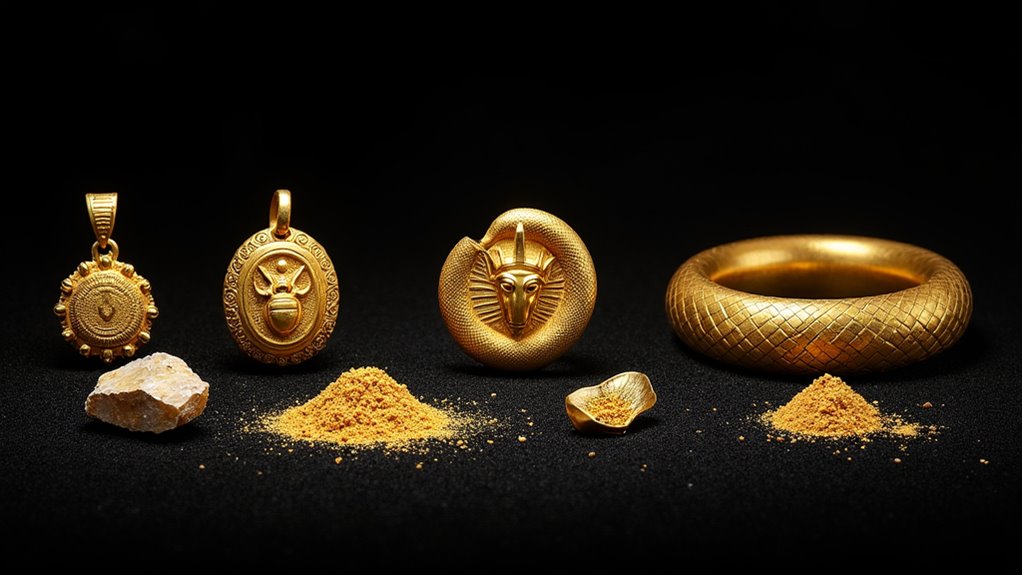
These golden treasures aren’t just fancy hats and sticks – they’re political powerhouses that’ve been influencing diplomatic relations since forever. They’re like a country’s ultimate flex, showing off cultural identity, artistic excellence, and straight-up economic muscle. The use of gold in ancient religious art has historically paralleled its significance in royal regalia, highlighting the metal’s enduring connection to power and divinity. Whether they’re chilling in a museum or making an appearance at state events, these golden masterpieces continue to captivate audiences and remind us why gold will always be royalty’s best friend.
Frequently Asked Questions
How Much Do Royal Crowns Typically Weigh?
Royal crowns pack some serious heft! Most weigh between 0.5-2.23 kg (1.1-4.9 lbs), depending on their bling factor.
The British Imperial State Crown tips the scales at 1.06 kg, while St. Edward’s Crown is a neck-straining 2.23 kg – talk about a heavy head!

Asian and African crowns typically range from 0.6-2.0 kg.
Lighter ceremonial pieces? Those hover under 1 kg – becuz who wants a headache during those endless royal events!
Can Modern Royals Modify or Resize Their Historical Crown Jewels?
Modern royals can modify historical crown jewels, but it’s complicated!
While Danish and British monarchies have traditions of updating pieces, strict regulations govern these changes. Most modifications require approval from cultural authorities and expert craftsmanship.

Some pieces, like coronation regalia, are rarely touched due to their ceremonial significance. Alterations typically focus on practical adjustments – think resizing or re-setting stones – while preserving the piece’s historical essence.
What Security Measures Protect Royal Crowns in Different Countries?
Royal crowns get Fort Knox-level protection these days!
Most monarchies use multi-layered security systems – think bombproof display cases, motion sensors, and AI-powered cameras watching 24/7. Guards with guns patrol nearby while climate-control systems keep those gems comfy.
When crowns aren’t dazzling visitors, they’re chillin’ in underground vaults with biometric locks.

Even getting near these baubles requires passing through more security checks than an airport!
How Often Are Royal Crowns Professionally Cleaned and Maintained?
Royal crowns typically get their spa treatment every 1-5 years – talk about high maintenance!
Professional conservators engage delicately with kid gloves, using specialized cleaning agents and soft brushes to pamper these blinged-out beauties.
Crowns that strut their stuff at public events need more frequent touch-ups (can’t have a dull crown under those harsh ceremony lights!).
The whole process is painstakingly slow – one wrong move and you’ve got a priceless oopsie on your hands.
Which Royal Family Owns the Most Valuable Collection of Crown Jewels?
The British Royal Family takes the crown (pun intended!) for most valuable collection. Their stash, worth several billion$, includes the legendary Imperial State Crown with its massive Cullinan II diamond.
While Russia’s collection is jaw-dropping and Persia’s jewels are insane, nothing beats the complete set at the Tower of London.
It’s literally the most extensive collection of working regalia that’s still used in ceremonys today. Take that, other monarchs!