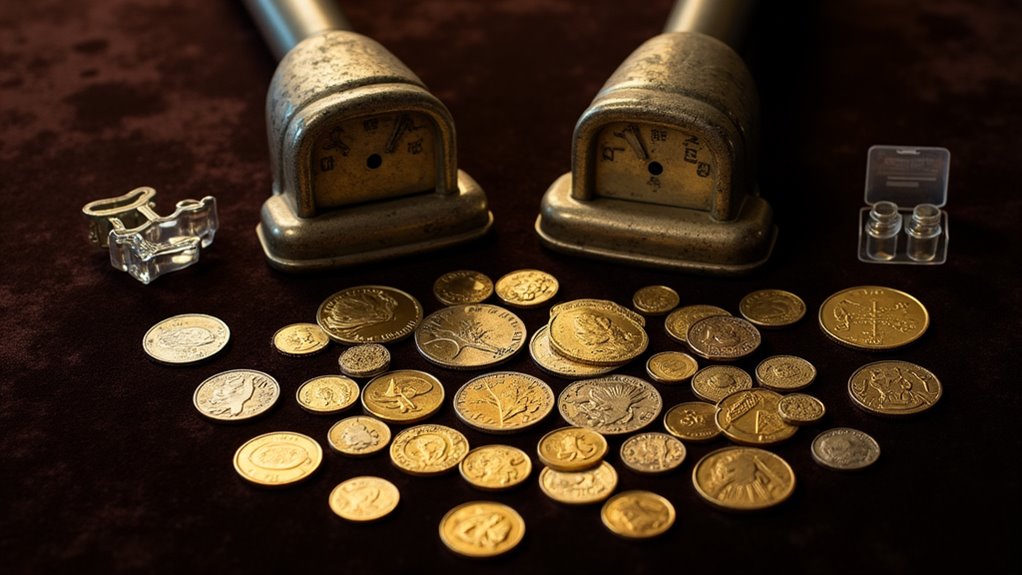
Gold’s portrayal in cinema transcends mere precious metal status, serving as a potent metaphor for humanity’s darkest impulses. From “The Treasure of Sierra Madre” to “Goldfinger,” filmmakers leverage specific lighting techniqes to capture its legendary lustre, transforming gold into a character itself. The allure drives epic quests and complex heists, while themes of greed and moral corruption persistently captivate audiences. Gold’s symbolic power in storytelling reveals deeper truths about our collective relationship with wealth and power.

A glittering thread of golden obsession has woven itself through the fabric of cinema since the earliest days of filmmaking. From classic treasure-hunting adventures to sophisticated heist narratives, gold has remained an enduring symbol that transcends mere monetary value, representing humanity’s deepest desires and moral struggles on the silver screen.
Throughout film history, gold has served as both a literal plot device and a powerful metaphor for human nature‘s darker impulses. Movies like “The Treasure of Sierra Madre” masterfully demonstrate how the pursuit of gold can corrupt even the most principled individuals, while action-packed franchises like “Pirates of the Caribbean” leverage gold’s allure to drive sweeping adventurous narratives that captivate audiences worldwide.
The visual representation of gold in cinema has evolved into a sophisticated language of its own. Cinematographers often employ specific lighting techniques to capture gold’s legendary lustre, creating scenes where the metal seems to possess an almost supernatural quality. This technical mastery helps reinforce gold’s status as something beyond mere currency – it becomes a character in its own rite, influencing decisions and shaping destinies. The ethical implications of sourcing gold can also add layers of complexity to these cinematic narratives, highlighting the importance of conflict-free sourcing in the gold industry. Furthermore, open pit mining has been a prevalent method for extracting gold, shaping the industry in significant ways, and making its portrayal in film resonate with audiences facing economic uncertainties.
Through masterful lighting and technique, cinematographers transform gold into a living presence, elevating it beyond mere metal to mythical heights.

Modern films continue to explore humanity’s complex relationship with gold through fresh perspectives. “Three Kings” merged gold’s traditional symbolism with contemporary political commentary, while “The Italian Job” reimagined the classic heist formula with cutting-edge technology and elaborate schemes.
Even James Bond’s iconic confrontation with Auric Goldfinger remains a defining moment in pop culture’s portrayal of gold-obsessed villainy.
The influence of these cinematic portrayals extends far beyond entertainment, shaping public perceptions of gold’s cultural significance. Films have contributed to the enduring mystique of treasure hunting and helped maintain gold’s status as the ultimate symbol of wealth and power. This representation has even impacted real-world attitudes towards gold investment and collection, though not always in the most realistic ways.
Character development in gold-centered narratives often follows predictable yet compelling patterns – the corrupting influence of greed, the redemptive power of sacrifice, and the moral tests that accompany sudden wealth. Yet filmmakers continue finding innovative ways to explore these themes, as seen in recent releases like “Blood and Gold” which contextualizes gold’s value against the backdrop of societal collapse.

The persistence of gold as a cinematic device speaks to its unique ability to represent both material wealth and metaphysical value. Whether driving complex heists, inspiring epic quests, or serving as a mirror for human nature, gold continues to shine brightly in the collective imagination of filmmakers and audiences alike. In times of economic uncertainty, its allure as a safe haven asset remains a powerful undercurrent in storytelling.
Its symbolic power shows no signs of diminishing, ensuring its place as a cornerstone of dramatic storytelling for generations to come.
Frequently Asked Questions
What Is the Most Expensive Gold Prop Ever Used in a Movie?
The Maltese Falcon statue from the 1941 noir classic takes the crown as cinema’s priciest golden prop, fetching a whopping $4.085 million at auction!
While technically black-painted bronze, this legendary bird soared past other gold-themed movie props like Goldfinger’s Rolls or the Man with the Golden Gun’s $113,400 weapon.

Talk about solid returns – this falcon’s value definately proved more precious than actual gold!
Who knew noir could be so lucrative?
How Do Filmmakers Create Realistic-Looking Gold Bars for Movie Scenes?
Filmmakers employ several crafty techniques to create convincing gold bars for the silver screen.
Most commonly, they’ll use tungsten as a base material (it’s nearly as heavy as real gold!) and coat it with gold-colored paint or leaf.

For less hands-on scenes, they’ll opt for painted foam or resin.
The real magic happens in post-production, where precise lighting and camera angles make even the simplest props gleam like Fort Knox’s finest.
Which Actor Has Appeared in the Most Gold-Related Films?
Sean Connery takes the crown as Hollywood’s ultimate gold-obsessed actor!
While Eastwood struck it rich in Westerns and McConaughey made modern gold fever look slick, nobody touched Connery’s golden legacy.
His iconic role in Goldfinger literally painted the blueprint for gold in cinema (and painted him gold too!).
Plus, The Man Who Would Be King sealed his status as the go-to guy for glittering narratives.
Game over, folks.
Do Movies Accurately Represent the Actual Weight of Gold Bars?
Movies consistently misrepresent gold’s true weight, portraying 400-oz bars (27.4 lbs each!) as easily manageable props.
Watch any heist film – actors toss these babies around like they’re made of styrofoam!

In reality, carrying multiple bars would have most people struggling to walk, let alone run from security guards.
Hollywood’s gotten it wrong for decades, making gold seem way more portable than its dense nature allows.
Have Any Films Used Real Gold Instead of Props During Production?
Real gold rarely makes it onto film sets – the logistics and costs just don’t add up.
While some documentaries about mining have captured actual gold, mainstream movies stick to props and movie magic.
Even classics like “Goldfinger” and “The Treasure of Sierra Madre” relied on fakery.
Modern filmmaking uses a combo of gold-colored materials, CGI, and clever lighting to create that golden gleam we all recognize.
Real gold’s just too risky n’ expensive!