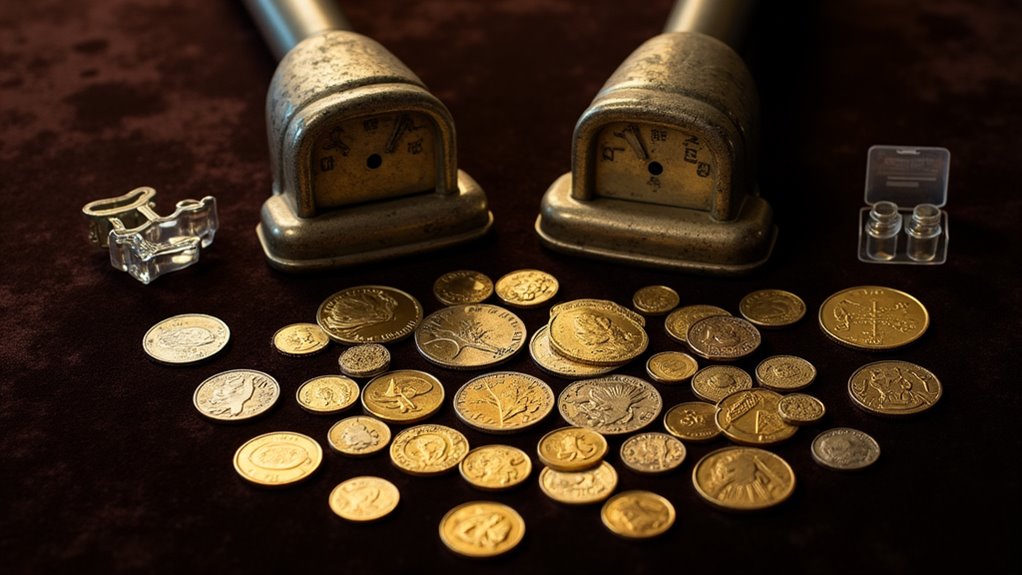
A California couple hit the mother lode in 2013 when they stumbled upon seven rusty cans filled with 1,427 gold coins during a routine dog walk. The Saddle Ridge Hoard, worth over $10 million, contained pristine Double Eagles dating from 1847 to 1894. While romantic theories linked the treasure to outlaws like Jesse James, experts believe it was stashed by a paranoid citizen during post-Gold Rush economic turmoil. The true identity of the mysterious burier remains just one layer of this golden discovery’s allure.

While countless treasure hunters dream of striking gold, a Northern California couple literally stumbled upon the mother lode during a routine dog walk in February 2013. The pair, known only as John and Mary, discovered seven rusted cans filled with 1,427 gold coins buried on their private property in the Shasta Cascade region. Talk about hitting the jackpot – these weren’t just any old coins, but a treasure trove worth over $10 million!
The stash, dubbed the Saddle Ridge Hoard, contained coins dating from 1847 to 1894, most of them pristine $20 Double Eagles that’d make any collector’s heart skip a beat. The burial site was marked by peculiar indicators – a tree with a hanging can and an oddly-shaped rock formation nicknamed “Saddle Ridge.” Pretty clever hiding spot, if you ask us.
Nearly 1,500 pristine gold coins, mostly Double Eagles, lay hidden for decades near an unusual tree and distinctive rock formation.
Despite wild theories linking the hoard to infamous outlaws like Jesse James or the notorious 1901 U.S. Mint theft by Walter Dimmick, experts have shot down these romantic notions faster than you can say “fool’s gold.” The more likely (albeit less exciting) explanation? Some paranoid private citizen buried their wealth for safekeeping during the turbulent post-Gold Rush era, when inflation and economic instability were prevalent in the country. Gold reserves during this time fluctuated as nations sought to stabilize their economies, reflecting the strategic importance of gold in times of crisis.

The coins tell a fascinating story of 19th-century American economics, with mint marks from San Francisco (“S”) and Carson City (“CC”) revealing their journey through the Old West. Some pieces were so well-preserved, they looked like they’d been minted yesterday – which, let’s be honest, is pretty mind-blowing considering they spent over a century underground! The allure of ancient gold coins, especially the historical significance they carry, adds to their value for collectors.
After going public in 2014, the discovery sparked a media frenzy and sent collectors into a gold-fever pitch. The lucky finders worked with experts to authenticate their windfall, though Uncle Sam definitely got his cut – those pesky treasure trove taxes ain’t no joke! Many coins found their way to auctions, while others landed in museums and private collections, giving history buffs and numismatists plenty to drool over.
The Saddle Ridge Hoard remains one of America’s most valuable coin discoveries, proving that sometimes the best treasures aren’t found by those obsessively seeking them. While the exact location stays under wraps (sorry, treasure hunters!), the find has become legendary in both collecting circles and popular culture.
It’s sparked renewed interest in historical currency preservation and reminded us all that extraordinary discoveries can happen during the most ordinary moments – even while walking the dog.

The identity of the original owner remains a mystery, but their accidental legacy lives on through these remarkable coins. And somewhere out there, John and Mary are probably still pinching themselves, wondering if that fateful February morning was just a really, really good dream.
Frequently Asked Questions
How Much Did the Couple Spend on Legal Fees to Keep Their Find?
Surprisingly, the lucky couple dodged major legal expenses!
With zero credible ownership challenges and government confirmation that the coins weren’t linked to any historical theft, their legal costs were minimal.
While they had to shell out for tax consultants and numismatic experts like Kagin’s firm, there’s no evidence of hefty legal bills.

The absence of ownership disputes meant they could skip the whole courtroom drama – talk about striking gold twice!
Were Any of the Coins Ever Determined to Be Fake?
Not a single fake coin emerged from the legendary Saddle Ridge stash – how’s that for legit!
PCGS put all 1,427 coins through the authentication wringer and every single one passed with flying colors.
Despite initial skeptisism from some coin buffs (hey, $10 million finds don’t happen everyday), expert analysis crushed any doubts.

The government didn’t even raise an eyebrow, and numismatic pros have basically given it their gold seal of approval.
What Security Measures Were Taken to Protect the Remaining Buried Coins?
The couple took multiple precautions to protect their remaining treasure.
After initial discovery, they reburied the coins under a woodpile in a different spot – talk about next-level paranoia!
They later moved them to an old ice chest for temporary safekeeping before implementing a permanent (and totally secret) storage solution.

They even packed up and left the property to throw off treasure hunters.
Smart move – those gold-crazy fortune seekers can be relentless!
Did the Discovery Lead to Other Treasure Hunters Searching Nearby Properties?
The discovery sparked a gold fever frenzy!
Treasure hunters descended on nearby properties like moths to a flame, armed with metal detectors and dreams of striking it rich.

Local authorities reported numerous trespassing incidents, while property owners battled unwanted prospectors.
Metal detector sales skyrocketed in the region, and online forums buzzed with theories about more buried hoards.
Some enterprising locals even started cashing in by offering guided “treasure tours.”
How Many of the Original Coins Were Donated to Museums?
Despite the buzz around the incredible Saddle Ridge discovery, there’s no verified record of any coins being donated to museums.
Wild, right? While these golden beauties made quite a splash at public viewings and shows, they ultimately went straight to market through Kagin’s Inc.
Most ended up in private collections after Amazon sales.
Seems the finders were more interested in turning their buried treasure into cold, hard cash than museum displays!