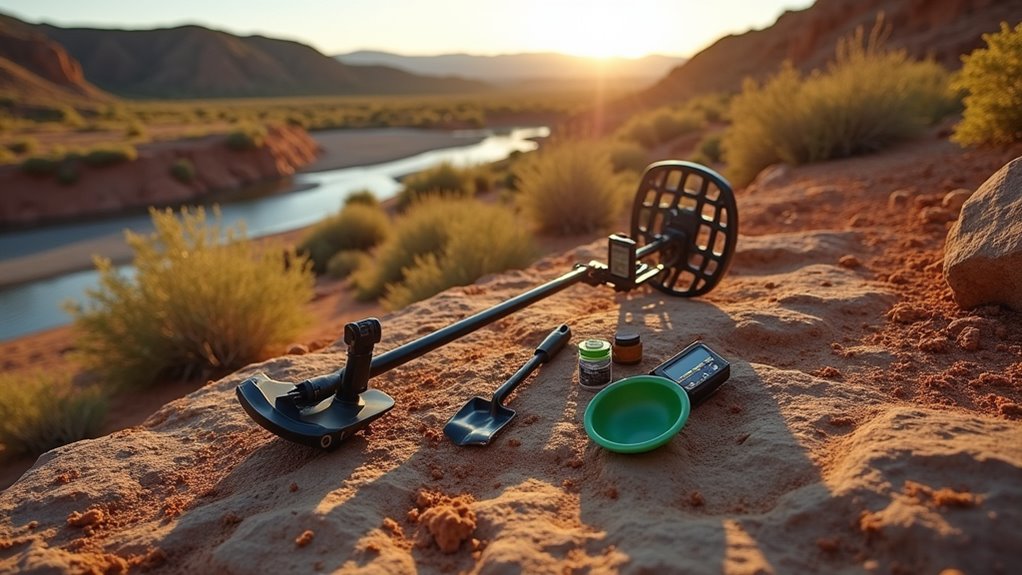
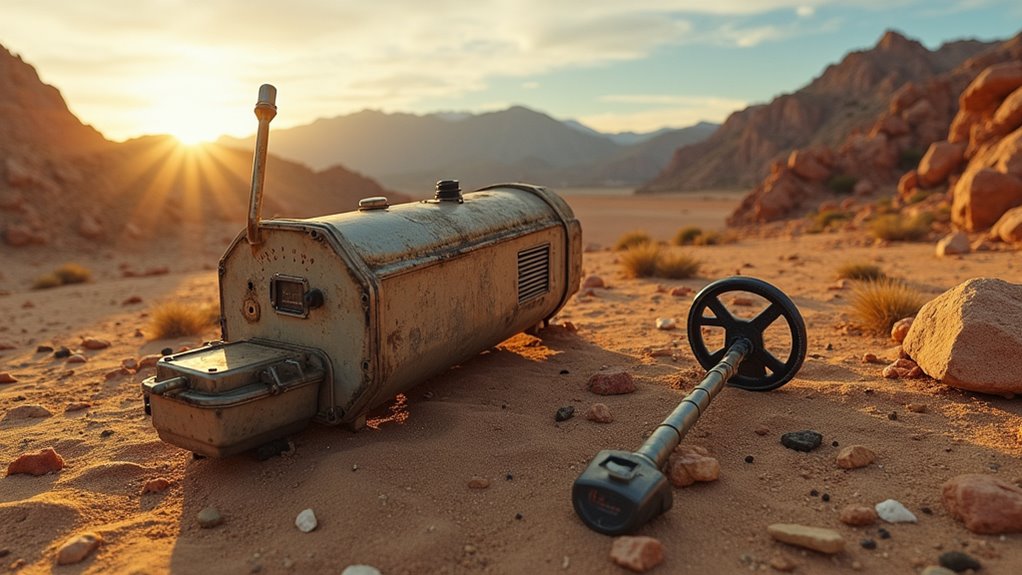
The Gold Rush era exploded with game-changing tech that turned basic pan-and-pray operations into industrial-scale gold factories. Hydraulic mining‘s massive water cannons blasted through dirt 20x faster than traditional methods, while telegraph lines and railways transformed isolated camps into buzzing trade hubs. Corporate titans swooped in by the 1850s, replacing lone prospectors with wage-earning crews. The environmental toll was brutal – but those innovations laid the groundwork for modern mining’s wild ride.

While early gold seekers relied on simple pans and pickaxes, the California Gold Rush released a technological revolution that would forever transform mining – and accidentally reshape an entire continent. The introduction of hydraulic mining in 1853 marked a seismic shift, with massive water cannons blasting entire hillsides into oblivion. These water-powered behemoths extracted a mind-boggling $170 million in gold between 1860 and 1880, processing 20 times more dirt than previous methods. But holy smokes, did it wreck havoc on the environment! The massive migration of fortune seekers transformed California into a bustling hub of activity.
The communication revolution exploded alongside mining innovations. Telegraph wires snaked across the landscape, while steamships and railroads turned backwater ports into bustling metropolises. Much like entrepreneurial Levi Strauss who found success selling supplies to miners, innovative businesses emerged to support the growing mining industry. Instant cities sprouted up like mushrooms after rain, connected by an increasingly sophisticated network of transportation and communication systems that would’ve made previous generations’ heads spin.
The Gold Rush didn’t just dig up precious metals – it birthed an explosive web of telegraphs, ships, and rails that transformed America’s western frontier.
Mining equipment evolved at a breakneck pace. Long toms replaced those clunky old rockers and cradles, while sluice boxes became the go-to for separating that precious yellow stuff from worthless sediment. Air compressors, hydraulic pumps, and hoisting gear let miners dig deeper than ever before – cause apparently, the easy gold wasn’t enough for these ambitious prospectors! Advances in modern gold mining techniques further pushed the boundaries of what was possible in extraction, including automation, which is now revolutionizing the industry. Techniques such as gold scrap recovery are now utilized to maximize the efficiency of gold extraction from waste materials.

The water management systems were absolutely bonkers. We’re talking dams that redirected entire rivers, flumes stretching for miles, and high-pressure accumulators that would make modern engineers jealous. Some operations brought water from up to 150 miles away (yeah, you read that right). The thirst for gold literally reshaped California’s hydrology, leading to long-lasting changes in sustainable practices that are now vital to minimize ecological damage.
By the mid-1850s, the romantic era of the independent prospector was basically toast. Corporate operations took over, bringing massive capital investment and turning free-spirited gold seekers into wage-earning employees. These companies went all-in on technology, using everything from data analytics to proprietary algorithms – pretty cutting-edge stuff for the 19th century!
But here’s the kicker: all this progress came at a devastating cost. Hydraulic mining absolutely destroyed landscapes and choked rivers with debris. Native American populations plummeted by 120,000 during the rush, while agriculture eventually had to step in as California’s economic savior after the 1884 court ruling shut down hydraulic operations.
The multi-ethnic society that emerged on America’s fringe was perhaps the only silver lining to this gold-plated disaster. The technological transformation of the Gold Rush era wasn’t just about finding more efficient ways to extract precious metals – it was a complete reinvention of how humans could reshape their environment.

The legacy of these innovations lives on in modern mining operations, even as we continue to grapple with their environmental consequences. Talk about a double-edged sword, right?
Frequently Asked Questions
How Did Gold Miners Communicate With Their Families Back Home?
Gold miners primarily relied on slow mail service, paying hefty rates of 40 cents per half-ounce to send letters home.
Communication was challenging – letters took 40+ days round-trip between coasts! Some used daguerreotypes to share images, while illiterate miners depended on others to read/write letters.
The Pony Express (1860) cut delivery to 10 days, while newspapers brought news from home.
Sam Brannan’s California Star Express helped connect families between California and Missouri.
What Happened to Abandoned Mining Equipment After the Gold Rush Ended?
Mining equipment met diverse fates after the gold fever died down. Some got locked inside welded-shut mines, while other gear was shipped off to new gold fields globally.
Water systems found new life in hydroelectric projects. But here’s the kicker – lots of abandoned machinery became environmental hazards, leaking contaminants into water sources.
Today, about 140,000 hard-rock mining features dot federal lands, sparking cleanup efforts and preservation projects.
Were There Any Early Patents Filed Specifically for Gold Mining Technology?

Early gold mining patents were surprisingly innovative!
The 1850s saw a flood of groundbreaking tech, like GB1853 no.997 for “Apparatus for Washing Earths containing Gold.”
But the real game-changer? That’d be the cyanide process patents (1887-1910) which sparked fierce courtroom drama.
By 1980, we got clever stuff like US4319994A – a mining pan with riffle slits that let miners peek at their gold catch from underneath.

Pretty slick engineering, if you ask us!
How Did Native Americans React to the New Mining Technologies?
Native Americans largely viewed mining technologies with deep distrust and resistance, as these tools devastated their traditional lands and resources.
While some tribes briefly participated in mining activities to adapt, most reacted with horror as hydraulic mining destroyed rivers they’d relied on for centuries.
Mercury contamination poisoned their water sources, while massive machinery obliterated sacred sites.

The technological “advances” fundamentally weaponized environmental destruction against their way of life.
What Role Did Women Play in Developing Mining Technology Innovations?
Women’s role in mining technology was largely indirect but impactful. While facing industry barriers, they innovated through entrepreneurial ventures that supported mining operations.
Belinda Mulrooney brought electricity to Dawson City, while Jenny Wimmer’s pot was essential in the first California gold test.
Women pioneered photography techniques, developed efficient laundry services, and created supply networks. Their business acumen drove infrastructure improvements and modernized mining communities through hospitality services and supply chain innovations.