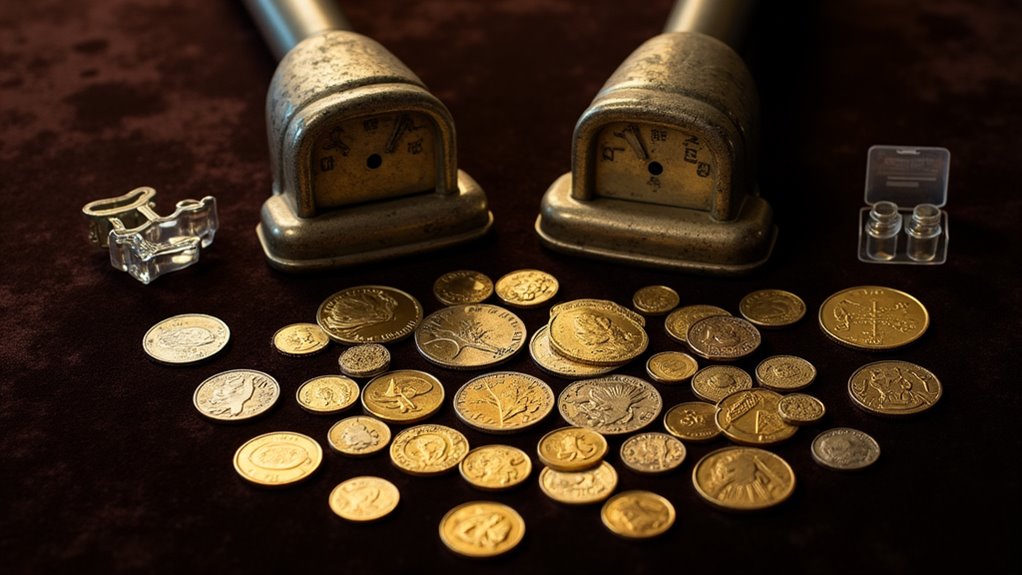
Electrum, nature’s own gold-silver cocktail, packed quite the punch in ancient times. This naturally occurring alloy – sporting anywhere from 20-80% gold content – literally changed the game when the Lydians minted the world’s first standardized coins around 600 BCE. Its unique whitish-yellow hue and superior durability made it a hit in everything from Egyptian pyramidion caps to fancy jewelry. Talk about a metal identity crisis – too precious to be silver, too rebellious to be pure gold. There’s more to this fascinating alloy than meets the eye.

While modern investors obsess over pure gold, the ancient world had a different golden child altogether – electrum, nature’s own gold-silver cocktail that changed the game of currency forever. This naturally occurring alloy, containing 20-80% gold mixed with silver and trace amounts of other metals, wasn’t just another pretty face in the precious metals lineup. Its unique pale to whitish-yellow hue and superior durability made it the MVP of ancient commerce. Notably, electrum‘s properties also made it a valuable asset in strengthening monetary policy for ancient economies, which laid the groundwork for sustainable mining practices that would emerge centuries later.
Let’s talk about how electrum literally changed the money game. Around 600 BCE, the Lydians thought, “Hey, let’s turn this stuff into coins!” And boom – standardized currency was born. These coins, sporting snazzy lion head designs, became the hottest thing since sliced bread in ancient trade. Sure, the varying gold-silver content made pricing a bit of a headache (imagine trying to determine exact value when every coin was slightly different), but that didn’t stop electrum from dominating the ancient economy until about 350 BCE. The use of electrum in coinage set a precedent for gold bullion reserves, influencing how future currencies would be structured and valued.
The Lydians dropped history’s first mixtape – electrum coins that turned ancient commerce into a standardized currency revolution.
The ancient Egyptians weren’t about to let the Lydians have all the fun. They slapped electrum coatings on their pyramidion caps and obelisks because, well, who doesn’t want their monuments to sparkle? The alloy’s reflective properties made it perfect for architectural bling, and its natural durability meant these structures could flex their shine for centuries. Talk about ancient flexing!

But electrum wasn’t just about coins and giant monuments. Ancient jewelry makers were all over this stuff like flies on honey. Its unique color and superior hardness compared to pure gold made it the go-to choice for everything from necklaces to rings. Particularly in Egypt and Mesopotamia, if you weren’t sporting electrum jewelry, were you even really part of the ancient elite?
The impact of electrum on ancient economies can’t be overstated. It fundamentally created the first international currency system, linking civilizations through trade and commerce. Found naturally in deposits across the Americas, Europe, and New Zealand, electrum’s availability meant ancient societies didn’t need complex metallurgical processes to create their currency – nature did the heavy lifting for them. Additionally, its significance can be compared to the importance of gold in central bank reserves, highlighting its enduring value through history.
Fascinating how this natural alloy, named after the Greek word “ēlektron” (which also meant amber), managed to become such a cornerstone of ancient civilization. From its role in establishing standardized currency to its use in creating some of the most impressive monuments and jewelry of the ancient world, electrum proved that sometimes nature’s mix is better than anything humans could dream up.
And while pure gold may rule today’s markets, electrum’s legacy as the OG precious metal continues to shine through history.
Frequently Asked Questions
Can Electrum Gold Be Used in Modern Jewelry Making?
Yes, electrum gold absolutely rocks modern jewelry design! Its pale yellow-to-whitish hue fits perfectly with today’s minimalist vibes, while its natural tarnish resistance makes it a dream for lasting pieces.
Though it’s not your typical mall jewelry material, artisan jewelers are loving its historical swagger and unique properties.

Sure, it’s got some quirks – those pesky inclusions need extra TLC during crafting – but that’s what makes it speshial.
Modern meets ancient? We’re here for it!
What Is the Current Market Value of Ancient Electrum Coins?
Ancient electrum coins pack serious market punch these days!
Early specimens (pre-6th century BC) command thousands, even in rough shape.

Mid-grade pieces from 600-450 BC typically fetch $1,200-$5,000, while those tiny fractionals start around $300 for beaters.
The real stunners? High-grade staters from Lydia can explode past $10k at auction.
But here’s the kicker – prices swing wildly based on gold content, condition, and that ever-elusive historical significance factor.
How Can You Test if an Artifact Contains Electrum?
Testing for electrum in artifacts requires several key methods.
Experts typically start with visual examination, checking for that distinct pale yellow-to-whitish color with silver hints.
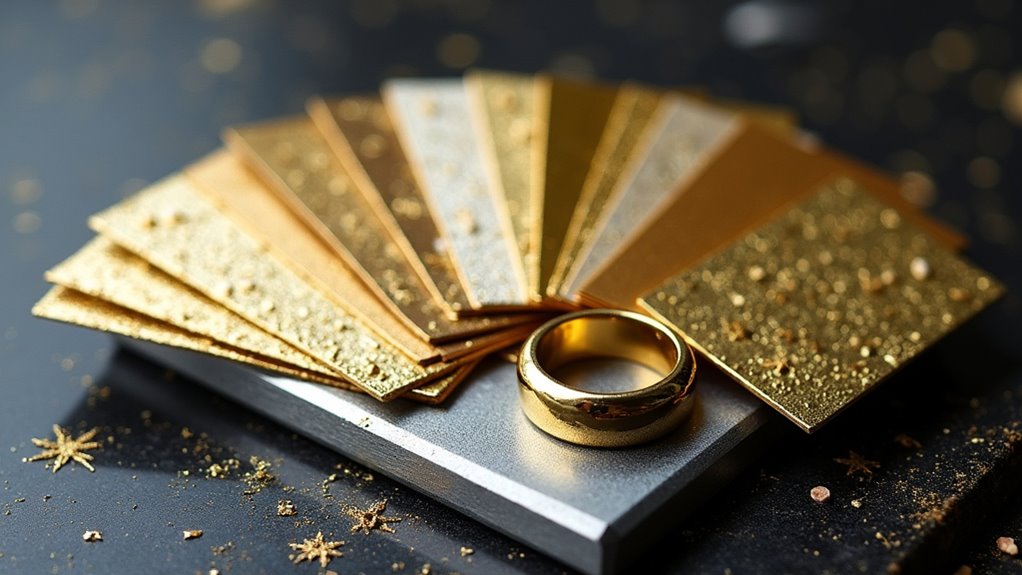
XRF spectroscopy reveals the gold-silver ratio, which should hit between 50-75% gold.
Density tests are essential – electrum’s weight falls right between gold and silver.
Laboratory pros might bust out the big guns: ICP-MS analysis or laser ablation for super-precise results.
Museum curators luv those non-invasive portable XRF scanners!
Are There Any Known Electrum Deposits Still Being Mined Today?

No major commercial mining operations currently target electrum deposits specifically.
While the ancient alloy occasionally turns up as a byproduct in gold-silver mines, it’s more of a geological curiosity than a mining objective. Modern refineries prefer separating pure gold and silver rather than preserving the natural alloy.
The last known significant electrum deposits were historically mined out in places like ancient Lydia (modern-day Turkey), leaving only trace amounts in scattered locations worldwide.
Does Electrum Tarnish or Corrode Differently Than Pure Gold?
Electrum definitely shows more tarnishing tendencies than pure gold – blame it on the silver content!
While pure gold stays practically pristine forever (show-off!), electrum can develop slight discoloration over time, especially in varieties with higher silver percentages.

The corrosion resistance isn’t quite up to pure gold’s standards either, thanks to those pesky trace metals like copper hanging around.
Still, it’s way more resistant than pure silver – so there’s that silver lining!