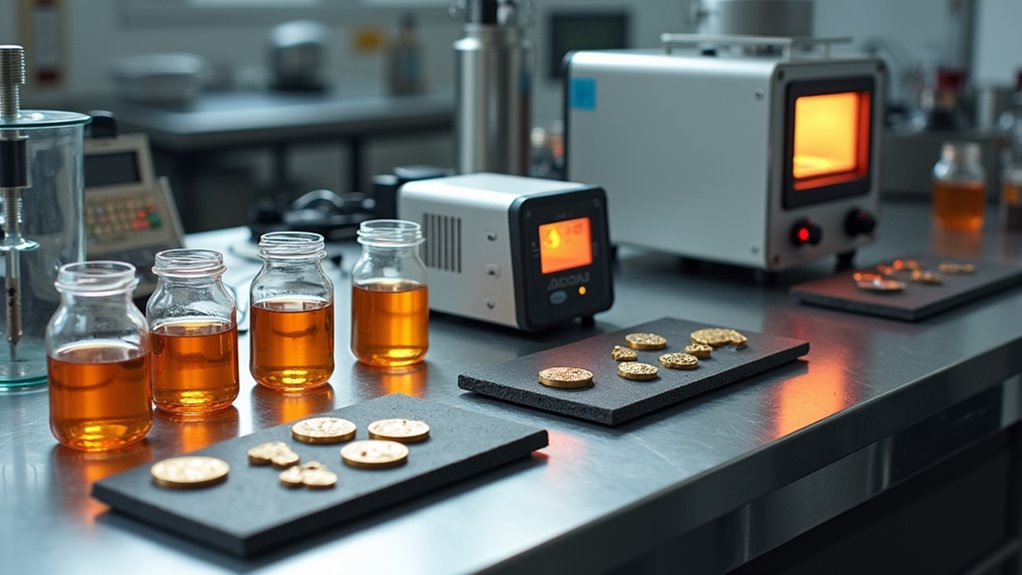
Gold alloying transforms an impractical metal into a versatile powerhouse. Pure gold‘s too soft for daily use, but mix in some copper or nickel? Now we’re talking! The resulting alloys aren’t just tougher – they’re cheaper and prettier too. From rose gold‘s romantic blush to white gold’s icy gleam, these metal marriages create jewelry that’s both durable and affordable. Plus, they’re revolutionizing electronics and aerospace. There’s way more to this golden chemistry than meets the eye.

While pure gold may shimmer with allure, its practical applications are severely limited by its inherent softness. This precious metal, when pure, simply can’t withstand the rigors of daily wear and tear – it scratches, dents, and deforms with alarming ease. That’s why alloying gold with other metals isn’t just smart; it’s absolutely essential for creating pieces that last longer than your average TikTok trend.
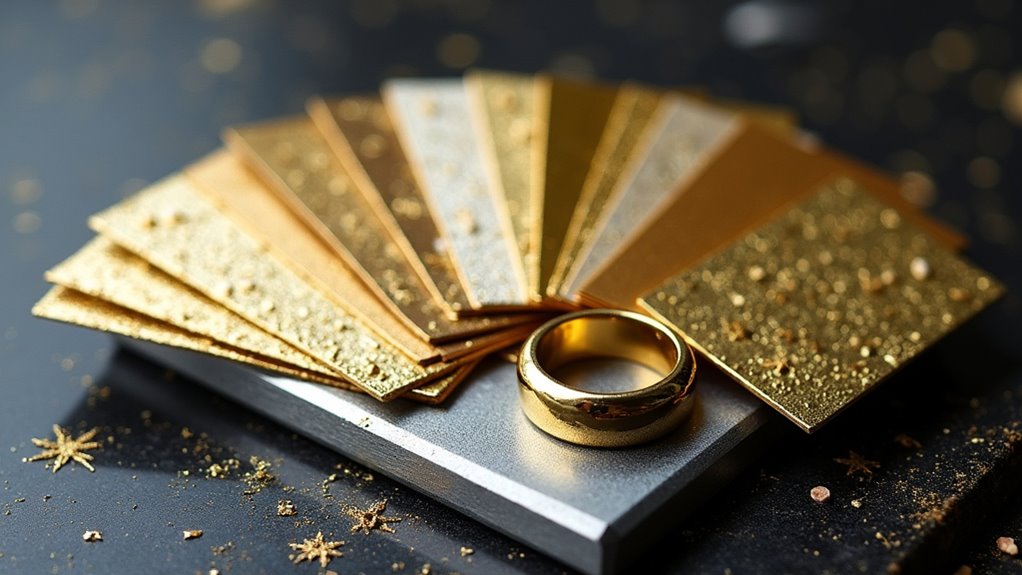
The marriage of gold with other metals creates a fascinating spectrum of possibilities. When copper joins the party, we get that Instagram-worthy rose gold that’s been driving jewelers crazy. Throw in some nickel or palladium, and suddenly you’ve got white gold that looks like it could be platinum’s cousin. White gold alloy metals include nickel and palladium, which enhance durability and appearance. Additionally, the composition of 14k gold reveals that it contains 58.3% gold content, making it both beautiful and durable. And let’s not forget green gold – silver’s contribution to the metallic rainbow. These aren’t just pretty faces; they’re tough cookies that can take a beating. In fact, 24 carat gold pure gold is often too malleable for everyday items, further emphasizing the need for alloys.
The economic genius of alloying gold can’t be ignored (oops, forgot that apostrophe – keeping it real). By mixing in less expensive metals, manufacturers can create pieces that won’t force you to sell your kidney on the black market. Think 14k or 10k gold – still precious, still beautiful, but won’t make your wallet cry itself to sleep. This democratization of gold has turned what was once exclusively royal bling into something the average person can actually afford.

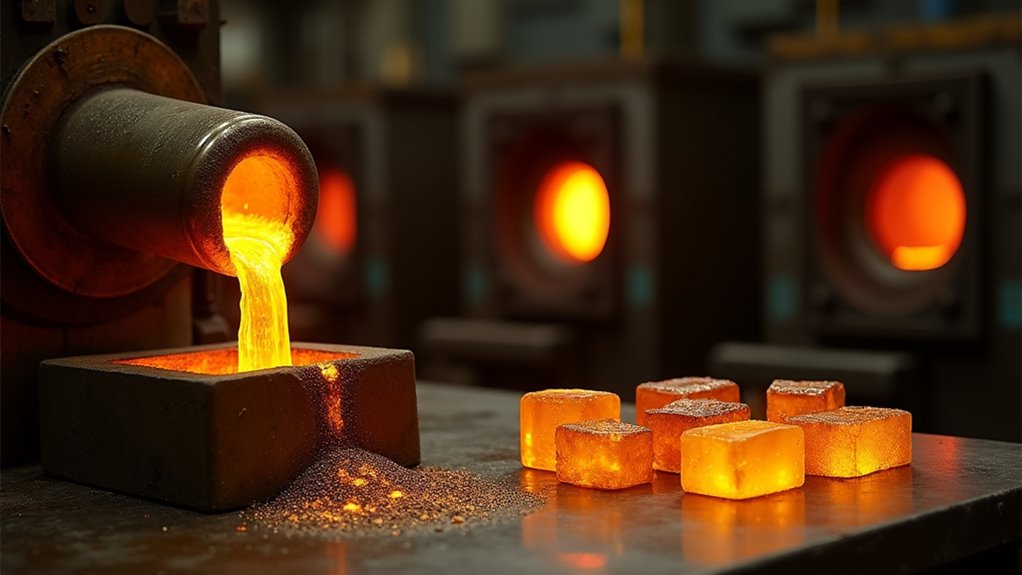
When it comes to manufacturing, alloyed gold is like that overachieving colleague who makes everyone else look bad. It flows better during casting, fills molds like a dream, and creates surfaces smoother than a politician’s promise. Silicon and zinc jump in to reduce porosity, while other metals help create pieces with details finer than your ex’s criticism. The result? Jewelry that’s both stunning and structurally sound.
The industrial applications are where things get really interesting. Electronics manufacturers aren’t just being fancy when they use gold alloys – they’re looking for that sweet spot between conductivity and durability. Aerospace engineers aren’t trying to make their satellites look bougie; they need materials that can handle the harsh conditions of space without turning into space debris. This versatility is showcased in common gold alloys, which are tailored for specific industrial needs.
Perhaps the most remarkable thing about gold alloying is its versatility in manufacturing processes. Whether it’s being drawn into wire thinner than your patience during a Monday morning meeting, or stamped into shapes more complex than your relationship status, alloyed gold delivers. The reduced oxidation during manufacturing means fewer headaches for producers and better finishes for consumers. It’s a win-win situation that’s made gold not just a pretty face in the metals world, but a serious industrial player with real-world applications that extend far beyond the jewelry counter.
Frequently Asked Questions
How Can I Test if My Gold Jewelry Is Authentic?
Testing gold jewelry’s authenticity doesn’t require a PhD in metallurgy!

Start with the classic magnet test – real gold tells magnets to buzz off.
The vinegar test reveals fakes through discoloration, while genuine pieces stay gleaming.
For the truly curious, the scratch test on ceramic leaves golden streaks if it’s legit.
Still unsure? Let a pro wielding XRF equipment give the final verdict – they’ll spot those imposters in seconds!
Can Gold Allergies Develop From Wearing Alloyed Gold Jewelry?
Yes, gold allergies can develop over time, especially from wearing alloyed gold jewelry.

The real culprits? Those sneaky metals mixed with gold – primarily nickel, copper, and cobalt. They’re total troublemakers!
Even after years of wearing gold without issues, someone’s immune system might suddenly throw a fit. The lower the karat, the higher the drama – we’re talking rashes, itching, and that lovely red glow nobody asked for.
Pure gold rarely causes problems; it’s those impurities that spark the chaos.
Which Countries Produce the Highest Quality Gold Alloys?
Switzerland absolutely dominates the high-quality gold alloy game – no contest! Their legendary refineries like PAMP Suisse and Valcambi consistently pump out .9999 pure gold that’s basically perfection.
Canada’s right there in second place, thanks to their Royal Canadian Mint‘s crazy-good standards. Australia’s Perth Mint rounds out the top three, while China, despite being the world’s biggest producer, isn’t quite playing in the same league when it comes to alloy quality.
Does Gold Plating Wear off Faster Than Alloyed Gold?
Yes, gold plating wears off considerably faster than alloyed gold.
While alloyed gold maintains its integrity for decades, that thin plated layer (just 0.5-2.5 microns!) doesn’t stand a chance against daily wear and tear.
Think of it like this – plating’s basically just a gold costume that’ll fade within months, especially on high-contact areas like rings.

Meanwhile, alloyed gold keeps strutting its stuff year after year, laughing at the mere concept of “wearing off.”
How Does Temperature Affect Different Gold Alloy Compositions?
Temperature dramatically impacts gold alloy behavior, with each composition reacting uniquely.
Lower-karat alloys melt at cooler temps (around 830°C for 14K) compared to their purer cousins (18K hits 927°C).
Heat exposure triggers grain boundary changes – too hot and you’ll get chunky structures that weaken the metal.

The real kicker? Thermal expansion can create tiny voids and cracks if ya don’t watch those temps like a hawk!