Purple gold alloy is a metallurgical marvel that blends gold (70-79%) with aluminum to create AuAl2, the compound responsible for its jaw-dropping purple hue. While this World Gold Council-recognized metal looks stunning, it’s notoriously brittle and demands surgeon-like precision to work with. The alloy needs careful temp control between 700°C-1,200°C during formation, and maintainance isn’t for the faint-hearted. There’s way more to this fascinating purple beast than meets the eye.

A scientific marvel that looks like it was plucked from a royal alien’s crown, purple gold alloy stands as one of metallurgy’s most fascinating achievements. This remarkable alloy, comprised primarily of gold and aluminum with gold content ranging from 70% to 79%, creates a striking purple hue through the formation of an intermetallic compound known as AuAl2. The World Gold Council officially recognized this distinctive metal in 2001, marking its legitimacy in the precious metals domain.
The creation of purple gold involves a delicate dance of elements, requiring precise temperature control between 700°C and 1,200°C. Metallurgists combine gold and aluminum in specific ratios, often incorporating small amounts of chromium and iridium to enhance stability. The resulting material, while visually stunning, comes with a catch – it’s especially brittle and demands specialized handling that would make even seasoned jewelers break into a nervous sweat. The brittleness of purple gold contrasts sharply with common gold alloys that exhibit greater malleability and durability.
Unlike its more conventional golden cousins, purple gold refuses to play nice when it comes to traditional jewelry-making techniques. Its brittleness makes it unsuitable for pieces that need to withstand significant stress or reshaping. Yet, this temperamental characteristic hasn’t stopped it from capturing the imagination of luxury jewelry designers who’ve embraced its limitations by creating stunning ornamental pieces that showcase its unique coloration. Many designers are now experimenting with various gold alloys to incorporate purple gold into their collections without compromising on resilience.
Purple gold’s stubborn brittleness limits its jewelry applications, yet designers embrace this challenge, creating exquisite ornamental pieces that celebrate its unique character.

The alloy’s maintenance requires a careful touch – think surgeon-level precision rather than your typical jewelry cleaning routine. Heat exposure can throw a tantrum with the color, though annealing in oxygen-free conditions can restore its royal purple dignity. Despite these quirks, purple gold maintains impressive resistance to tarnishing, keeping its eye-catching appearance without throwing maintenance fits.
The scientific significance of purple gold extends beyond its decorative appeal. The complex interplay between gold and aluminum molecules represents a triumph in alloy engineering, demonstrating how precise compositional control can yield unexpected results. Additionally, the alloy composition of 18k yellow gold showcases how different metal mixtures can influence the durability and color of precious metals.
Ball-milling and sintering techniques have evolved to guarantee uniform structure formation, while advanced laser welding methods allow for precise crafting without compromising the alloy’s integrity.
Modern applications of purple gold remain somewhat limited due to its specialized nature, but that’s exactly what makes it so intriguing. It’s found its niche among collectors and connoisseurs who appreciate both its scientific sophistication and artistic potential.

The alloy represents a perfect storm of luxury, scientific innovation, and artistic expression – a rare combination that continues to fascinate metallurgists and jewelry enthusiasts alike.
Despite challenges in working with this temperamental material, purple gold stands as a reflection of human ingenuity in metallurgy. Its existence proves that even in the well-established field of precious metals, there’s still room for innovation that can quite literally change the color of luxury. Just don’t try to bend it – seriously, don’t.
Frequently Asked Questions
Is Purple Gold Alloy More Expensive Than Traditional Yellow Gold?
Purple gold typically commands a higher price tag than traditional yellow gold, primarily due to its complex manufacturing process.
While both share similar base gold content values, purple gold’s tricky aluminum alloying process and limited production capabilities drive up costs.

The rarity factor definitely plays a role – you won’t find this stuff in every jeweler’s display case!
Its brittleness also means more specialized crafting techniques, further pumping up those prices.
Can Purple Gold Jewelry Be Resized Like Regular Gold Rings?
No – purple gold jewelry can’t be resized using traditional methods.
Unlike its yellow cousin, this brittle beauty will crack or shatter if you try stretching or compressing it.
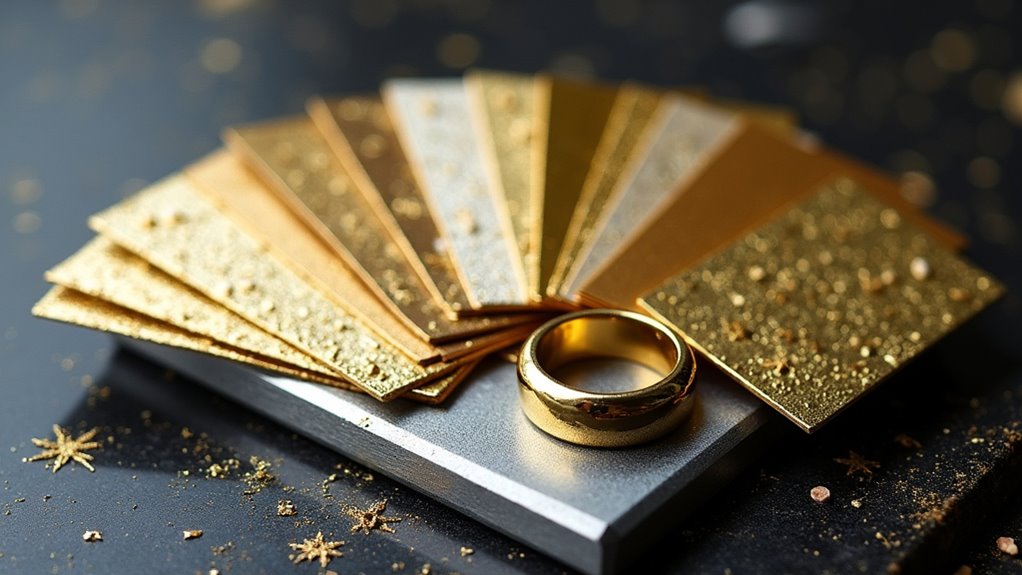
Jewelers basically treat it like a gemstone! Want changes? You’re looking at a complete remake or clever workarounds like ring guards.
Some crafty artisans incorporate it into more flexible metals, but straight-up resizing? That’s a hard nope for this temperamental alloy.
Does Purple Gold Tarnish or Fade Over Time?
Purple gold’s intermetallic structure makes it surprisingly resistant to tarnishing compared to traditional gold alloys.
While it won’t exactly fade into oblivion, environmental factors can still mess with its stunning purple hue. Chlorine’s a major nemesis, and extreme temps aren’t doing it any favors either.

With proper care though – we’re talking gentle cleaning and smart storage – this purple beauty keeps its swagger longer than you’d expect. Just avoid those pool parties!
Are There Any Health Risks Associated With Wearing Purple Gold?
Purple gold is generally safe to wear, but there are a few health considerations to keep in mind.
While rare, some folks might experience allergic reactions to the aluminum component. The alloy’s brittleness can lead to tiny particles breaking off, potentially causing skin marks or irritation.
Sweat interactions might trigger localized discoloration too.

But hey – compared to other metal alloys, purple gold’s actually pretty chill on the safety front!
Which Jewelers Specialize in Creating Custom Purple Gold Pieces?
Several high-end jewelers specialize in crafting custom purple gold pieces.
Ore Metals leads the pack with their bespoke 18k designs, while Jewelry by Johan rocks the wedding band scene.
Lee Hwa Jewellery’s got serious game in contemporary collections, and Nobbier’s killin’ it with artistic statement pieces.
Don’t forget those indie artisan jewelers – they’re the real innovators, creating one-of-a-kind masterpieces for collectors who’ve got deep pockets and bold taste.