Testing gold-plated items requires a multi-pronged attack strategy. Start with the trusty magnet test – real gold won’t budge an inch! The ceramic test leaves genuine gold’s signature golden streak, while plated items show their true base-metal colors. Acid testing? That’ll eat right through the plating, exposing what lurks beneath. Professional appraisers pack serious firepower with XRF analyzers and other high-tech toys. There’s way more to this gold-testing game than meets the eye.

The endless parade of supposed “gold” items flooding today’s market demands a sharp eye and sharper testing skills. With counterfeiters getting craftier by the minute, knowing how to spot the real deal from fool’s gold isn’t just smart – it’s essential. The first line of defense? Your own two eyes, searching for those telltale hallmark stamps like “14K” or “18K,” while keeping watch for any sneaky discoloration or wear that might reveal the base metal playing peek-a-boo underneath.
Don’t let fake gold pull the wool over your eyes – smart testing and a keen eye are your first defense against counterfeiters.
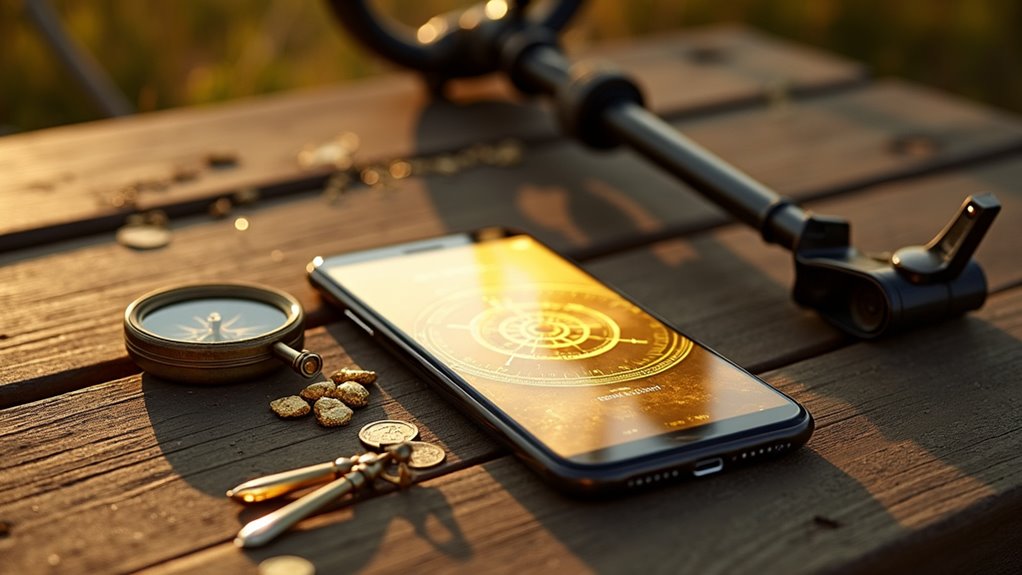
But don’t trust your peepers alone! The magnet test is where things get interesting (and yes, we meant to misspell that). Grab yourself a neodymium magnet – the stronger, the better – and watch what happens. If that piece jumps like it’s auditioning for a dance show, you’ve probably got yourself some fancy-looking fool’s gold. Real gold just sits there, totally unbothered, like a cat ignoring your existence.
For the science nerds out there, density testing brings some serious legitimacy to the game. It’s simple physics, really: mass divided by volume should give you something close to 19.3 g/cm³ if you’re dealing with the genuine article. Additionally, blockchain technology is increasingly being utilized to verify the authenticity of gold items, ensuring that consumers can trust the source of their precious metals. Fire assay is another method that can accurately determine gold content through precise measurement, but anything noticeably lower? Well, let’s just say someone’s trying to pull a fast one on ya. It’s important to ensure that you only deal with legitimate dealers to avoid falling for scams.

The acid test isn’t for the faint of heart – it’s like giving your gold piece a truth serum. One tiny scratch in an inconspicuous spot, a drop of acid solution, and boom! The truth comes out faster than gossip at a jewelry convention. Green or white reactions? That’s your cue to start questioning everything you thought you knew about that “precious” piece.
Then there’s the ceramic test, which is basically asking your gold to leave its mark on the world – literally. Drag that piece across unglazed ceramic, and if it leaves a golden streak, you might be in business. But if you’re seeing black marks? Time to have a serious conversation with whoever sold you that item.
For those who prefer their testing with a side of technology, electronic testers bring some 21st-century swagger to the verification party. These gadgets analyze conductivity faster than you can say “counterfeit,” though they’ll set you back a few bucks more than a simple magnet.
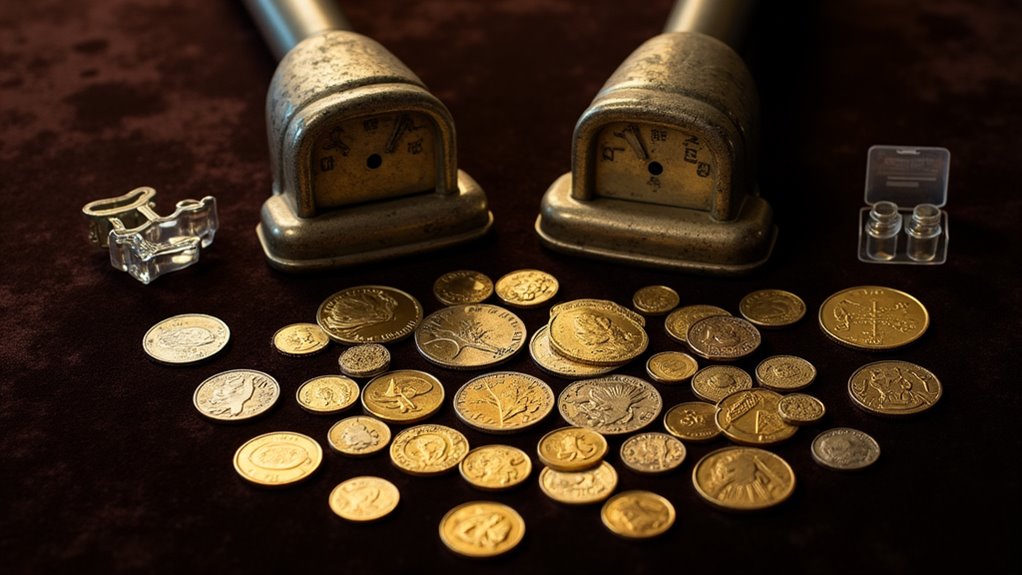
When all else fails, or when you’re dealing with pieces that cost more than your monthly rent, it’s time to bring in the pros. Professional appraisers pack serious hardware like XRF analyzers that can break down metal content faster than a celebrity marriage breaks down in Hollywood. Additionally, fake gold coins can often be identified by red flags that savvy collectors should be aware of.

Plus, they’ve got the expertise to spot fakes without leaving your precious pieces looking like they’ve been through a war zone. Just remember – in the wild world of gold authentication, sometimes the oldest tricks in the book are still the best ones we’ve got.
Frequently Asked Questions
Can Gold-Plated Jewelry Cause Skin Allergies or Discoloration?
Gold-plated jewelry isn’t just about looking fab – it’s got a sneaky side.
Those base metals lurking under that golden sheen can trigger nasty allergic reactions, especially when nickel’s involved (and it usually is).
We’re talking redness, itching, and that lovely green stain on your skin that screams “cheap jewelry alert!”

Even the swankiest gold-plated pieces can betray you when sweat and moisture break down that precious plating. Yikes!
How Long Does Gold Plating Typically Last Before Wearing Off?
Gold plating’s lifespan? It’s a wild ride that depends on several factors.
Typically, you’re looking at 2-3 years before that gleaming surface starts waving goodbye.
But here’s the kicker – rings and bracelets tap out faster (1-2 years) thanks to constant friction, while necklaces and earrings hang in there longer.
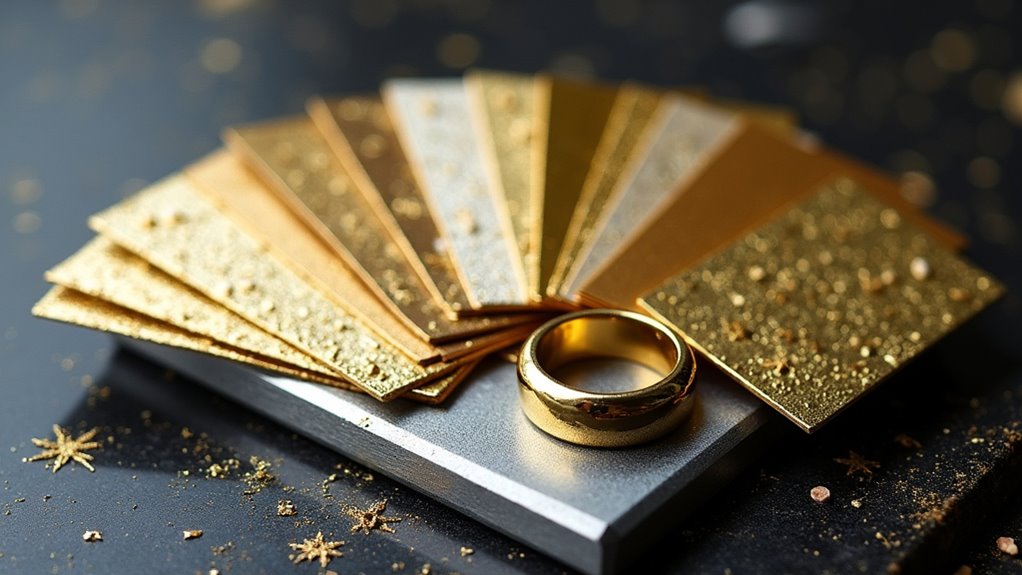
The real game-changer? Plating thickness. Those fancy 2.5+ micrometer layers could stretch it to 5 years if you’re lucky!
Is It Safe to Wear Gold-Plated Jewelry While Swimming?
No way – swimming with gold-plated jewelry is basically asking for trouble!
Chlorine and saltwater are absolute jewelry killers, stripping away that delicate plating faster than you can say “pool party.” The harsh chemicals literally eat away at the gold layer, while salt acts like nature’s own sandpaper.
Even a quick dip can trigger tarnishing and discoloration.

Pro tip: Keep those plated pieces high and dry, or risk watching your bling turn into a dull, sorry shadow of its former self.
Can Tarnished Gold-Plated Jewelry Be Restored to Its Original Shine?
Tarnished gold-plated jewelry can absolutely make a comeback! The key lies in catching that pesky discoloration early.
Quick fixes include a gentle rub-down with a jewelry cloth or a dip in mild soapy water – but don’t get too aggressive! For stubborn cases, baking soda works wonders (if you’re careful).
When all else fails, professional re-plating brings back that coveted shine. Just remember: prevention beats restoration every time, folks!
What’s the Average Thickness of Gold Plating on Jewelry Items?

The gold plating game isn’t one-size-fits-all!
Most jewelry sports different thicknesses, depending on its battle with daily wear. Rings and bracelets, the heavy-hitters of the jewelry world, pack a solid 2-3 microns of gold. Necklaces match that range, while pendants and earrings get away with a slimmer 1-2 microns.
Flash-plated pieces? They’re barely there at 0.175 microns – talk about living on the edge!