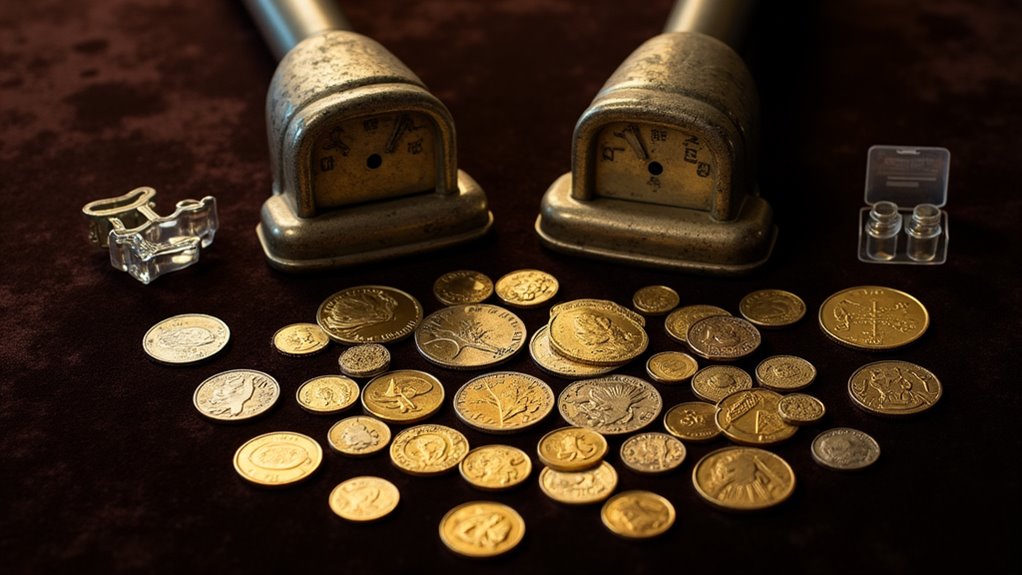
Blockchain’s making waves in recycled gold tracking, and it’s about time! The tech creates tamper-proof digital records of gold’s journey from scrap to shine, using smart contracts and RFID tags to keep everyone honest. Major players like IBM’s TrustChain are already partnering with jewelry bigwigs to make it happen. While some old-school refiners drag their feet, blockchain’s revolutionizing how we verify recycled gold’s legitimacy – and there’s way more to this golden story than meets the eye.

While gold recycling has always been a murky business rife with trust issues, blockchain technology is swooping in like a digital knight in shining armor to shake things up. This decentralized ledger tech is revolutionizing how we track recycled gold from scrap heap to showcase, and holy moly, it’s about time!
The industry’s been crying out for transparency, and blockchain delivers it with all the subtlety of a gold brick to the face. By creating tamper-proof records of every recycled gold piece’s journey, it’s basically impossible to pull any funny business. Those sketchy “recycled gold” claims? They’re getting harder to fake than a kardashian’s… well, you know. Smart contracts automatically verify and enforce compliance at each step of the recycling process. The immutable ledger ensures every transaction record remains permanent and unalterable. As a result, companies can now provide real-time data on the origin and processing of recycled gold.
IBM’s TrustChain Initiative is leading the charge, partnering with jewelry bigwigs to make this happen. They’re slapping unique identifiers on everything – barcodes, RFID tags, you name it – and linking them to the blockchain faster than you can say “conflict-free.” Smart contracts are automating the whole shebang, while QR codes let consumers peek behind the curtain of their bling’s backstory.

But let’s not kid ourselves – implementing this stuff ain’t exactly a walk in the park. You’ve gotta convince everyone and their grandmother to hop on board, and some of these old-school refiners are about as tech-savvy as a goldfish.
Plus, there’s always the challenge of matching physical gold to its digital twin (spoiler alert: it’s expensive).
The regulatory folks are eating this up, though. It’s like Christmas came early for compliance officers, with blockchain helping tick all those boxes for Dodd-Frank, OECD guidelines, and that pesky Modern Slavery Act. Makes their jobs way easier when everything’s recorded in permanent digital ink.
Looking ahead, this tech’s gonna do more than just track gold – we’re talking real-time supply chain monitoring, automated verification systems, and maybe even fractional ownership through tokenization. It’s like the gold industry finally discovered electricity, except this time it’s all about digital trust.

The real game-changer? This system could finally give recycled gold the credibility it deserves. No more wondering if that “eco-friendly” ring is actually made from melted-down conflict gold. The blockchain sees all, knows all, and keeps receipts better than your most organized aunt.
Sure, there are still some wrinkles to iron out. Data accuracy is vital – garbage in, garbage out, as they say.
And getting everyone to play nice in the same digital sandbox? That’s gonna take some serious diplomatic skills. But for an industry that’s been stuck in the dark ages, blockchain’s bringing the kind of transparency that makes a glass house look opaque. And that’s something worth its weight in… well, you know the rest.
Frequently Asked Questions
How Much Does Implementing Blockchain Technology Cost for Gold Recycling Businesses?
Implementing blockchain for gold recycling ain’t cheap! Initial costs typically range from $210,000 to $2 million – yowza!

This includes hardware setup ($50k-$500k), software development ($100k-$1M), and system integration ($50k-$250k).
But wait, there’s more… Annual operating costs run $50k-$320k for maintenance, security, and updates.
Though pricey, businesses typically see 20-50% cost savings thru reduced fraud and improved efficiency. Not too shabby for a digital makeover!
Can Blockchain Systems Integrate With Existing Gold Recycling Facility Equipment?
Modern blockchain systems can seamlessly connect with existing gold recycling equipment through IoT sensors, RFID tags, and smart barcodes.

While some older machinery might need retrofitting, most facilities can integrate blockchain without major overhauls.
The tech plays nice with current ERP systems too – tracking everything from initial melt-downs to final refinement.
It’s basically plug-and-play for newer equipment, though legacy systems might need some extra TLC.
What Happens if There’s a Power Outage During Blockchain Data Recording?
When power outages hit, blockchain networks don’t skip a beat – they’re built for this drama!
The distributed nature means nodes in unaffected areas keep humming along, validating transactions like nothing happened.
Sure, local hashrates take a dive, but data integrity stays rock-solid thanks to automatic re-syncing when power returns.
Those clever consensus mechanizms prevent any funky inconsistencies, while the immutable ledger keeps everything recorded before the outage safe and sound.
How Long Does It Take to Train Staff in Blockchain Operations?
Staff training time for blockchain operations varies dramatically – from quick 6-hour crash courses to intensive 400-hour corporate programs.

It’s not just about sitting through lectures, folks! Prior tech knowledge makes a huge difference, with complete beginners needing 2-6 weeks while tech-savvy staff might breeze through in days.
Most companies opt for 16-20 hour instructor-led programs, though ongoing mentorship is essential.
Bottom line: there’s no one-size-fits-all timeline in this crypto circus.
Are There Any Government Regulations Specifically for Blockchain in Gold Recycling?
Currently, there are no specific federal regulations governing blockchain use in gold recycling – it’s basically the Wild West out there!
While some states have passed laws on digital asset mining (looking at you, New York and Arkansas), none directly address gold recycling applications.
The closest we’ve got is the FIT 21 bill, but even that’s just general digital asset stuff.
The regulatory landscape‘s basically playing catch-up with the technology – typical government pace!