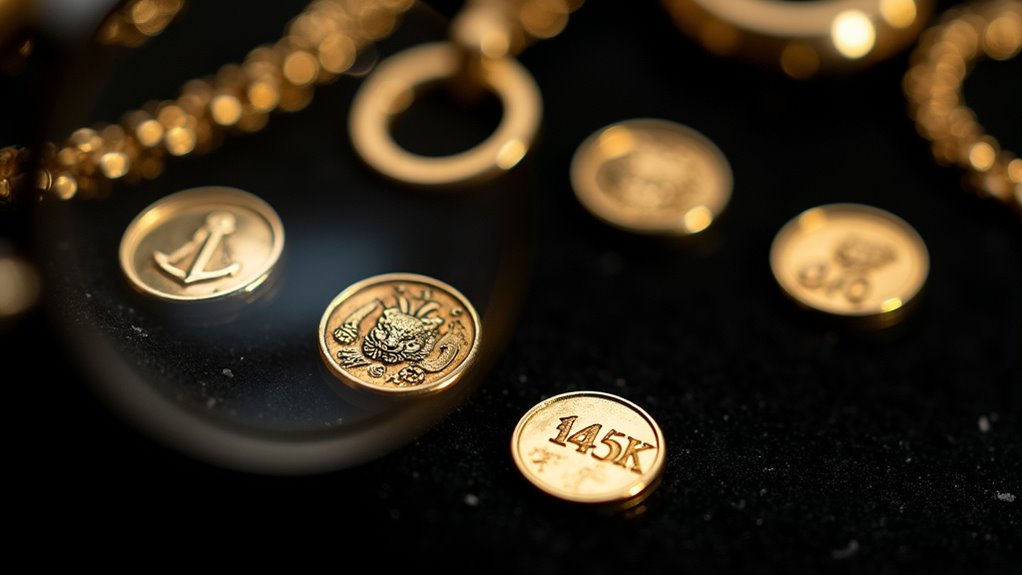
Don’t get duped by shady jewelry dealers pushing fake gold. Smart buyers know the basic tests: genuine gold won’t stick to magnets, sinks in water due to its density, and won’t turn your skin funky colors. Look for legit hallmarks like “14K” or “18K,” but don’t trust those alone – counterfeiters are crafty. A quick acid test at a jeweler’s can reveal the truth, though many sellers won’t appreciate your skepticism. The deeper you go, the more scams you’ll uncover.

Ever wondered why that “incredible deal” on a gold necklace turned your neck green? Let’s cut through the glitter and get real about fake gold jewelry, because nobody wants to be that sucker who paid real money for fool’s gold.
The first line of defense is your own two eyes. Real gold has this unmistakable rich yellow color that doesn’t fade or look patchy. Check those sneaky hidden spots – faker’s love to skimp on gold content where they think you won’t look. Especially check clasps and bands for official markings, as these are common spots for hallmarks. Gold hallmarks can provide important information about the purity and authenticity of the item.
And those hallmarks stating “14K” or “18K”? They’re like a jewelry’s ID card, but counterfeiters can fake those too, so don’t stop there.

Here’s where science becomes your best friend. Grab a strong magnet – not that weak thing holding up your grocery list. If that piece sticks like your ex’s drama, it’s definitely not pure gold. You can easily perform this test at home with a store-bought magnet.
But don’t get too excited if it doesn’t stick; some clever counterfeiters use non-magnetic metals too. Time for the sink-or-swim test – literally. Real gold’s density means it’ll sink faster than your hopes at an all-you-can-eat buffet that runs out of food.
Want to get serious? The acid test is where things get real. Nitric acid doesn’t mess around – it’ll turn fake stuff green faster than moldy bread. Gold-plated brass goes gold-colored, and sterling silver goes milky.
Real gold? It just sits there, unbothered, like a cat ignoring your existence. Just don’t try this at home unless you really know what you’re doing.

The lighter test is another way to separate the real from the wannabes. Genuine gold doesn’t flinch under flame – no warping, no funky smells, no drama.
Fake stuff? It’ll show its true colors, usually green or black, like a chameleon with identity issues.
Here’s a test that costs nothing: wear it. Real gold is like that friend who never causes drama – it won’t turn your skin funny colors.
Fake gold? It’ll leave its mark, usually in shades of green, black, or blue that definitely weren’t part of your fashion statement.

When in doubt, get professional backup. Jewelers, refineries, and their fancy electronic testers can give you the final word.
Sure, it might cost a few bucks, but it’s cheaper than finding out your “investment piece” is worth less than yesterday’s newspaper.
Frequently Asked Questions
Can Fake Gold Jewelry Cause Skin Allergies or Reactions?
Fake gold jewelry can absolutely wreak havoc on sensitive skin. The culprit? Usually nickel – that cheap metal lurking in counterfeit pieces that makes 10-20% of people break out in nasty rashes.
We’re talking red, itchy, swollen skin that shows up within a couple days of wearing that “bargain” piece. Here’s the kicker – some folks don’t react for weeks, then BAM! Full-blown allergic reaction.
White gold’s especially sketchy – more likely to have nickel than yellow.
How Long Does Gold Plating Typically Last Before Wearing Off?
Gold plating’s lifespan is pretty underwhelming – most pieces only last a few months to 2 years with regular wear. Kinda pathetic, right?
The super thin stuff (0.5 microns) wears off faster than a cheap manicure, while thicker plating (2.5+ microns) might stick around for several years if your lucky.
Daily wear, exposure to chemicals, and even your body chemistry affect how quickly it fades.

Bottom line: dont expect that bargain-priced “gold” to stay golden forever.
What’s the Price Difference Between Real and Fake Gold Jewelry?
The price gap between real and fake gold is astronomical.
Real gold jewelry typically costs $50-200+ per gram, while fake stuff goes for pennies on the dollar. A solid 14k gold chain? Easily $500-1000.
The knockoff version? Maybe $20.

Here’s the kicker – that cheap fake will be worthless in months, while real gold holds value for decades.
The old saying rings true: if the price seems to good to be true, it probly is.
Are There Legal Consequences for Sellers Who Knowingly Sell Fake Gold?
Sellers pushing fake gold as real? Yeah, they’re playing with fire.
The feds don’t mess around – we’re talking up to $2 million in fines and 10 years behind bars for first-timers.
Repeat offenders? Double that punishment.
Plus, they’ll face civil lawsuits, asset seizures, and their business reputation goes down the drain.
Local cops, customs agents, and private investigators are all on the hunt.
Not worth the risk… just sayin’.
Can Fake Gold Jewelry Be Recycled or Resold for Any Value?
Let’s get real – fake gold jewelry is basically worthless for recycling.
Sure, gold-plated pieces might get you a few bucks at a refinery, but don’t expect much.
The only half-decent option is reselling as costume jewelry, especially if it’s vintage or from a recognizable brand.
But here’s the kicker – you better be upfront about it being fake, or you’ll risk legal troubles.
Bottom line: there’s minimal value, and dishonesty ain’t worth the hassle.