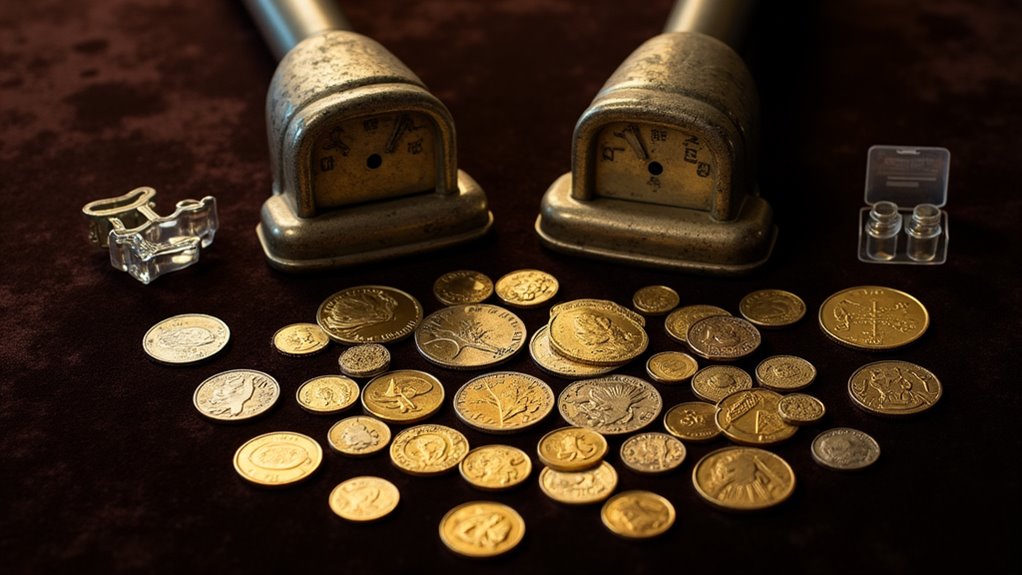
Professional coin grading through NGC and PCGS follows the rigorous 70-point Sheldon Scale, where experts examine gold coins under magnification for luster, strike quality, and surface marks. These third-party graders scrutinize every detail – from minor scratches to oxidation – before assigning a grade that dramatically impacts value. MS-70 represents perfect uncirculated specimens, while cleaned or damaged coins receive “Details” grades. This standardized system transforms raw coins into trusted, marketable assets. There’s way more beneath that shimmering surface.
While gold coins may gleam and dazzle, grading them isn’t just about their shine – it’s a meticulous science that can make or break their value. At its core, coin grading relies on the universal Sheldon Scale, a 70-point system that both NGC and PCGS swear by. These grading giants aren’t playing around – they’ve got teams of experts who scrutinize every millimeter of these precious discs like they’re hunting for buried treasure (which, lets be honest, they kinda are). Numismatic conventions provide a fantastic opportunity for collectors to learn about the grading process and connect with experts, allowing them to deepen their understanding of the history of coins. Additionally, visiting top-rated coin shops can offer insights into the nuances of grading by experienced professionals.
Coin grading transforms shiny metal into precise science, where expert eyes determine fortunes through meticulous inspection of every detail.
The process is ridiculously detailed, with graders wielding magnification tools to spot imperfections that would make a perfectionist weep. They’re looking at everything from luster (that sweet, sweet surface shine) to strike quality, which basically means how well the design was stamped onto the coin.
And don’t even get them started on surface marks – a single scratch can send a coin’s grade plummeting faster than crypto during a market crash.

Here’s where it gets juicy: MS (Mint State) and PF (Proof) coins play by different rules. MS coins, ranging from 60-70, are like the casual Friday of the coin world – uncirculated but made for regular use. Proof coins? They’re the black-tie affair, specially crafted with mirror-like finishes that’ll make your reflection jealous. A perfect 70 grade means zero imperfections under 5x magnification – good luck finding that unicorn!
But wait, there’s drama in the grading world (shocker!). Surface oxidation can mess with details, and sometimes graders disagree on those razor-thin differences between grades. Don’t even mention counterfeit coins – they’re the party crashers nobody invited. In fact, knowing how to spot fake gold coins can save collectors from costly mistakes.
And if you’ve ever cleaned a coin thinking you’re doing it a favor? Congratulations, you’ve probably just knocked several points off its grade!
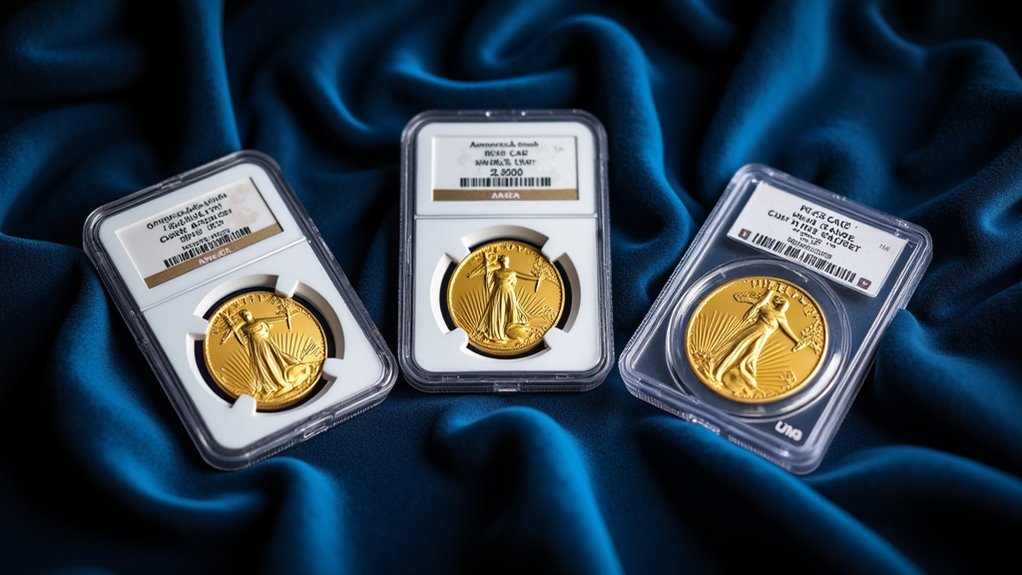
Professional grading isn’t just about slapping a number on a coin – it’s about creating a universal language that buyers and sellers can trust. Those tamper-proof holders? They’re like tiny vaults protecting not just the coin, but its entire identity. NGC and PCGS both use at least two experts per coin because, apparently, trust issues are real in the numismatic world.

Sometimes coins get hit with the dreaded “Details grade” – basically a participation trophy for coins that have physical flaws but still deserve recognition. It’s like getting a “thanks for trying” pat on the back, but hey, at least it’s something!
The whole process might seem obsessive, but when you’re dealing with pieces that can be worth more than your car, every detail counts. And that’s why professional grading remains the gold standard (pun absolutely intended) in the collecting world.
Frequently Asked Questions
How Much Does Professional Coin Grading Typically Cost per Coin?
Professional coin grading costs vary wildly, but here’s the real deal:
Basic grading runs $17-22 for common pieces under $300.
Got something fancier? Expect to shell out $35-65 for mid-range coins.
Those ultra-rare beauties? We’re talking $150+ per piece.
Don’t forget the sneaky extras – shipping, handling, and those pesky membership fees ($60-150 annually).
Pro tip: Bulk submissions can slash costs by 30%.

It’s not cheap, but sometimes it’s worth every penny!
What Is the Average Turnaround Time for NGC and PCGS Grading Services?
Turnaround times for NGC and PCGS vary wildly, depending on how much cash you’re willing to throw at them!
Economy service crawls along at 45-50 business days (yawn), while regular service picks up the pace at 20-30 days.
Express service? Now we’re talking – 15-20 business days for both graders.

But here’s the kicker: specialty coins like ancients can take a whopping 60-80 days with NGC.
PCGS’s walkthrough service is the speed demon, wrapping up in just days.
Can Damaged or Cleaned Gold Coins Still Receive Numerical Grades?
Here’s the hard truth – damaged or cleaned gold coins typically won’t snag those coveted numerical grades from NGC or PCGS. Period.
These grading powerhouses slap ’em with “Details” grades instead, which is basically code for “nice try, but no dice.”

Sure, they’ll still authenticate and encapsulate these coins, but collector’s aren’t exactly fighting over pieces that’ve been scrubbed or dinged.
It’s like putting lipstick on a numismatic pig – the damage is done!
Are Grading Standards Different for Modern Versus Vintage Gold Coins?
Absolutely – modern and vintage gold coins face dramatically different grading standards.
While modern pieces get scrutinized under a microscope for absolute perfection (that MS-70 dream!), vintage coins catch some slack for their age-related quirks.
Today’s coins need pristine surfaces to score big, but those historical beauties? They’re judged on rarity, historical significance, and overall eye appeal.
Even a well-worn vintage piece can command serious value if it’s rare enough!
Which Grading Service, NGC or PCGS, Generally Yields Higher Market Values?
PCGS-graded coins typically command higher market values, especially in U.S. markets. While both services are respected, PCGS’s slightly stricter grading standards and established reputation among high-end collectors create a modest premium.
However, NGC holds its own, particularly with world and ancient coins. The difference isn’t dramatic – maybe 3-5% on average – but consistently favors PCGS.
That said, both services carry serious weight in the marketplace, and individual coin quality matters more than the holder.