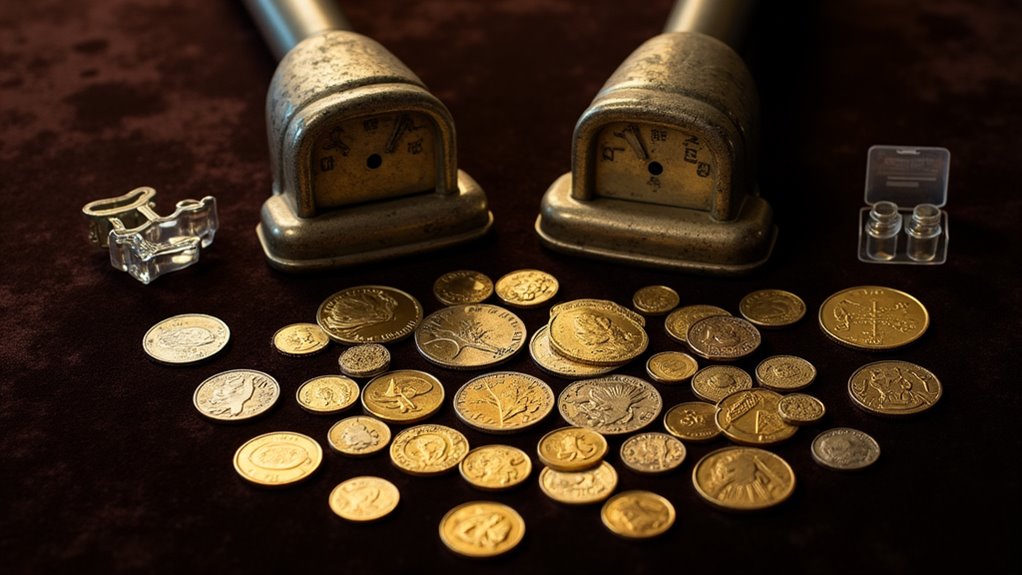
The British Gold Sovereign‘s epic journey from Henry VII’s reign to today’s bullion markets is a masterclass in staying power! First minted in 1489, this legendary coin transformed from a royal currency experiment into global trading‘s golden child. Its 22-carat composition and Pistrucci’s iconic St. George design have made it a numismatic rockstar for over 500 years. Currently commanding serious premiums among collectors and investors, the Sovereign’s storied past only scratches the surface of its fasinating legacy.

A glinting tribute to British monetary prowess, the Gold Sovereign stands as one of history’s most enduring and influential coins. First minted in 1489 under Henry VII, this gleaming statement of wealth and power initially contained 23-carat gold, weighing a substantial 240 grains. The sovereign wasn’t just another pretty coin – it emerged as an essential tool for stabilizing England’s currency after the chaotic Wars of the Roses. The introduction of gold coinage in ancient civilizations laid the groundwork for the Sovereign’s eventual importance in British history, paralleling the significance of imperial issues in the Roman Empire.
The modern incarnation burst onto the scene in 1817, sporting Benedetto Pistrucci‘s iconic design of St. George slaying the dragon – a masterpiece that’s stood the test of time. Crafted from 22-carat “Crown Gold” alloy, these beauties pack 7.32 grams of pure gold into their 7.98-gram total weight. The addition of copper wasn’t just for kicks – it gave these babies the durability to withstand centuries of handling. Leading gold mining companies have also looked to the Sovereign’s legacy as a benchmark for quality in gold production.
During Britain’s imperial heyday, the Sovereign went totally global. These golden ambassadors circulated from Cape Town to Calcutta, becoming the preferred currency for international trade. Talk about a power move! The standardized weight and purity made them trustworthy players in the world’s financial markets, while their intrinsic value far exceeded their one-pound face value.

The Sovereign’s influence didn’t stop at commerce – it basically wrote the playbook for modern bullion coins. The Royal Mint got creative, establishing minting operations across the Empire in places like Australia, South Africa, and Canada. Each facility cranked out these golden beauties to the same exacting standards, creating a truly international currency before anyone even dreamed of the euro. The Krugerrand’s market role as a pioneering gold bullion coin further emphasized the global acceptance of gold as a standard in investing.
Today’s collectors and investors are still going bonkers for Sovereigns. Rare editions and proof strikes? They’re commanding seriously juicy premiums in the numismatic market. The annual design variations keep things spicy, while the coin’s historical street cred makes it a no-brainer for serious collectors. During market meltdowns, these babies shine even brighter as safe-haven assets.
Beyond the numbers game, Sovereigns pack some serious cultural punch. They’re still gifted as tokens of prosperity in many cultures, and their design has influenced countless other national coinages. The Pistrucci dragon-slaying scene isn’t just numismatic eye candy – it’s a legit artistic masterpiece that’s been turning heads for over two centuries.
Looking ahead, the Sovereign shows zero signs of losing its mojo. Still minted as a bullion coin, it continues to command respect (and premium prices) in the global precious metals market. Whether you’re a history buff, an investor with a taste for tradition, or just someone who digs beautiful things that hold their value, the British Gold Sovereign remains an absolute unit in the world of precious metals. Not bad for a coin that’s been flexing since the 15th century!
Frequently Asked Questions
How Should I Properly Store and Handle My Gold Sovereigns?
Proper storage of gold sovereigns demands white cotton gloves and edge-only handling – no fingerprints allowed on these beauties!

Store ’em in PVC-free capsules or archival holders, somewhere cool and dry. A fireproof safe’s your best bet, unless you’re fancy enough for a bank vault.
Regular check-ups are essential – these babies need attention!
And for heaven’s sake, don’t go broadcasting your stash to the neighborhood. Keep it hush-hush!
Can Gold Sovereigns Be Used as Legal Tender in Modern Britain?
While Gold Sovereigns technically remain legal tender in Britain, their practical use for everyday transactions is virtually non-existent.
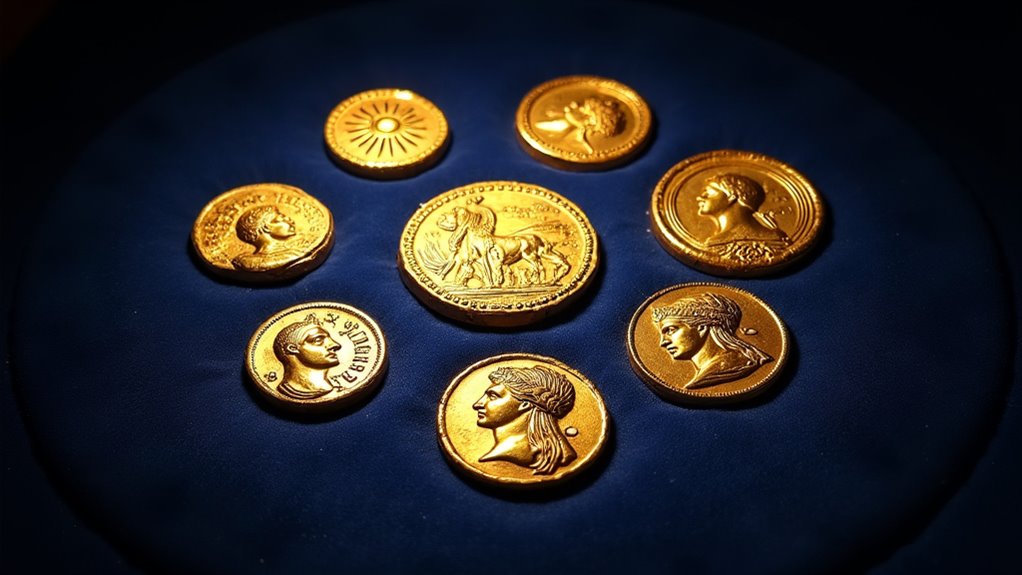
Good luck buying groceries with these beauties! Despite their nominal £1 face value, no shop’s gonna accept a coin worth hundreds in gold content.
Businesses aren’t required to take them, and their real value makes spending them about as logical as using a Picasso to wallpaper your bathroom.
They’re more investment darling than spending money!
What’s the Best Way to Authenticate a British Gold Sovereign?
Authenticating a British gold sovereign requires a multi-pronged approach.

Start with physical inspection – measure that 22.05mm diameter and check the precise 7.98g weight.
XRF spectroscopy’s the real game-changer, instantly revealing gold content without damaging the coin.
For bulletproof verification, get those pros involved – NGC or PCGS grading services know their stuff.
And don’t forget the magnet test – if it sticks, you’ve got yourself a fancy paperweight!
Which Years of Gold Sovereigns Are Considered the Most Valuable?
The 1937 Edward VIII prototype Sovereign stands as the holy grail, commanding astronomical prices due to its incredibly limited production.

The 1489 Henry VII Sovereign (when you can find one!) and 1819 George III pieces aren’t far behind in value.
The ultra-rare 1841 Sovereign makes collectors drool, while early Victorian “Young Head” designs from 1838-1887 consistently fetch premium prices.
The 1923 South African Sovereign rounds out the top-tier of valuable issues.
Are Modern Gold Sovereigns Made With the Same Specifications as Historical Ones?
Modern gold sovereigns are practically identical to their historical cousins post-1817.

They maintain the same 22-carat gold purity (91.67%), precise weight of 7.98805 grams, and that classic 22.05mm diameter.
Even the iconic St. George & dragon design hasn’t budged!
The only real difference? Today’s minting tech is way more precise – no more wonky variations like back in the day.
Talk about staying power – these specs haven’t changed in 200+ years!