Artisanal gold mining is a grim paradox – generating 20% of global gold while destroying lives and ecosystems. Ten to fifteen million miners across 80 countries hack away with basic tools, supporting nearly 100 million dependents in total.
It’s a brutal cycle of mercury poisoning, child labor, and environmental devastation. Yet governments struggle to regulate this shadow industry that feeds the world’s jewelry obsession.
The deeper you go, the darker this rabbit hole gets.

While big mining corporations rake in billions with their massive operations, a scrappy underground economy of artisanal gold miners is quietly responsible for up to 20% of the world’s gold production.

We’re talking about 10-15 million miners across 80 countries, using nothing fancier than basic tools and pure grit to scratch out a living. It’s not just them either – a whopping 80-100 million people depend on this hustle to put food on the table. When you consider that each miner in Sub-Saharan Africa typically supports 5 to 6 dependents, the impact on local communities becomes even clearer. Organizations like Pact work to make formal, safer operations a reality for these communities.
Let’s get real about what these miners are pulling off. They’re not just extracting gold; they’re producing 80% of the world’s sapphires and a fifth of its diamonds.
They’re cranking out serious amounts of tantalum and tin too. The whole operation might look primitive – think panning, sluicing, and mercury amalgamation – but don’t let that fool you.
These aren’t hobbyists; they’re feeding a global supply chain. This underground economy often operates without sustainable practices, which can exacerbate environmental issues.

But here’s where it gets messy.
The environmental toll is brutal, no sugar-coating it.
Mercury poisoning is wreaking havoc on ecosystems, forests are getting cleared faster than you can say “sustainability,” and water sources are copping a beating from chemical runoff. The landscape looks like it’s been through a war zone in some places, and wildlife? They’re getting the raw end of the deal.
The human cost is even uglier.

Safety standards? What safety standards? We’re looking at communities where kids are swapping schoolbooks for mining tools, where mercury exposure is slowly killing people, and where basic healthcare is about as common as a winning lottery ticket. The whole scene is a stark reminder of what desperate poverty looks like in action.
Now everyone’s scrambling to “formalise” the sector – fancy talk for trying to make it legit. Governments are pushing paper, making policies, and pretending they can regulate an industry that’s been operating in the shadows for generations. Good luck with that. The reality is, these miners need security and investment potential, but the gap between policy and practice is wider than an open-pit mine.
Looking ahead, there’s some hope on the horizon. People are finally getting serious about mercury-free processing techniques, and there’s a growing push for better working conditions.
Supply chain transparency is becoming more than just a buzzword, and some big mining companies are actually trying to work with these small-scale operations instead of against them.
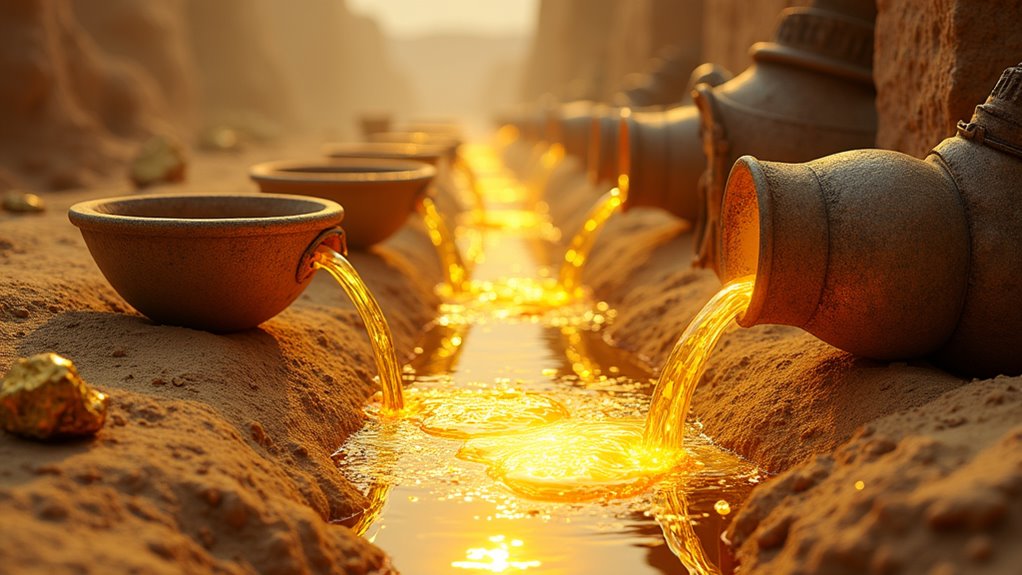
But let’s not kid ourselves – changing a system this entrenched isn’t gonna happen overnight. It’s gonna take more than good intentions and fancy initiatives to transform an industry that’s been running on desperation and determination for decades.
Frequently Asked Questions
What Personal Protective Equipment Is Required for Artisanal Gold Mining?
Essential PPE for artisanal gold mining ain’t optional – it’s life or death.
Hard hats protect against nasty head knocks, while safety goggles shield eyes from debris and chemicals.
Respiratory masks are vital for dodging toxic fumes and mercury exposure.

Proper gloves prevent chemical burns and cuts.
And don’t forget steel-cap boots – they’re a must for protecting feet from heavy equipment and spills.
Sadly, many miners skip these basics.
How Long Does It Typically Take to Find Gold Deposits?
Finding gold ain’t quick – we’re talking 1-10 years of pure slog just for exploration.
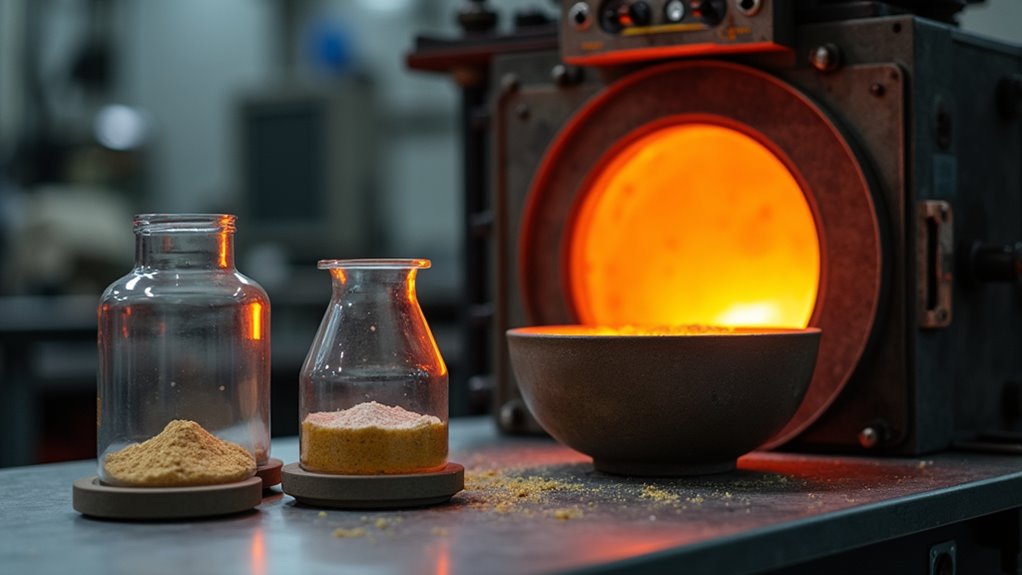
And here’s the issue: only 10% of deposits actually have enough gold to be worth developing.
Less than 0.1% of sites turn into productive mines.
It’s a waiting game that needs serious expertise in geology, chemistry, and engineering.
Plus, you’ll need deep pockets cos this ain’t a cheap treasure hunt, mate.
Which Countries Have the Most Successful Small-Scale Gold Mining Operations?
Ghana and Indonesia dominate small-scale gold mining, but for wildly different reasons.
Ghana’s got legit operations producing roughly 30% of their gold – impressive stuff.
Indonesia’s more of a wild west scenario, with illegal mining running rampant (let’s be real, it’s a mess).
Zimbabwe and the Philippines are up there too, but their dodgy regulations make it hard to get solid numbers.
China’s technically in the game, but good luck getting reliable data.
What Licenses Are Needed to Start Artisanal Gold Mining?
Getting legit in artisanal mining means snagging either a Class C or Class B license, depending on yr operation size.
Class C’s the basic one – needs some passport pics, citizen ID, and paperwork from the Mines office.
Class B’s more involved – requires 15% local ownership and proper surveys.
Here’s the kicker: most miners skip the red tape entirely cos the process is a massive headache.
Govts could do better making it accessible, tbh.
How Much Does It Cost to Set up a Small-Scale Mining Operation?
Starting a small-scale mining operation ain’t cheap. Basic setup costs run $50,000-$100,000 minimum – and that’s being optimistic, mate.
You’ll need around $25k-70k for essential equipment, $2k-5k for land rights, plus operating expenses like labour and fuel.
Don’t forget the 15-20% emergency fund cushion. The real kicker? Costs can balloon quickly depending on location, scale, and regulatory requirements.
It’s definately not a poor person’s game anymore.