Traditional gold mining is an environmental nightmare that needs a serious reality check. The industry spews toxic chemicals and greenhouse gases like there’s no tomorrow, producing 11x more CO2 than aluminum processing.
We don’t even need most new mining since 80% of gold already exists above ground. Modern recycling methods using bacteria and eco-friendly solvents cut emissions by 90%.
Smart refiners are finally catching up with closed-loop systems and zero-emission tech. The sustainable gold rush is just getting started.
Mining gold the old-fashioned way is wreaking havoc on our planet, spewing toxic chemicals and greenhouse gases like there’s no tomorrow. Let’s face it – the traditional gold refining industry has been getting away with environmental murder for far too long, pumping out CO2 emissions at a rate that makes aluminum production look like child’s play. We’re talking 11 times more carbon dioxide per dollar, and that’s just the tip of the toxic iceberg. The fact that virtually all gold ever mined throughout history remains in circulation today makes new mining even more questionable.
But here’s the kicker – we don’t even need to keep digging up new gold. A whopping 80% of all gold already exists above ground, just begging to be recycled. Yet somehow, we’re tossing $60 million worth of precious metals into landfills every year through e-waste. It’s like throwing money in the trash while setting the planet on fire.
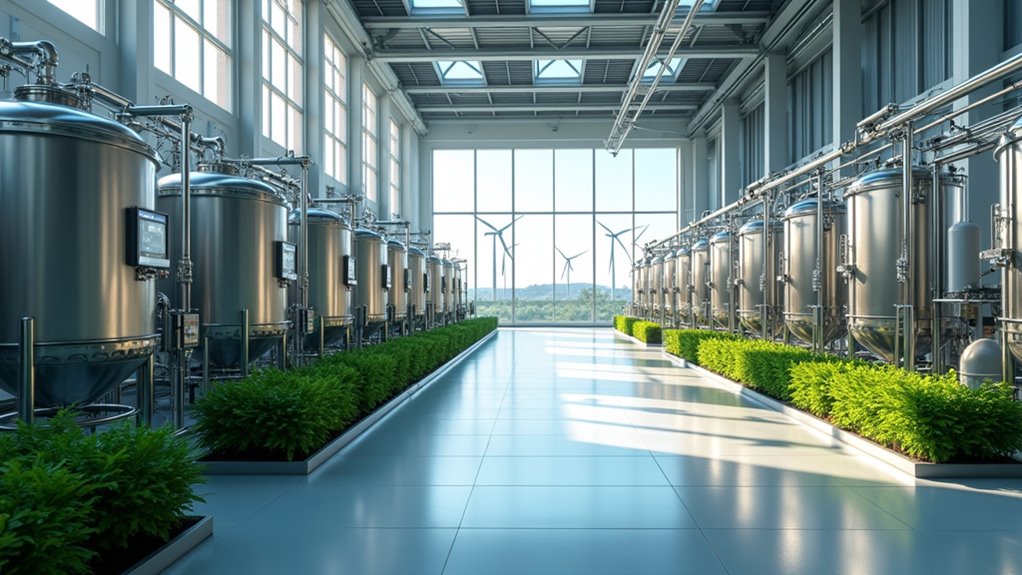
The good news? Some forward-thinking refineries are finally getting their act together. Modern methods like electrodeposition and the EF-ZERO system are showing the dinosaurs how it’s done, eliminating acid fumes and recovering 95% of metal byproducts.
These closed-loop processes aren’t just feel-good environmental window dressing – they’re actually more profitable in the long run. The implementation of specialized membrane filters ensures optimal separation of gold ions from impurities during electrolysis. Moreover, these innovations are paving the way for zero-emission processing technologies that further minimize environmental impacts.
Modern gold refineries are proving that green practices aren’t just eco-friendly window dressing – they’re a golden ticket to higher profits.
Speaking of profits, luxury brands are waking up and smelling the sustainably-sourced coffee. They’re increasingly demanding recycled gold, and who can blame them?
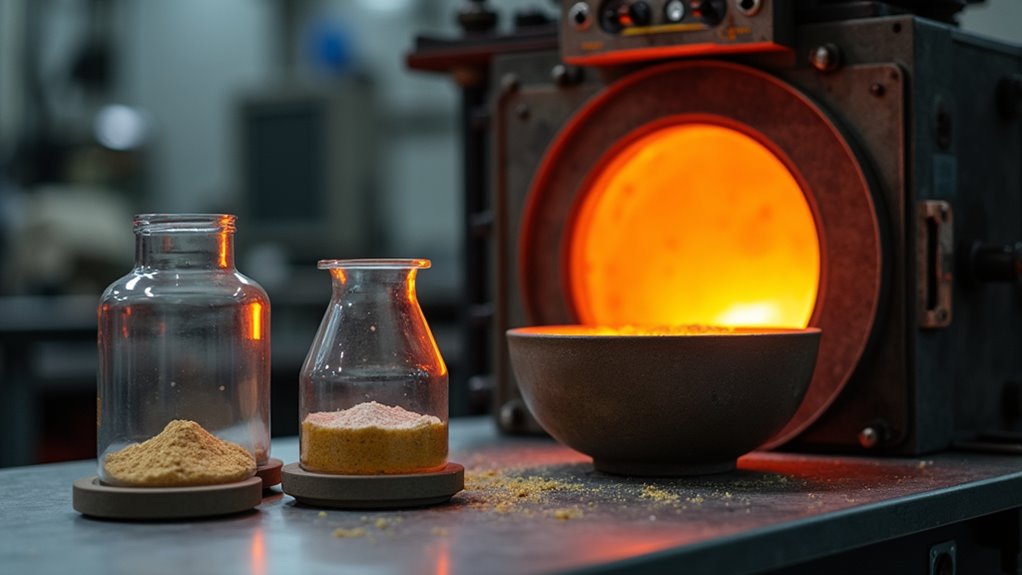
Recycling produces 90% fewer CO2 emissions than mining, and consumers are getting wise to environmental impact. Sure, the initial costs of eco-friendly methods might make bean counters sweat, but the long-term benefits are impossible to ignore.
The tech innovations in this space are actually pretty mind-blowing. We’ve got bacteria munching away at gold extraction (bioleaching), deep eutectic solvents that are actually biodegradable (shocking, right?), and three-stage processes that can separate copper, silver, and gold from e-waste with surgical precision.
Add some solar power and wind energy to the mix, and you’ve got yourself a proper 21st-century operation.
Regulations are finally catching up too, with ESG ratings keeping track of who’s actually walking the walk. The CHIPS and Science Act is shaking things up in semiconductor-related refining, while international agreements are forcing the industry’s hand toward sustainability. About damn time, if you ask me.

The bottom line? The gold refining industry needs to evolve or die. Modern methods can achieve 99.9% purity without turning the environment into a toxic wasteland. Between reforestation efforts, zero-emission systems, and renewable energy sources, there’s no excuse for clinging to outdated practices.
The technology exists, the market demands it, and the planet desperately needs it. Time to separate the forward-thinkers from the fossil fuel fossils.
Frequently Asked Questions
How Long Does It Take to Refine One Kilogram of Gold?
Refining a kilo of gold isn’t a quick coffee break – we’re talking 5-8 hours minimum per batch.
And that’s if everything goes smoothly! Different methods like aqua regia or electrolysis each have their own timeline.

Grain size matters big time – those tiny 2-3mm pieces dissolve way faster than chunky bits.
Want ultra-pure stuff? Better plan for multiple rounds, cause getting to 99.99% purity ain’t no walk in tha park.
What Protective Equipment Do Gold Refiners Need to Wear?
Gold refiners don’t mess around with safety – their protective gear is serious business.
They need full-face shields, chemical splash goggles, and respirators with special filters for those nasty fumes. Fire-resistant clothing’s a must, along with chemical-resistant suits and gloves for handling acids.

Safety boots protect their feet, and they’d better have proper ventilation systems running.
Skip any of this stuff, and they’re basically asking for trouble. No shortcuts allowed in this game.
Can Gold Be Refined Without Using Harmful Chemicals?
Yes, gold can absolutely be refined without toxic nastiness.
The old-school mercury and cyanide methods are straight-up dinosaurs. Modern refiners are killing it with chloride-based processes that snag 84% of gold (take that, cyanide’s measly 64%).
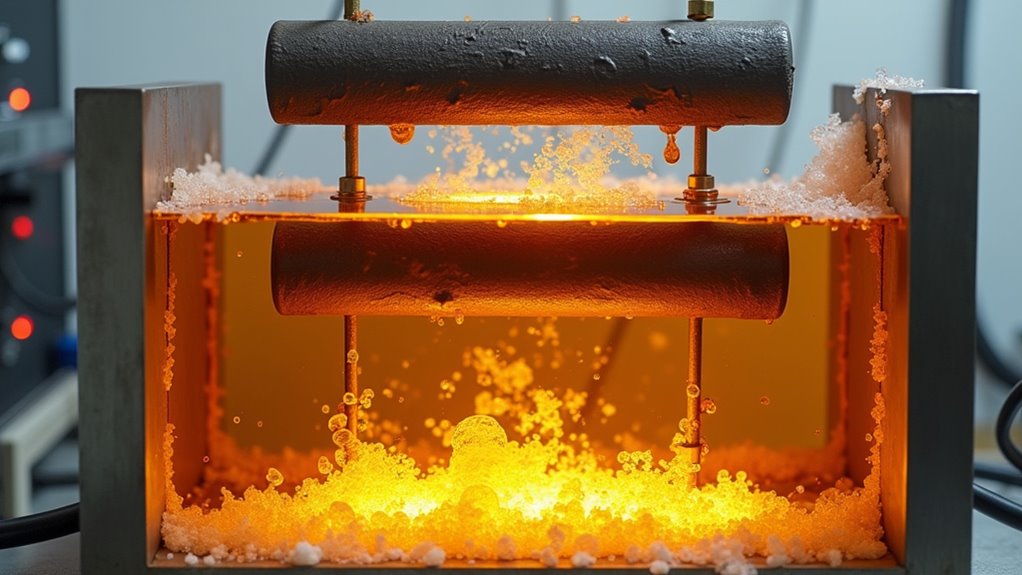
Some genius even figured out how to use saltwater – yeah, just regular ol’ saltwater. Even basic household chemicals like bleach can get the job done.
The future of refining doesn’t have to poison everything in sight.
How Much Does Professional Gold Refining Equipment Cost?
Professional gold refining equipment ain’t cheap – we’re talking serious cash here.
Small-scale setups start around $2,300 but can quickly jump to $12k. Want the big industrial stuff? Better have deep pockets – those monsters run between $48k to a whopping $760k.
The Tumbler models hover around $58k, while Titan machines are a bit easier on the wallet at $9,200.
Size, automation, and features drive the price – thats just how this game works.
What Certifications Are Required to Operate a Gold Refining Facility?
Operating a legit gold refining facility isn’t for the faint-hearted.
You’ll need the heavy-hitters: LBMA Good Delivery certification (if you’re playing in the big leagues), RJC certification to prove you’re not running some sketchy operation, and RMI certification to show your gold isn’t funding conflicts.
Don’t forget the basics – ISO 9001:2015 for quality, ISO 14001 for environmental standards, plus whatever local permits your jurisdiction demands.
No shortcuts here, folks.