Modern gold mining deploys an arsenal of massive excavators that’d make your childhood Tonka trucks cry. The behemoth Caterpillar 6090 FS tips the scales at 1,102 tons – yeah, you read that right – and sports a bucket that gulps down 57 cubic yards per scoop. These metal beasts work alongside mining trucks hauling 211-ton loads and drill rigs punching 90-foot holes. And that’s just scratching the surface of today’s high-tech mineral extraction game.

Towering mechanical beasts tear through layers of earth, their mammoth buckets hungrier than a gold bug’s appetite for the next rally. The modern gold mining landscape is dominated by behemoths like the Caterpillar 6090 FS, weighing in at a whopping 1,102 tons – yeah, you read that right. These monsters aren’t your grandfather’s backhoe; they’re technological marvels capable of moving mountains, quite literally.
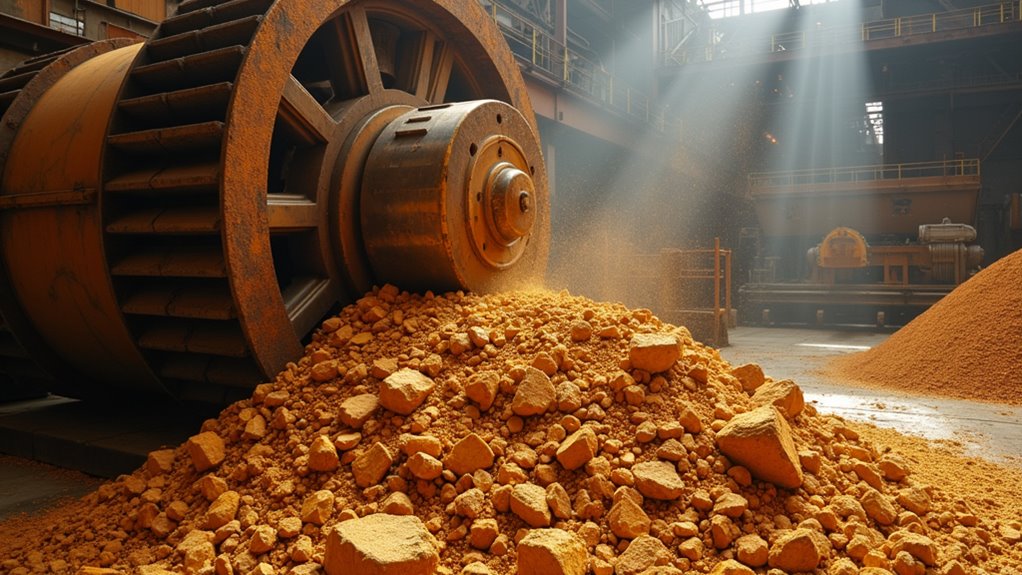
Gold mining operations deploy various types of excavators, each with its own specialty. Hydraulic excavators handle the precision work, while dragline excavators swing their cable-operated buckets through the air like some kind of mechanical circus act. The real showstopper? Bucket wheel excavators, with their massive rotating wheels that look like they could’ve been designed by a sci-fi movie prop department. Regular inspections of critical components ensure these massive machines keep running smoothly day after day. Advanced mobile washing plants like the SD600 model efficiently process the excavated material on-site. Open pit mining often employs these machines due to the large volumes of earth they can move. Additionally, innovations in automation technology are enhancing the efficiency of these operations, ensuring a more sustainable approach to gold extraction. The use of heavy machinery is essential for maximizing productivity in these mining endeavors.
Excavator ballet: hydraulics slice with surgical skill, draglines dance overhead, while bucket wheels spin like mechanical monsters from tomorrow’s dreams.
The specs on these machines are absolutely bonkers. We’re talking about reach distances up to 73 feet – that’s like stacking three school buses end-to-end. With bucket capacities reaching 57 cubic yards, these beasts can move enough dirt in one scoop to fill your average swimming pool. And power? Try 3,650 horses under the hood. That’s not an engine, that’s a small power plant!

The selection of the right excavator isn’t just about picking the biggest toy in the sandbox. Mining companies gotta consider everything from overburden depth to ore characteristics. It’s like matching wine with dinner, except the dinner is millions of dollars worth of gold deposits, and the wine is a multi-million dollar piece of machinery that better not break down mid-shift. Proper equipment standards ensure that these excavators operate safely and efficiently throughout their lifespan.
Technology has transformed these dirt-movers into smart machines. Modern excavators come equipped with telematics systems that monitor everything from fuel consumption to bucket positioning. Some even have automated features that make them operate with the precision of a surgeon – if surgeons operated with 40-ton buckets, that is.
These excavators don’t work alone. They’re supported by an army of other equipment – mining trucks that can haul 211 tons per trip, bulldozers that rip through rock like butter, and drill rigs that punch holes 90 feet deep. It’s a carefully choreographed dance of steel and hydraulics, all in pursuit of those precious yellow nuggets.
The industry’s pushing towards more eco-friendly operations, with hybrid powertrains and engines that meet the latest emission standards. Some of these machines can keep chomping away at the earth for up to 25,000 hours – that’s nearly three years of non-stop operation.

Because when gold prices are soaring, nobody wants their excavator taking a coffee break. The future of gold mining looks pretty darn impressive, even if it does occasionally hit a rock or two along the way.
Frequently Asked Questions
What Is the Average Lifespan of Excavators Used in Gold Mining Operations?
Mining excavators typically clock 7,000-12,000 operational hours annually – way more intense than regular construction work!
These beasts survive 8-12 years in the brutal gold mining environment, though some warriors push past 15 with religious maintenance.
The 24/7 grind and harsh conditions take their toll, but proper care‘s a game-changer.
Fun fact: some operators squeeze 20,000+ hours outta these machines before retirement. Talk about getting your money’s worth!
How Much Training Do Operators Need Before Operating Mining Excavators?
Mining excavator operators require substantial training before hitting the controls.
Basic certification demands 1-3 weeks of initial training, but serious operators need 3-5 years of experience to really master these beasts.
Entry-level programs cover safety protocols, maintenance basics, and operational controls.

The kicker? You’ll need to score at least 70% on certification exams, and specialized mining-specific training is mandatory.
Physical fitness and mechanical aptitude ain’t optional – it’s essential.
What Safety Features Are Mandatory for Excavators in Underground Gold Mines?
Underground gold mine excavators must be equipped with critical safety features.
ROPS and FOPS protect operators from cave-ins and falling debris. Integrated fire suppression systems, emergency stop controls, and backup cameras are non-negotiable.

PDS and collision avoidance tech prevent accidents in tight spaces. Proper lighting systems (minimum 5-10 foot-candles) and gas detection alarms are essential.
All equipment requires regular maintenence checks and certification.
Which Excavator Brands Are Most Popular Among Gold Mining Companies?
Caterpillar dominates the gold mining scene, claiming roughly 40% of the excavator market share – no shocker there.
Komatsu’s trailing close behind, especially popular in Asia-Pacific operations.

Hitachi’s making waves too, particularly with their EX-series that’s got miners buzzing.
Liebherr’s carved out their niche with those monster machines that handle massive pit operations.
Volvo CE’s the dark horse, sneaking up with their eco-friendly options that’re turning heads in sustainability-focused projects.
How Much Fuel Do Large Mining Excavators Consume During Daily Operations?
Large mining excavators are absolute fuel guzzlers!
These beasts typically consume between 40-80 liters per hour during full-throttle operations. For perspective, that’s roughly 20,000 liters per day – enough to make an environmentalist cry.
The Liebherr R 9800, with its massive 19,690L tank, can run for 35 hours straight.
Consumption varies wildly tho – operator skill and terrain can swing fuel use by 15%.
Even maintenance status plays a huge role.