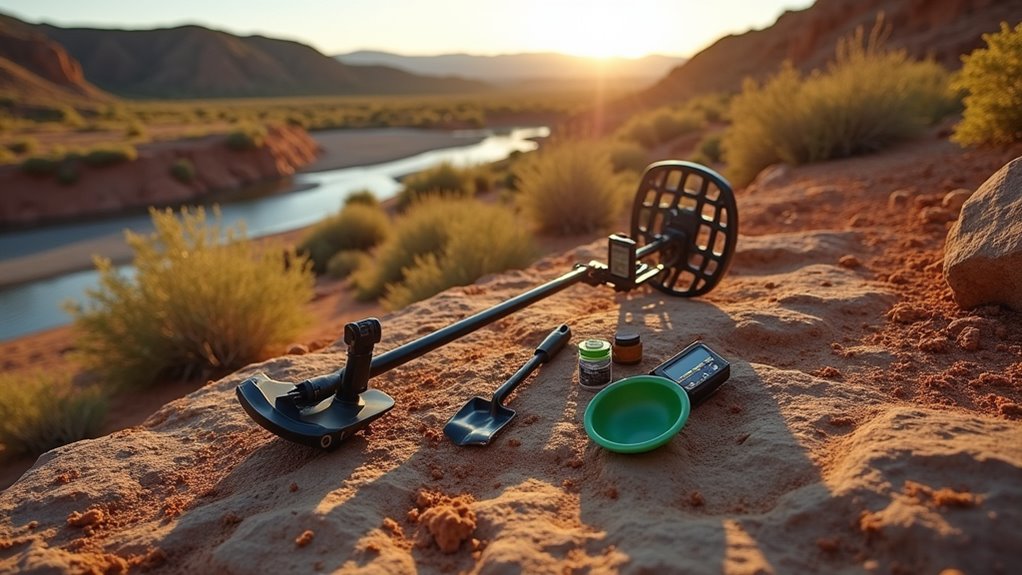
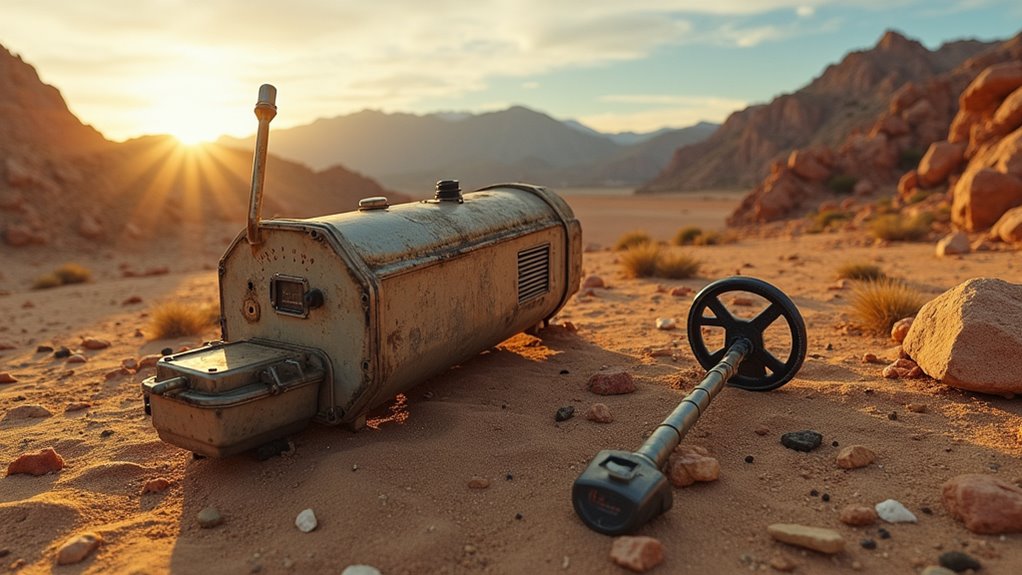
Gold mining equipment spans from basic to beast mode! A 14-inch gold pan with ridges remains the prospector’s faithful companion, while sluice boxes and highbankers handle the heavy lifting. Modern operations deploy dredges and crushers for serious tonnage – but don’t forget those specialized metal detectors that sniff out those sneaky nuggets. Safety gear isn’t optional either (unlike your weekend plans). There’s a whole world of glittering possibilities waiting in those hills.

From basic pans to high-tech dredges, the arsenal of gold mining equipment has evolved into a dazzling array of tools that’d make any prospector drool. The humble 14-inch pan remains the quintessential starting point – plastic or metal, take your pick. These circular workhorses, ranging from tiny 8-inchers to massive 24-inch behemoths, often come with built-in ridges that make separating those precious nuggets from worthless pebbles a breeze. Modern pans feature closer riffle spacing for improved capture of fine gold particles.
From simple pans to modern dredges, today’s gold mining gear offers prospectors an impressive toolkit for uncovering nature’s hidden treasures.
Throw in a suction bottle, some tubes, and a magnifier, and you’ve got yourself a basic prospecting kit that’d make old-timers proud.
But let’s get real – serious gold hunters don’t stop at pans. Sluice boxes are where the action really heats up. These long, narrow contraptions with their riffled bottoms are pure genius at separating gold from everything else. Modern versions typically rock aluminum construction, though you’ll still find wooden and plastic models lurking around. The effectiveness of these boxes relies on gravity separating techniques to process gold-bearing materials efficiently.

Speaking of upgrades, highbankers and power sluices kick things up several notches by adding pumps that mimic natural water flow – perfect for processing larger amounts of material without breaking your back.
Now we’re talking serious hardware with gold dredges. These floating beasts are basically underwater vacuum cleaners for gold, sucking up river-bottom sediment and channeling it through sluice boxes or trommels. Just don’t forget the permits – governments tend to get tetchy about people vacuuming their waterways.
Metal detectors have evolved too, with specialized gold-hunting models that’ll pick up tiny pieces other detectors miss. Whether you’re team VLF or team PI technology, these electronic wizards are essential for finding those elusive nuggets hiding in plain sight.
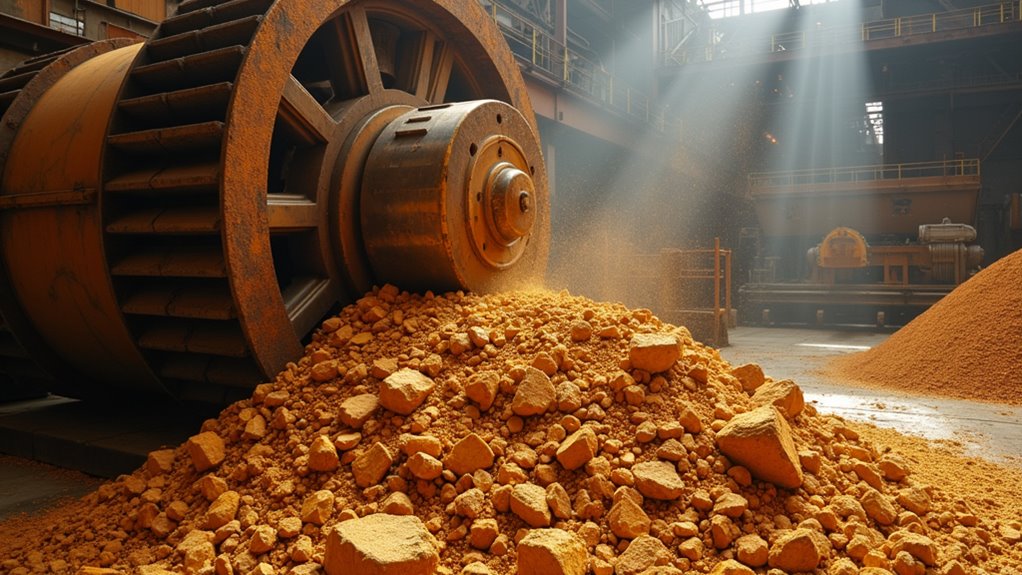
When mother nature gets stubborn, rock crushers and mills enter the chat. These bad boys pulverize rocks into submission, revealing the golden treasure within. From mobile units to massive stationary crushers, they’re game-changers for processing ore-bearing rock.

Commercial operations often employ cone crushers, turning mountains of stone into manageable gravel faster than you can say “gold rush.”
Safety equipment might not be sexy, but it’s what keeps prospectors alive to dig another day. Sturdy boots, protective clothing, and essential supplies like water and sunscreen are non-negotiable.
Underground operations take things further with refuge chambers and specialized PPE. The smart prospector knows that all the fancy equipment in the world won’t help if you’re not around to use it.
And while some might scoff at “unnecessary” safety gear, experienced miners know better – they’ve seen what happens when mother nature decides to remind everyone who’s boss. In this game, proper equipment isn’t just about finding gold – it’s about living to spend it.
Frequently Asked Questions
How Much Does Professional Gold Mining Equipment Typically Cost?
Professional gold mining equipment spans a dizzying price range, from basic $50 gold pans to multi-million dollar processing plants.
Entry-level prospectors might drop $2-10k on dredges and highbankers, while mid-tier operations need $10-50k for trommels and shaker tables.
The big boys? They’re shelling out $500k+ for wash plants and flotation cells.
Serious mining ain’t cheap – full processing setups can easily hit $5 million or more!
What Licenses Are Required to Operate Gold Mining Equipment Legally?
Operating gold mining equipment legally requires a layered approach to permitting.
Miners need federal permits like NPDES from EPA and possibly BLM authorization. State-level permits for environmental compliance and water rights are essential.

Don’t forget local business licenses and zoning permits!
Equipment-specific requirements vary – suction dredges face strict size limits, while heavy machinery needs special certifications.
Mercury use? That’s basically a no-go these days.
Can Gold Mining Equipment Be Rented Instead of Purchased?
Yes, mining companies widely offer equipment rentals as a cost-effective alternative to purchasing.
Monthly payments typically run between 3.25-7% of equipment value, with terms from 24-72 months. Companies can access excavators, drills, crushers, and specialized tools without massive upfront costs.

Quick approvals for up to $500k are common, while larger amounts need financial docs. Added perks include maintenance services and the flexibility to upgrade as technology advances.
How Long Does It Take to Become Proficient With Mining Equipment?
Becoming proficient with mining equipment follows a clear progression.
Basic tools like pans and shovels take 2-4 weeks to grasp, while intermediate gear such as highbankers needs 6-12 months for real mastery.
Advanced equipment like dredges demands 3-6 months of dedicated practice.

The full journey to equipment mastery typically spans 3-5 years, though some seasoned pros say it’s a lifelong learning process.
Each piece has its own quirky learning curve!
What Maintenance Schedule Should Be Followed for Gold Mining Equipment?
Mining equipment demands a rigorous maintenance rhythm. Daily inspections catch immediate issues, while weekly checks focus on critical systems like brakes and hydraulics.
Monthly servicing targets deeper component health – think oil changes and belt tensions. The real kicker? Every 250-500 operating hours needs thorough fluid analysis.
Annual overhauls, scheduled during planned shutdowns, keep the beasts running smoothly. Plus, that predictive monitoring tech? It’s catching problems before they explode into costly nightmares!