Modern gold washing plants and trommels are absolute beasts at processing ore – we’re talking 10 to 6,000 tons per hour! These bad boys combine rotating cylinders, spray bars, and interchangeable screens to liberate that precious yellow metal from stubborn clay and debris. With recovery rates hitting a whopping 97%, today’s systems are light-years ahead of old-school panning methods. Mercury-free processing and water recycling? Yeah, that’s how the pros play now. The deeper you go, the shinier it gets.

While artisanal miners might still pan for gold with a simple bowl, today’s serious mining operations demand industrial-scale washing plants and trommels that can process thousands of tons per hour. These behemoth machines have evolved into sophisticated processing powerhouses, capable of handling anywhere from a modest 10 tons to a whopping 6,000 tons per hour. And let’s be real – that’s a lot of dirt to sift through for those precious yellow flakes. For DIY enthusiasts building their own systems, selecting quality bucket materials is crucial for durability and performance.
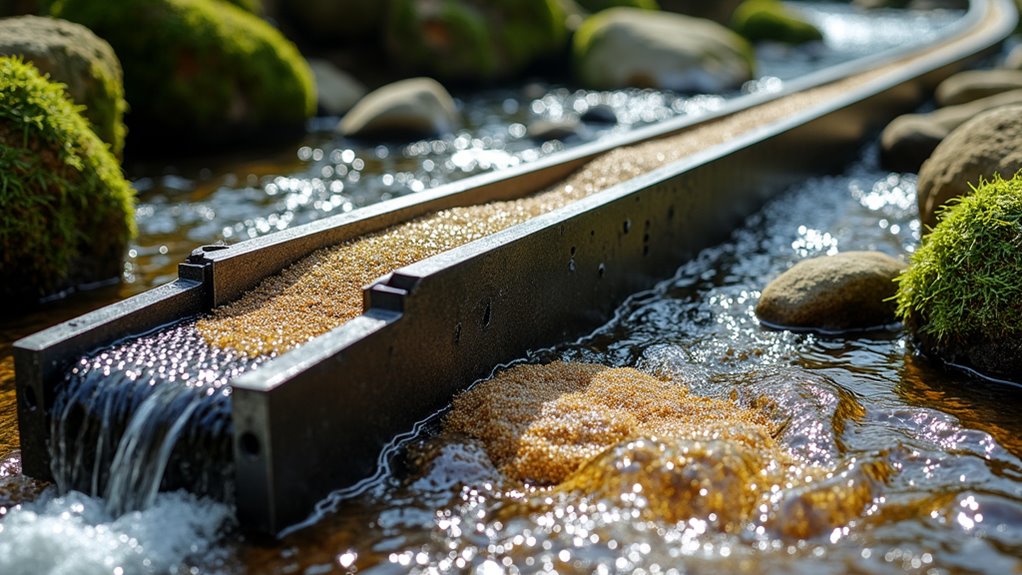
Modern gold washing plants come in various flavors, each with its own special sauce for separating the precious from the worthless. Trommel systems, those rotating cylinders of possibility, screen and wash material while sluice boxes use good ol’ gravity to make the magic happen. Jig concentrators bounce the heavy stuff around, and centrifugal concentrators spin the living daylights outta the ore to catch even the tiniest gold particles. These advanced systems can achieve a remarkable gold recovery rate of up to 97%. It’s like a gold-catching party, and everyone’s invited! Additionally, some operations utilize suction dredges to maximize gold recovery from riverbeds.
From simple sluice boxes to high-tech trommel systems, modern gold processing plants use every trick to snag those precious yellow specks.
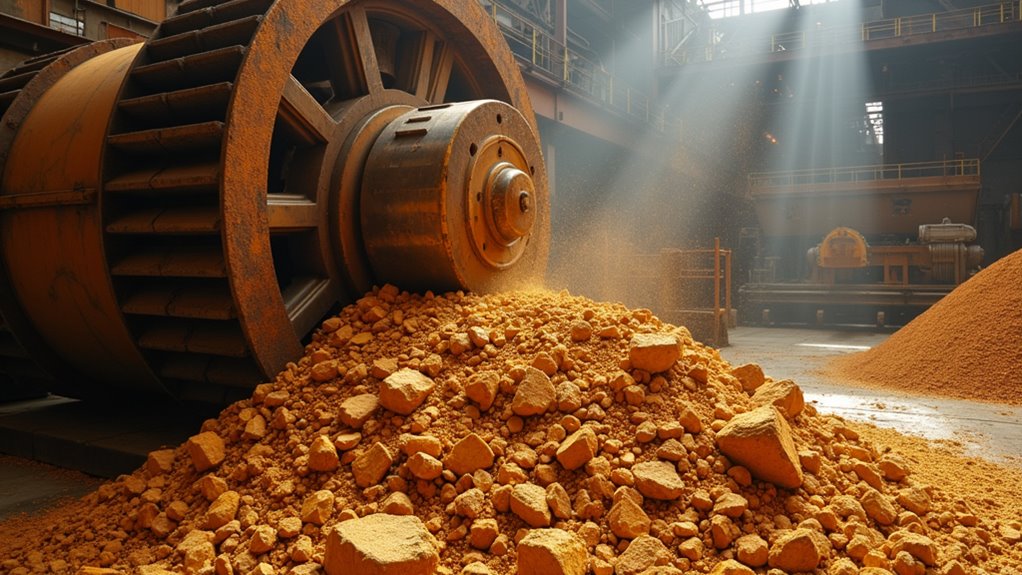
The heart of these operations often lies in the trommel design – a rotating screened cylinder that’s basically a giant mechanical gold-panning machine on steroids. With adjustable slopes, interchangeable screen panels, and spray bars that blast clay into submission, these bad boys are engineered to liberate every possible speck of gold from its earthly prison. Quality equipment ensures they’re not messing around when it comes to efficiency. These machines are specifically designed to remove clay, silt, and debris that can hinder gold recovery. Additionally, the use of advanced technology in these systems allows for real-time monitoring of the separation process, enhancing gold recovery efficiency and reducing operational costs.

Environmental consciousness has finally caught up with the gold processing world (about time, right?). Modern plants now offer mercury-free and cyanide-free processing options, water recycling systems that would make environmentalists weep with joy, and even dry processing alternatives for regions where water is scarcer than gold itself. It’s not just about getting the gold anymore – it’s about getting it right.
These systems are designed to recover gold particles down to 40 microns – that’s smaller than a grain of talcum powder, folks. Multiple concentration stages guarantee maximum recovery, while security systems keep sticky fingers at bay. The really impressive part? These plants can be customized faster than you can say “gold rush,” with modular designs that make transport and setup a breeze.
The industry has come a long way from the days of simple panning, evolving into a high-tech treasure hunt that combines brute force with surgical precision. With on-site installation services, operator training programs, and lifetime technical support, manufacturers aren’t just selling equipment – they’re selling complete solutions.
And in a world where every gram of gold counts, these washing plants and trommels aren’t just processing ore – they’re printing money. Well, technically they’re finding it, but you get the point.
Frequently Asked Questions
How Often Should I Replace the Trommel Screen Mesh?
Trommel screen replacement timing depends on how brutal the material is – no two operations are alike!
Light-duty setups can squeeze 6-12 months outta their mesh, while heavy-duty ops might need fresh screens every 1-3 months.

Watch for the telltale signs: torn mesh, efficiency drops, or material sneaking through where it shouldn’t.
Pro tip: daily checks and proper tensioning can stretch that lifespan, but don’t push it too far – damaged screens are money down the drain!
What Is the Minimum Water Pressure Needed for Efficient Gold Washing?
For efficient gold washing, minimum water pressure typically hovers around 25-35 PSI for basic operations.
But here’s the kicker – material type makes all the difference! Clay-heavy stuff demands 40-50 PSI, while sandy material can get by with less.

Large-scale operations often crank it up to 60-100 PSI for maximum efficiency.
Pro tip: maintaining consistent pressure beats raw power – fluctuations can seriously mess with recovery rates.
Its all about finding that sweet spot!
Can Trommels Be Used Effectively in Freezing Weather Conditions?
Trommels can operate in freezing conditions with proper adaptations. Mining operators commonly limit operations to 175-day seasons in extreme cold regions like Interior Alaska.
Key adjustments include maintaining constant flow to prevent line freezing, using insulated pads, and adjusting drum angles.
While it’s more expensive and requires specialized equipment, freezing weather operation is totally doable – just gotta deal with slower chemical reactions and higher energy costs for solution heating.
What Safety Certifications Are Required for Operating Gold Washing Plants?
Operators need MSHA Part 46 certification, requiring 24 hours of new miner training and yearly 8-hour refreshers.
Site-specific hazards, emergency procedures, and equipment operation must be covered.
Additional certifications may include forklift safety, hazmat handling, and first aid/CPR.

Some states mandate supplemental training.
Documentation of all completed certifications must be maintained on-site.
A competent person must oversee safety programs and verify training compliance.
How Do Different Soil Types Affect Gold Washing Plant Performance?
Different soil compositions dramatically impact gold washing plant efficiency.
Clay-rich soils slow operations and clog systems, while sandy soils enable faster processing but accelerate equipment wear.

Gravel-heavy material demands robust screening but often yields bigger nuggets.
The real troublemaker? Organic-rich soils – they’re notorious for messing with recovery rates and water quality.
Each soil type requires specific adjustments to maximize plant performance and gold recovery.