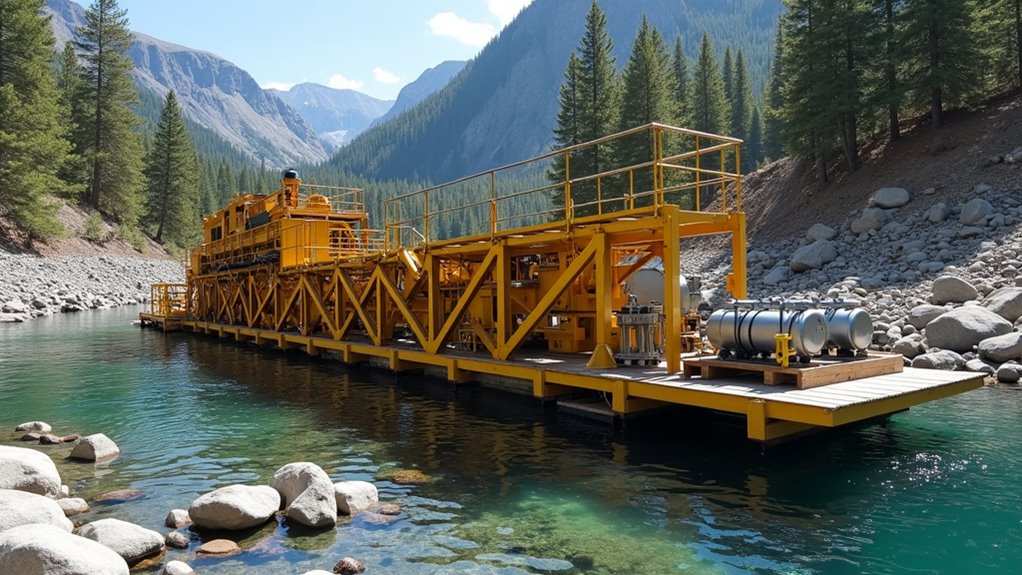
Modern gold mining operations are crushing it with state-of-the-art conveyor systems that transform ore transport into a thing of beauty. These bad boys can move materials up to 25km in a single hour – take that, traditional hauling! Equipped with smart sensors and real-time monitoring, today’s conveyors slash costs while keeping environmental impact in check. Sure, they’re pricey upfront, but the long-term savings? Pure gold. The tech revolution in mining material handling is just getting started.

While gold mining has always been about the glittering end product, it’s the behind-the-scenes conveyor systems that are the real unsung heroes of modern mining operations. These mechanical marvels have completely transformed how precious metals get from point A to point B, revolutionizing efficiency and safety while making traditional ore transportation methods look like something from the stone age.
The sheer variety of conveyor systems in today’s gold mines is mind-boggling. From overland pipe conveyors that stretch for kilometers to those nimble little grasshopper systems that hop around like mechanical insects, each type serves a specific purpose. And let’s not forget about those beastly radial spreaders that handle materials with the precision of a surgeon – albeit a very large, industrial one. The implementation of automated material handling has dramatically increased mining productivity. At Hidden Valley Mine, the overland conveyor handles an impressive 14,000 tonnes daily across challenging terrain. Additionally, the use of advanced extraction techniques enhances the overall efficiency of these systems, which is particularly relevant in open pit mining where large volumes of material must be moved efficiently. Interestingly, the potential for increased investment opportunities in Africa’s mining sector has also driven technological advancements in these systems. Furthermore, these systems contribute to sustainable mining practices by minimizing the need for heavy trucks, which reduces greenhouse gas emissions. Moreover, the rise of next-gen exploration tools is paving the way for a more innovative and efficient future in the gold mining industry.
What’s truly remarkable is how these systems can move materials up to 25 kilometers in just an hour, laughing in the face of steep inclines and obstacles that would make truck drivers break out in cold sweats. The energy efficiency is nothing to scoff at either – some systems even recover energy on downhill sections, because who doesn’t love a conveyor belt that pays it forward?

The tech integration is where things get really interesting. Modern conveyor systems are basically the Teslas of the mining world, packed with sensors and monitoring systems that track every pebble’s journey. Drones buzz overhead, mapping ideal routes while real-time data flows faster than the ore itself. It’s like having a crystal ball that actually works, minus the mystical hand-waving.
Speaking of money (because isn’t that what gold mining’s ultimately about?), these systems don’t come cheap. The initial investment can make accountants reach for their anxiety meds, but the long-term savings are worth every penny. Reduced transportation costs, improved throughput, and fewer workplace incidents add up to a pretty compelling business case – even if smaller operations might need to stick to their trucks for now.
The environmental impact is significantly less severe compared to traditional methods. These systems whisper rather than roar, making them ideal for operation near populated areas or sensitive ecosystems. They’re like the ninjas of the mining world, getting the job done without drawing attention to themselves.
Though maintaining these complex systems requires specialized knowledge and regular attention – sort of like having a high-maintenance partner who’s totally worth the effort.

In the end, conveyor systems have become as essential to gold mining as pickaxes were to the prospectors of old. They’re the backbone of modern mining operations, quietly moving mountains while the world focuses on the sparkly stuff. And while they might not have the glamour of the precious metal they transport, these mechanical marvels deserve their moment in the spotlight – even if they’re too busy keeping the industry moving to take a bow.
Frequently Asked Questions
What Is the Average Lifespan of Conveyor Belts in Underground Gold Mines?
Underground gold mine conveyor belts typically last 3-10 years – but don’t bet your bullion on it!
Harsh conditions down there are brutal on equipment, folks. While proper maintenance can push lifespans past 10 years, most belts cave to the relentless assault of abrasive materials and moisture.
Smart operators know the drill: regular maintenance is key. But even with TLC, these workhorses eventually need replacing.

That’s just the underground reality, baby!
How Do Extreme Temperatures Affect Material Handling Equipment Performance in Gold Mines?
Extreme temperatures wreak havoc on material handling equipment’s performance.
High heat (50°C+) causes rubber belts to expand and soften, while bearings start failing above 150°C.
Cold temps make belts brittle and crack-prone.
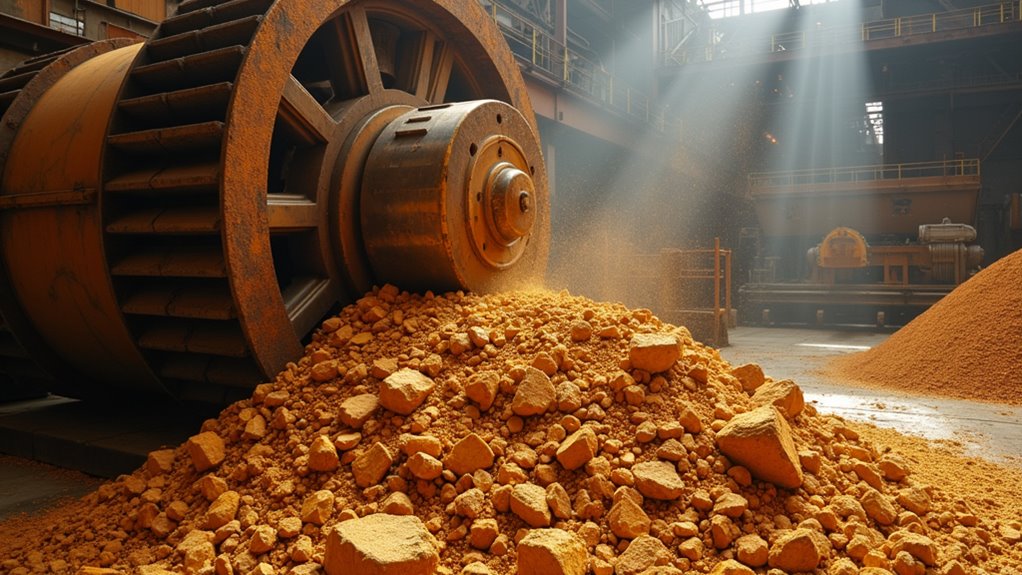
The constant thermal cycling fatigue’s components, especially in deep mines where equipment heat compounds the problem.
Critical systems like lubricants break down faster, and metal parts expand/contract, throwing alignments off-kilter.
Maintenance nightmares ensue!
What Safety Certifications Are Required for Conveyor Operators in Mining Operations?
Mining conveyor operators must hold multiple safety certifications. MSHA Part 46 training is mandatory, requiring completion of site-specific hazard recognition and general safety procedures.

Operators need a valid 5000-23 form showing completed training. Additional certifications include Material Handling Safety and Certified Conveyor Operator credentials, which cover equipment operation, maintenance, and emergency protocols.
Annual refresher courses keep certifications current and guarantee regulatory compliance.
How Often Should Emergency Stop Systems Be Tested on Mining Conveyors?
Emergency stop systems demand monthly maintenance and testing, with some variation based on system category.
Category 2 systems require automatic testing at 100x the demand rate, while high MTTFD systems theoretically need proof tests every 20 years.

However, MSHA data shows a 2% failure rate, suggesting more frequent checks are prudent.
Best practice includes monthly visual inspections of switches, pull cords, and control circuits to catch common failure points before they become hazards.
What Are the Power Consumption Rates for Different Types of Mine Conveyor Systems?
Power consumption varies considerably across mining conveyor systems.
Overland conveyors typically consume 0.1 kWh per ton-kilometer, while underground systems draw more power due to ventilation needs and complex layouts.
Processing plant conveyors, especially in grinding circuits, are the real energy hogs – consuming up to 90% of plant power.
The massive 98km copper ore conveyor system in action today gulps down 58MW to move 100 million tons annually.