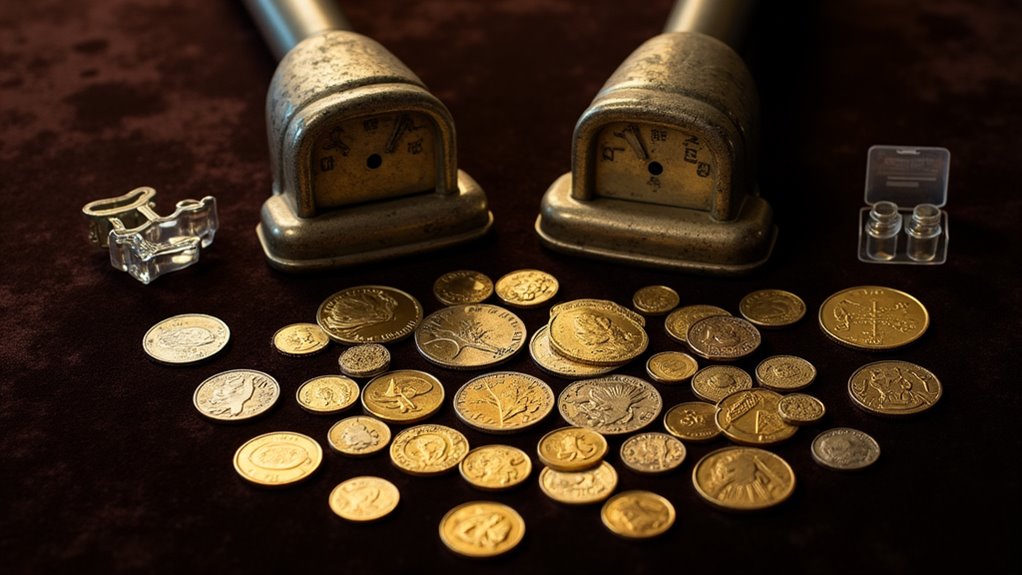
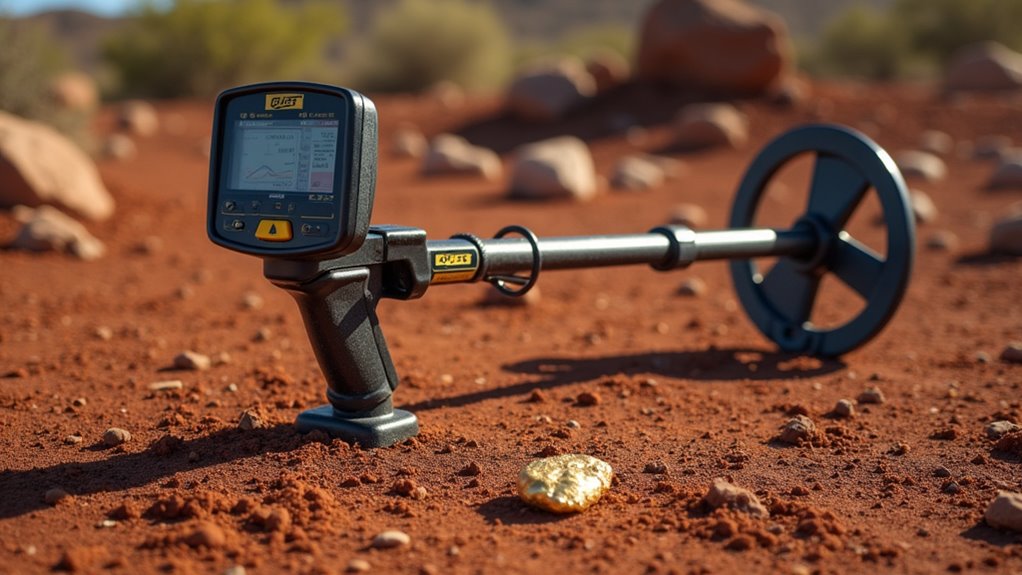
Gold refining with induction furnaces is a game-changer in precious metal processing. The process starts by cleaning raw gold, then heating it to 1064°C using electromagnetic currents – no external heat needed, how’s that for efficiency? Flux materials like borax lower the melting point while lead or silver help collect pure gold. After precipitation with sodium bisulfite and electrolysis, you’ve got yourself 99.99% pure gold. There’s way more to this fascinating metal transformation than meets the eye.

Turning raw gold into its purest form isn’t for the faint of heart – it’s a complex dance of heat, chemistry, and precision that separates the pros from the wannabes. Let’s cut through the glitz and get down to the nitty-gritty of how induction furnaces transform raw gold into something worth bragging about.
First things first – you gotta get that gold cleaned and sorted. High-grade ore requires more complex processing methods. No shortcuts here, folks. The real magic happens when that induction furnace fires up, using electromagnetic currents to heat the metal without any external heat source. Pretty slick, right? Operating the furnace is completely safe operation since it produces no harmful gases or fumes. The crucible gets preheated to around 300-400°C for 15 minutes, cause nobody likes a cold start. Then the gold goes in, and the temperature cranks up to a whopping 1064°C. That’ll definitely melt your face off – and the gold too.
Firing up an induction furnace to purify gold isn’t child’s play – we’re talking face-melting temperatures and electromagnetic wizardry.
Here’s where it gets interesting – and by interesting, I mean potentially explosive if you mess it up. The pros add flux like soda or borax to lower the melting point, then mix in some lead or silver to collect the pure stuff. But that’s just the warm-up act. The real show starts with aqua regia – a nasty cocktail of nitric and hydrochloric acid that dissolves gold faster than your ex’s promises. The solution gets filtered, leaving behind all the garbage that doesn’t belong. This step is crucial as it ensures the removal of impurities and other metals that would otherwise contaminate the gold.

Now comes the fancy part – precipitation. Drop some sodium bisulfite into the mix (1.5 grams per gram of gold, if you’re counting), and watch pure gold literally fall out of solution. It’s like magic, except it’s actually science. The recovery rates hit up to 95% using sluicing techniques, which ain’t too shabby if you ask anyone who knows their stuff.
For the perfectionists out there (and in this business, you better be one), electrolysis takes things to the next level. Pure gold ions migrate through an electrolyte solution like teenagers to a TikTok trend, depositing themselves onto a cathode with 99.99% purity. Quality control involves fire assays and electronic testing – because if you’re not absolutely certain about your gold’s purity, you’re basically just playing dress-up.
The grand finale? That purified gold gets remelted at 1064°C and formed into whatever shape the market demands. Modern induction furnaces can handle up to 99 different recipes, keeping detailed records that would make an accountant jealous.
It’s a process that demands respect, precision, and just enough crazy to work with potentially deadly chemicals and temperatures that could melt your shoes. But hey, nobody said turning dirt into treasure would be easy.
Frequently Asked Questions
What Safety Certifications Are Required to Operate an Induction Furnace?
Operating an induction furnace ain’t a walk in the park. You need OSHA-mandated safety training certification – no exceptions. Period.
Ground leak detector systems must be certified and regularly tested. ISO 13578:2017 compliance is essential, especially for electric arc furnaces.
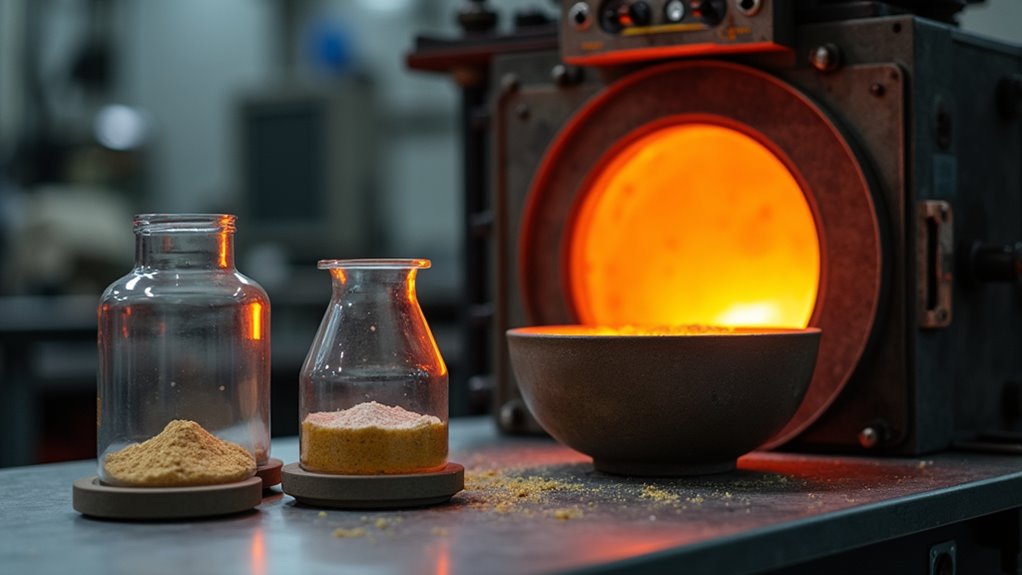
Manufacturers require completion of their specific equipment training programs. Plus, operators need PPE certification based on hazard assessments.
Skip these, and you’re asking for trouble.
How Often Should the Induction Furnace Coils Be Replaced?
Induction coils aren’t cheap – better get their timing right! For heavy industrial use, replacement typically hits every 3-5 years.
But with proper maintenance and lighter workloads, these bad boys can stretch to 10 years.

Don’t just blindly follow a schedule though. Watch for red flags like efficiency drops, power spikes, or visible wear.
Smart operators track performance metrics and cooling system effectiveness – cuz replacing too early wastes cash, too late risks disaster.
What Is the Maximum Temperature Limit for Gold Refining?
The max temperature for gold refining?
Let’s cut to the chase – anything above 1150°C is just showing off.

Sure, induction furnaces can hit a whopping 2000°C, but that’d just vaporize your precious metal faster than a teenager’s allowance.
The sweet spot hovers around 1100°C, just above gold’s melting point of 1064°C.
Going higher is like using a blowtorch to light a candle – totally unnecessary and kinda reckless.
Can Other Precious Metals Be Refined Using the Same Equipment?
You bet – induction furnaces are total workhorses when it comes to precious metals.
These bad boys can handle pretty much anything: platinum, palladium, silver – you name it.

Thanks to temp ranges hitting a crazy 2600°C, even stubborn metals don’t stand a chance.
The EMK-50 crusher handles 50kg of gold or 40kg of silver, while PL1 furnaces make quick work of platinum – just 15 mins to melt a kilo.
Talk about versatile!
What Are the Power Consumption Rates During Different Refining Stages?
Power consumption rates hit different levels during each stage – no surprise there!
Cold starts are energy hogs, eating up 580 kWh/ton even with fancy intermediate frequency furnaces.
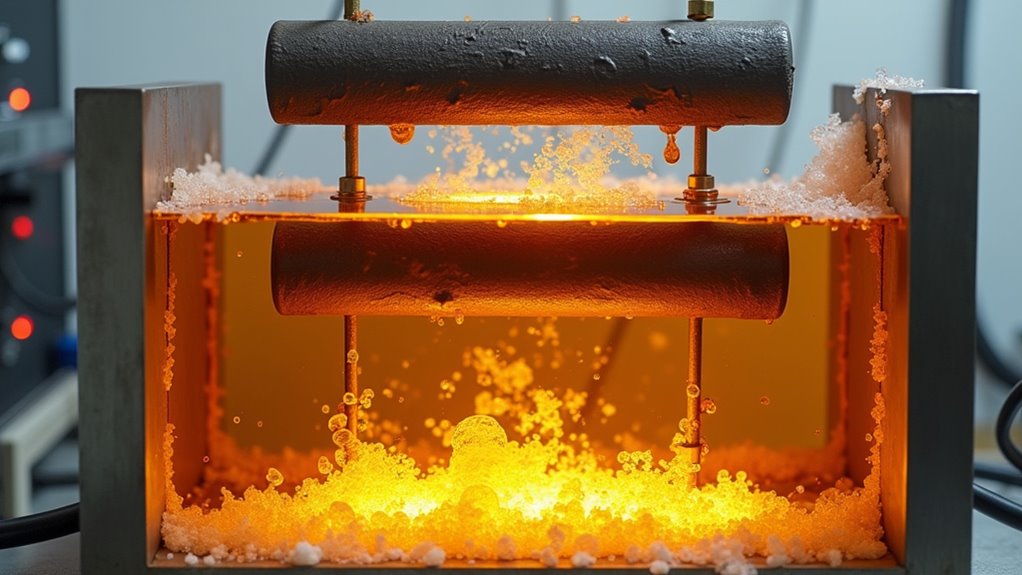
Normal operation is slightly better at 505-545 kWh/ton.
But here’s the kicker – continuous feeding brings it down to 494 kWh/ton.
Pro tip: extended smelting time and proper charge control save serious juice.
Temperature management between runs? Absolutely essential.