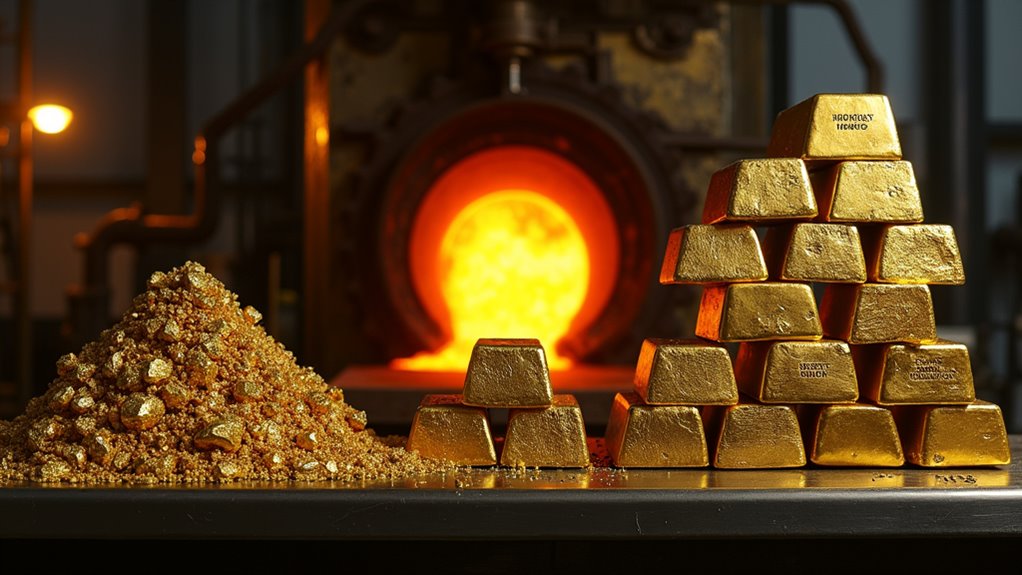

The process of turning raw gold into shiny bars ain’t exactly a walk in the park. First, crude gold gets melted down at scorching temps over 1900°F with flux materials like borax to kick out impurities. Then comes the real fun – chemical processes like cyanidation or the Miller method strip away everything that’s not gold, pushing purity to 99.95%. Finally, the refined gold gets poured into molds, polished, and stamped. There’s way more to this fasinating transformation than meets the eye.

While many dream of striking it rich by finding a massive gold nugget, the reality of turning raw gold into those shiny bars isn’t exactly a walk in the park. The process starts with getting your hands on the raw stuff – whether it’s ore ripped from Earth’s crust, recycled jewelry, or those partially refined doré bars that miners produce. And let’s be real, those doré bars are only about 80% gold – hardly the pure bling everyone’s after.
The real fun begins when that raw material hits temperatures north of 1900°F. That’s when things get seriously hot and heavy. Refiners toss in flux materials like borax and silica – not because they’re trying to make some fancy science experiment, but because these additives grab onto the garbage that’s mixed in with the gold. Add some reducing agents like nitric acid, and you’ve got yourself a party where gold gets to ditch its less desirable companions. The optimal smelting temperature typically ranges between 1150 to 1450 degrees Celsius for the most effective separation. State-sealed scales are used to carefully weigh all materials before processing begins.
When gold hits melting point, it’s not just getting hot – it’s getting a chemical makeover to shed its unwanted extras.
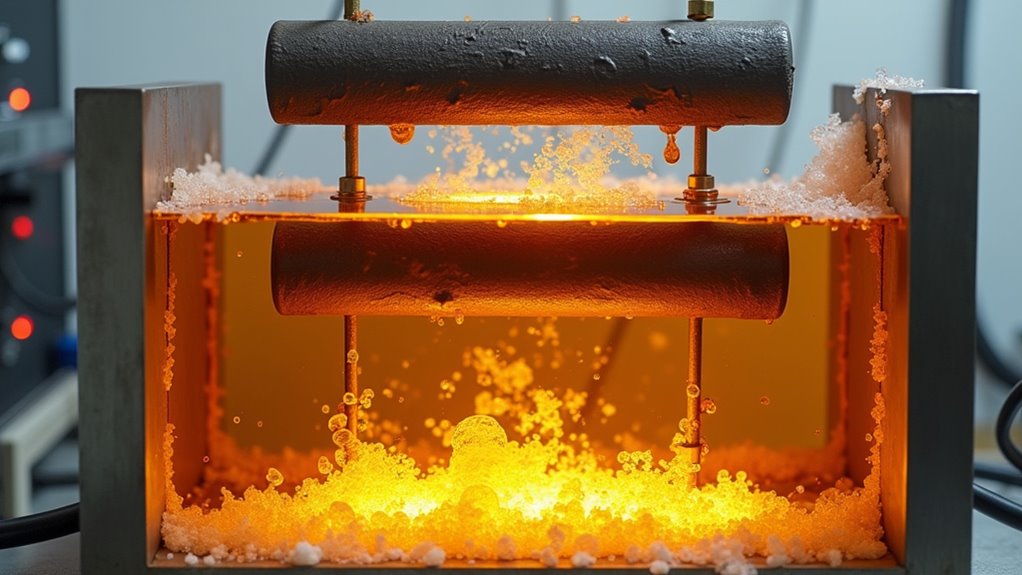
Here’s where it gets interesting – and by interesting, we mean complicated as hell. There’s not just one way to refine gold; there are multiple methods, each with its own quirks. Cyanidation works great for low-grade ores (yeah, they literally use cyanide), while the Miller process hits you with chlorine gas to achieve 99.95% purity. Want even purer gold? The Wohlwill process cranks it up to 99.99% using electricity, because apparently, 99.95% just isn’t good enough for some people. The refining processes are crucial for metal recovery from ores and scrap, ensuring valuable materials are not lost.
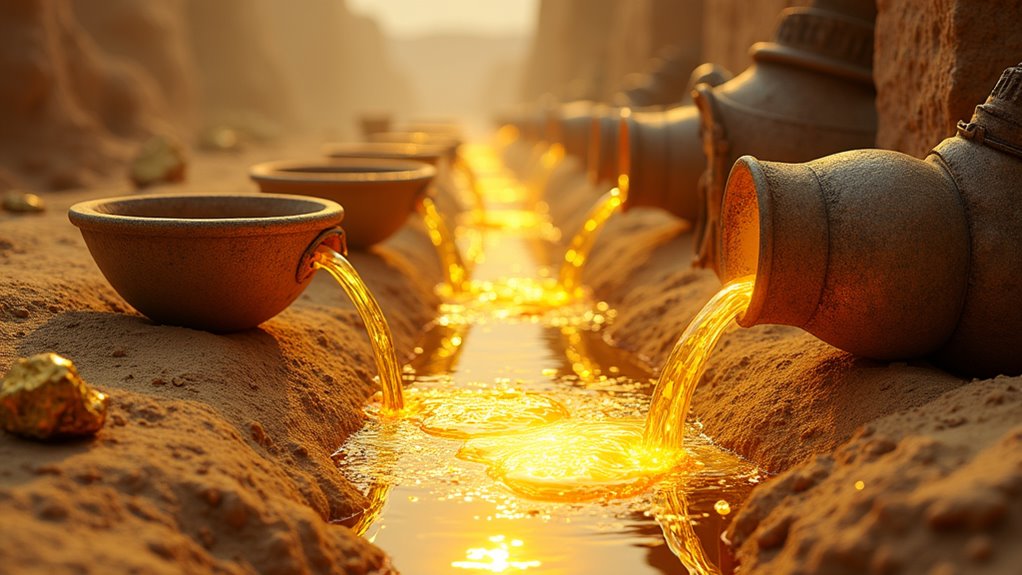
The physical separation techniques are pretty wild too. We’re talking about exploiting gold’s tendency to be heavier than everything else, blasting stuff with water jets, and even using good old-fashioned mercury (though that’s mostly frowned upon these days, for obvious reasons). It’s basically a game of “keep the gold, dump the junk” using whatever means necessary.
Quality control is no joke in this business. These folks are obsessed with testing their gold, using everything from X-ray fluorescence to atomic absorption spectroscopy. They’re basically CSI for precious metals, making sure every bit of gold is exactly what it claims to be.
Finally, after all that drama, the refined gold gets poured into molds to make those iconic bars everyone’s so crazy about. Thirty seconds later, you’ve got yourself a solid gold bar that needs cleaning, polishing, and stamping with its essential stats.
But don’t think you can just walk away with it – these bars go straight into secure vaults, wrapped up in more paperwork than a mortgage application. Every bar needs certificates, assay reports, and enough documentation to make a bureaucrat blush. Welcome to the gold game – where turning rocks into riches is anything but simple.
Frequently Asked Questions
How Long Does the Entire Gold Refining Process Typically Take?
The complete gold refining process typically takes 4-7 days total, from initial ore processing to final bar production.
The longest parts? Initial processing eats up 2-3 days with all that crushing and separating nonsense.
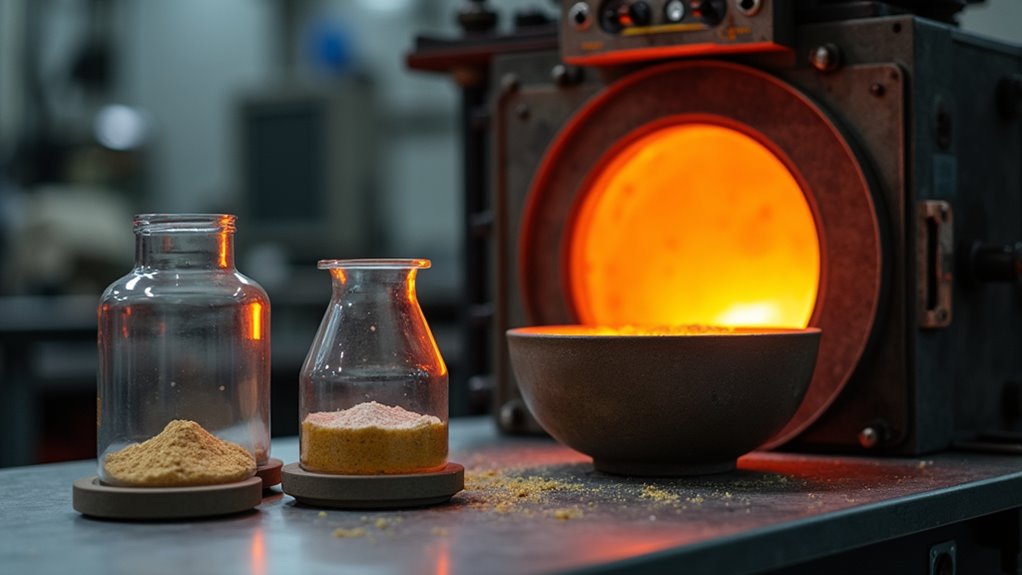
Then there’s chemical refining (8-12 hours) and electrolytic refining (24-36 hours).
Quality control adds another day.
Its not rocket science, but ya can’t rush perfection when dealing with precious metals.
What Safety Equipment Is Required for Handling Chemicals During Gold Refining?
Let’s get real about safety – this isn’t your backyard chemistry set.
You’ll need serious PPE: chemical-resistant suits, heavy-duty gloves, and proper respirators with acid gas cartridges. Face shields and goggles are non-negotiable. Emergency eyewash stations better be nearby.

Those nasty chemicals don’t mess around! And don’t forget proper ventilation systems – breathing in toxic fumes isn’t exactly a smart career move.
No shortcuts here – safety first or game over.
Can Gold Be Refined at Home, or Is Professional Equipment Necessary?
Gold can technically be refined at home, but let’s get real – it’s risky business.
While basic equipment might work for small batches (reaching about 99.5% purity), you’re playing with dangerous chemicals in your garage.

Professional refiners have the fancy toys – electrolysis systems and proper filtration – hitting that sweet 99.99% pure gold.
Plus, they handle toxic waste legally.
Save yourself the headache and potential hospital visit.
What Is the Minimum Amount of Raw Gold Needed for Refining?
You need at least 20 ounces per ton for direct smelting, but most pros won’t touch anything under 50 oz/t.
Small-timers might mess with lower concentrations using cupellation, but that’s a fool’s game.

Industrial refineries laugh at anything below premium concentrations – they’re not running a charity!
The sweet spot? About 1400 oz/t silver with 8 oz/t gold for direct smelting.
Anything less is basically leaving money on the table.
How Much Does Professional Gold Refining Equipment Cost?
Professional gold refining equipment ain’t cheap – that’s for sure.
Small-scale setups start around $2,300, but those are basically toys. Real players need to drop at least $15k-65k for mid-range systems that actually get the job done.
Wanna go big? Industrial-scale plants will set you back anywhere from $250k to a whopping $7.25 million.
Plus, don’t forget the hidden costs like installation, chemicals, and those pesky regulatory fees.