Choosing a gold refinery isn’t about fancy marketing or smooth-talking salesmen. The real deal comes down to cold, hard facts: reputation, technology, and financial transparency. Smart operators look for refineries with modern equipment that consistently hit 99.99% purity, clear pricing structures, and solid security measures. Skip the fly-by-night operations with rusty padlocks and vague payment terms. A legit refinery’s track record speaks volumes – and there’s plenty more dirt to uncover about this shifty industry.

When it comes to turning raw gold into gleaming bullion, choosing the wrong refinery is like trusting your life savings to a sketchy back-alley pawnshop. The gold refining industry is crawling with smooth-talking operators who promise the moon but deliver pyrite. That’s why smart players do their homework before handing over their precious metal to just anyone with a fancy website and some stock photos of gold bars.
First things first – reputation matters more than flashy marketing. A refinery’s track record speaks volumes, so dig into those years of experience, industry awards, and what actual customers are saying. The Better Business Bureau rating isn’t gospel, but it’s a decent canary in the coal mine. If a refinery’s got more complaints than a DMV at lunch hour, that’s your cue to run. After-sales support should include comprehensive training and equipment maintenance programs. It’s crucial to speak with clients directly rather than relying on website testimonials. The connection between gold refining and metal recovery is also a key indicator of a refinery’s expertise.
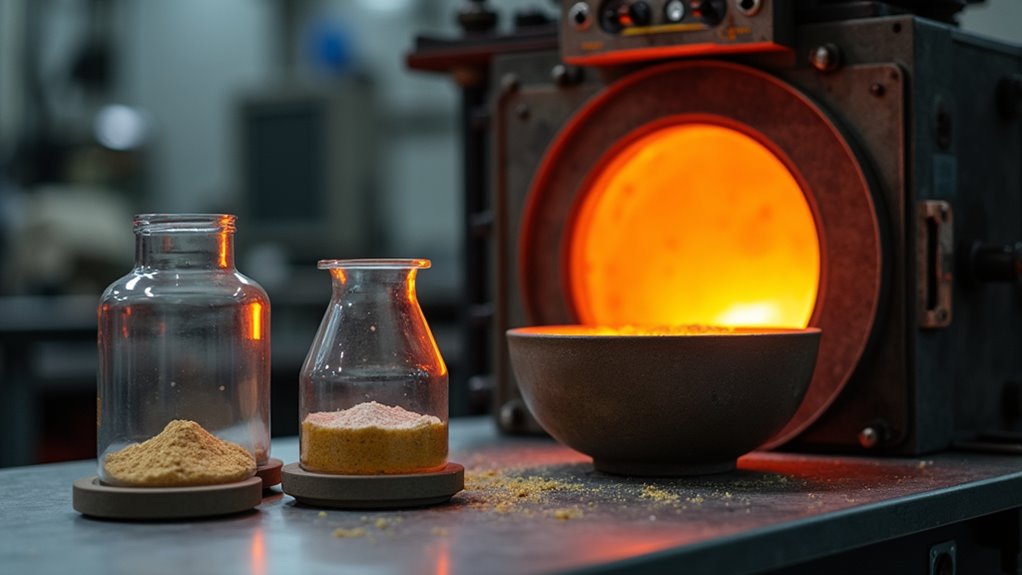
The nitty-gritty of refining processes separates the pros from the pretenders. Whether they’re using Aqua Regia or the Miller Process, their tech better be high-quality and their capacity substantial. Nobody wants their gold sitting in some backlog while equipment from the 1980s wheezes along.
Outdated refining equipment is like trusting your Ferrari to a mechanic using stone tools – prehistoric tech has no place in modern gold processing.

And speaking of quality – if they can’t consistently hit 99.99% purity with solid quality control measures, they’re basically running a glorified smelting operation.
Let’s talk money, because that’s what this is really about. A legit refinery doesn’t play games with hidden fees or vague payment terms. Their pricing should be crystal clear, their rates competitive, and their payment schedule reliable. If they’re dodging questions about additional costs or making excuses about market rates, there’s probably a reason – and it ain’t good.
Security isn’t just a buzzword when you’re dealing with precious metals. Any refinery worth its salt has fortress-level physical security, thorough insurance coverage, and tracking systems that would make FedEx jealous. If their idea of security is a rusty padlock and a sleepy guard dog, keep shopping.
Environmental and ethical practices aren’t just for tree-huggers anymore – they’re essential business factors. Modern refineries need proper waste management, sustainable practices, and ethical sourcing standards. Those who cut corners on environmental compliance usually cut corners elsewhere too. Plus, who wants their gold processing to leave behind a toxic wasteland?
Customer service might seem like a minor detail until you’re frantically trying to track down your shipment at 3 AM. A quality refinery provides dedicated account managers, clear communication, and actual humans who answer the phone. If they treat inquiries like inconveniences and explanations like state secrets, imagine how they’ll handle real problems.
Frequently Asked Questions
What Documentation Do I Need When Sending Gold to a Refinery?
Sending gold to refineries ain’t no joke – you better have your paperwork locked down tight.
Essential docs include government ID, proof you actually own the gold (duh), origin declaration, and shipping manifests.
Don’t forget those AML and KYC forms – refineries gotta cover their butts legally.

Previous assay reports help, but aren’t deal-breakers.
And for pete’s sake, get insurance! Nobody wants their precious metal disappearing into thin air.
How Long Does the Typical Gold Refining Process Take?
The gold refining timeline really depends on whatcha got.
Small batches? Few hours to a day, tops.

Big industrial loads? Could stretch to 3 days.
The Miller process is quick but only hits 99.5% purity.
Want that ultra-pure 99.99% stuff? Better settle in for the Wohlwill process – takes 2-3 days.
Aqua regia’s pretty standard, usually wraps in 1-3 days.

But hey, paperwork and shipping? That’s a whole other headache.
Can Refineries Process Gold Mixed With Other Precious Metals?
Absolutely. Refineries are built to handle gold mixed with all sorts of precious metals – it’s literally their bread and butter.
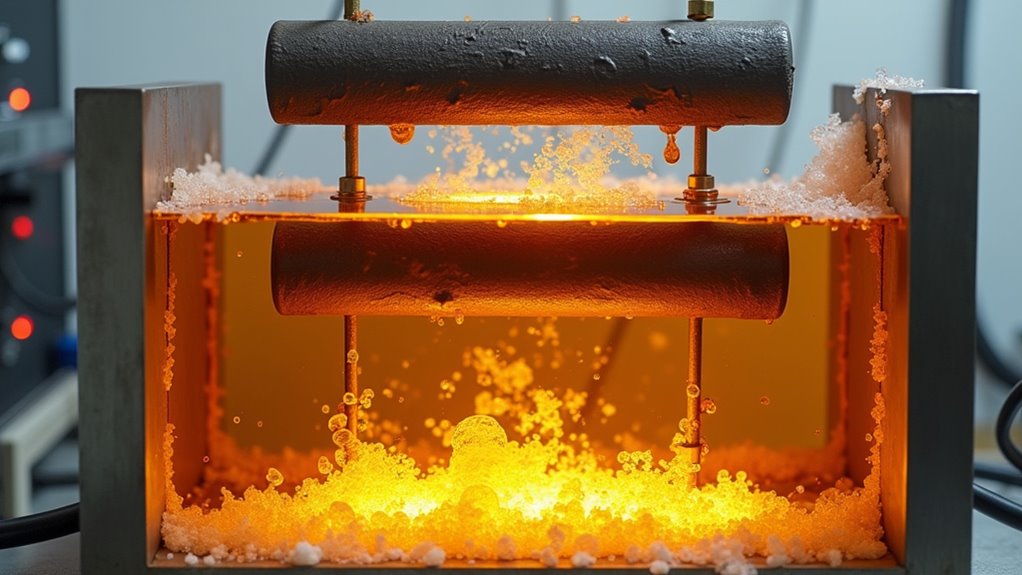
They’ve got specialized equipment and processes to separate gold from silver, platinum, palladium, you name it. Whether it’s doré bars from mines or mixed-metal jewelry, they use techniques like the Miller process and Wohlwill electrolysis to break everything down.
Sure, it’s more complex than pure gold, but any decent refinery can handle the job.
What Are the Minimum Quantity Requirements for Gold Refinery Services?
Here’s the deal with refinery minimums – they’re all over the place.
Some spots’ll take whatever scraps you’ve got, while others won’t touch anything under 100 oz.
Gets even trickier with low-grade stuff – those minimums shoot way up.
Small batches? Yeah, you’ll probably get slapped with higher fees per ounce.
But here’s the kicker – some refineries combine smaller lots together, so you might catch a break there.
Just gotta shop around.
Are There Different Pricing Tiers Based on Gold Purity Levels?
Gold purity absolutely impacts pricing – it’s just common sense.
Higher karat gold (24K) commands premium refining rates, while lower purity stuff gets the budget treatment. Most refineries use tiered pricing based on purity levels – 24K, 18K, 14K, and 10K each have their own price point.
They’re not stupid – purer gold requires more precise handling and better equipment. Plus, market demand for specific purities affects what refineries can charge.
Simple economics, folks.