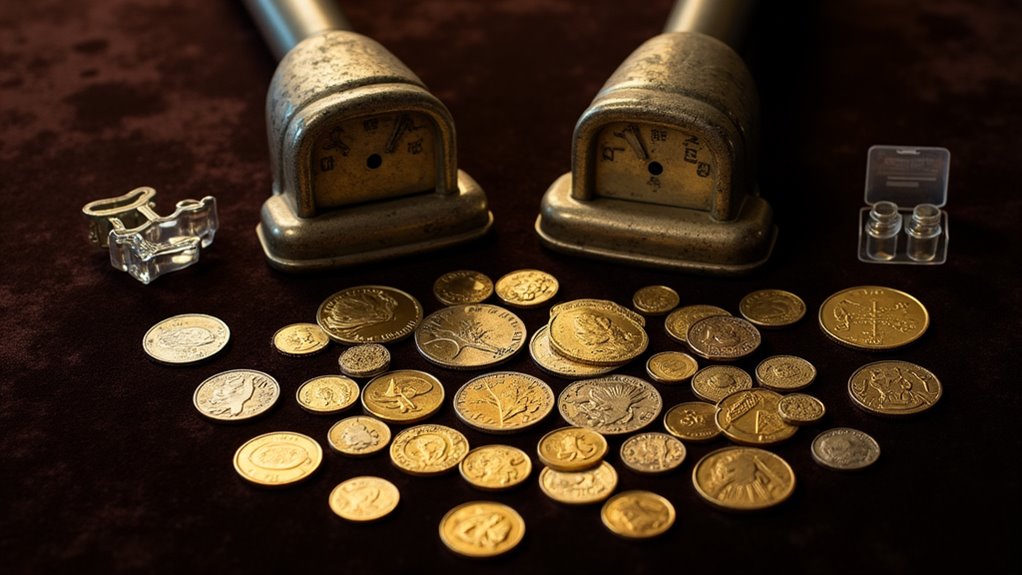
Valcambi’s Swiss fortress pumps out a staggering 5.1 tonnes of precious metals daily, thanks to their 100% robotic manufacturing setup.
They’re the world’s biggest refinery, churning out everything from tiny 1g bars to massive 1000g chunks of pure gold. Sure, they’ve got some sketchy Dubai dealings and questionable “green” initiatives, but when you’re processing 60-70% of global gold trade, who’s gonna complain?

Nestled in the pristine Swiss Alps, Valcambi gold refinery churns out more precious metals than you can imagine – we’re talking a whopping 5.1 tonnes per day. This powerhouse isn’t just another run-of-the-mill operation; it’s the world’s only refinery using 100% robotic processes to manufacture gold bars. Talk about living in the future. Rajesh Exports Ltd. has made this facility even more impressive since acquiring the world’s largest refinery.
Deep in Switzerland’s Alps, Valcambi’s robotic gold refinery defines the future of precious metals, churning out tons daily with machine precision.
With an annual capacity exceeding 2,000 tonnes of gold, silver, platinum, and palladium, Valcambi dominates the global precious metals scene like a boss. They’re pumping out 7.1 tonnes of gold bars and coins daily, while casually tossing 2.6 tonnes of silver products into the mix. And we’re not talking about mediocre stuff here – their gold reaches a mind-blowing 999.99 fineness. Beat that.

But here’s where things get interesting (or should we say controversial?).
Despite their fancy “Green Gold” initiative and high-minded ethical standards, Valcambi’s got some explaining to do. Post-2019, they’ve been caught up in some seriously sketchy business involving gold imports from Dubai. The company relied solely on Trust One Financial for their due diligence information rather than conducting their own inspections.
Oops.
Seems like those stringent due diligence processes might need a tune-up. It’s essential for refineries to prioritize evaluation criteria that ensure ethical sourcing and transparency.
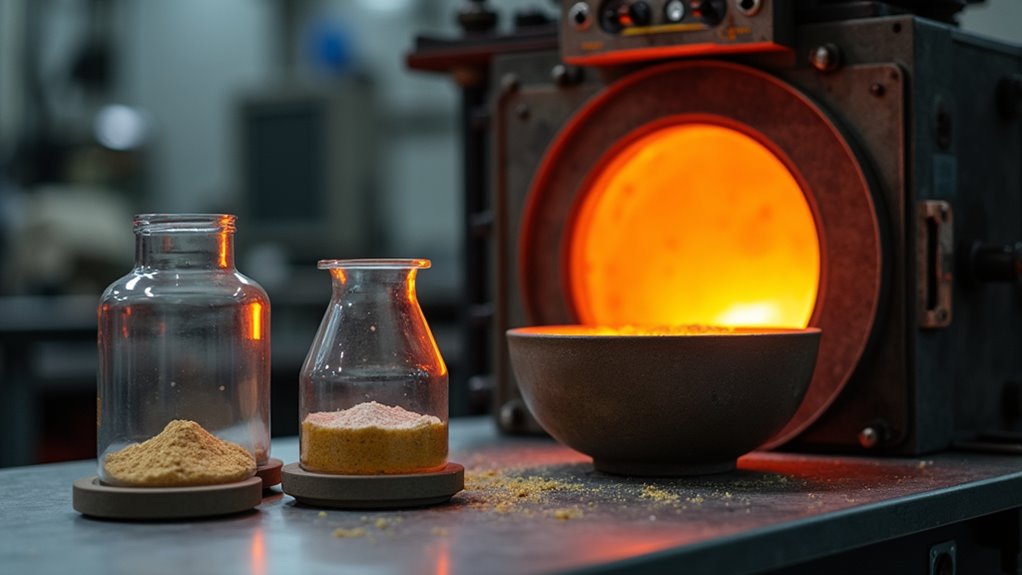
Still, you can’t deny their innovation game is strong. They invented the first minted gold bar in the world and developed these neat CombiBars® that probably make other refineries jealous.
Their product range is ridiculous – from tiny 1g minted bars to chunky 1,000g cast bars, plus all sorts of fancy customized designs for those who want their gold with a personal touch.
Their influence reaches far beyond those Alpine peaks. As Switzerland’s premium refiner, they’re part of the reason the country handles 60-70% of global gold trade.
They’ve got everyone from luxury watch manufacturers to central banks knocking at their door. And those accreditations?

LBMA, LPPM, ISO – they’ve collected them like Pokemon.
The tech they’re using isn’t just impressive – it’s revolutionary. They’re mixing and matching refining techniques based on material analysis, offering segregated processing for their Green Gold program, and basically showing everyone else how it’s done.
But let’s keep it real – all this innovation doesn’t erase those pesky questions about their supply chain transparency and potential connections to conflict zones.
Look, Valcambi’s story is complicated. They’re simultaneously pushing the boundaries of what’s possible in precious metal refining while maneuvering the murky waters of global trade ethics. They’re the industry leader who’s both revolutionizing processes and facing accusations of cutting corners.

It’s a classic tale of innovation meets controversy, proving that even in the gleaming world of gold refining, not everything that glitters is ethically sourced.
Frequently Asked Questions
How Many Security Measures Does Valcambi Implement to Protect Its Gold Reserves?
Valcambi ain’t messing around with security – they’ve got a whopping 20 distinct measures protecting their precious metal stash.
From 24/7 surveillance and dedicated security teams to fancy MintMark SI tech and tamper-proof packaging, they’re locked down tight.
They’ve even got this obsessive system tracking every single gram of gold that comes through their doors.

Good luck trying to sneak anything past these paranoid perfectionists!
What Environmental Initiatives Has Valcambi Adopted in Recent Years?
Valcambi’s gone full-on eco-warrior lately.
They’ve slashed water usage by a whopping 67.3% since 2016 – not too shabby!
Switched to 100% renewable energy in 2022, running on Swiss hydro and solar power.
Their solar setup cranked out 91,775 kWh in 2022 alone.
They’ve already hit their CO2 reduction target 6 years early and ditched plastic foam packaging.
Plus, they’re backing eco-friendly mining practices and joined the UN Mercury Partnership.
How Does Valcambi Verify the Authenticity of Gold From New Suppliers?
Valcambi doesn’t mess around when it comes to new gold suppliers. They run a hardcore KYC process, digging deep into suppliers’ legal compliance and mining practices.
The real fun starts with physical testing – XRF analysis, fire assays, and even laser ablation to check composition. They’re obsessed with documentation too, cross-checking serial numbers and validating certificates.
And yeah, they’ve jumped on the blockchain bandwagon for extra traceability. No sketchy gold gets through their doors.
What Percentage of Valcambi’s Workforce Consists of Local Swiss Residents?
According to the latest data from 2023, just 26% of Valcambi’s workforce are Swiss nationals or residents – a drop from 31% in 2022 and 30% in 2018.
Pretty wild that a Swiss refinery relies so heavily on Italian cross-border workers, who make up a whopping 74% of staff!
Though notably, all 4 top management positions are held by Swiss nationals.
Talk about a stark contrast in the workforce structure.
How Does Valcambi Handle Gold Recycling From Electronic Waste?
Valcambi’s got a pretty slick e-waste recycling game going. They take all those junked electronics packed with precious metals and work their magic to extract the gold.
Their specialized techniques – which they’re pretty tight-lipped about – separate the gold from other materials. They’ve even got this mixed-gold option that keeps costs down while staying efficient.
Sure beats letting all that gold rot in landfills, right? At least someone’s thinking ahead.