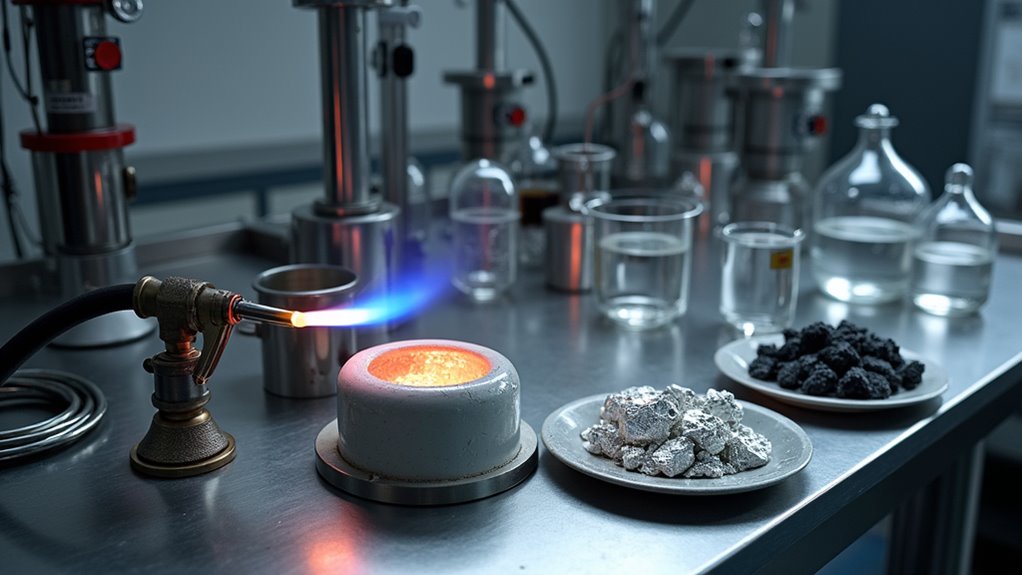

Silver refining ain’t for the faint of heart – it’s a complex process demanding serious equipment and safety measures. Common methods include pyrometallurgical refining (using heat), electrochemical processes like Moebius, and the silver chloride approach. Each technique requires specific tools, from crucibles to electrolysis cells, plus proper chemical handling and waste disposal. While home refining’s possible, the pros use industrial-grade setups for ideal results. Those hungry for pristine silver purity should buckle up for what comes next.
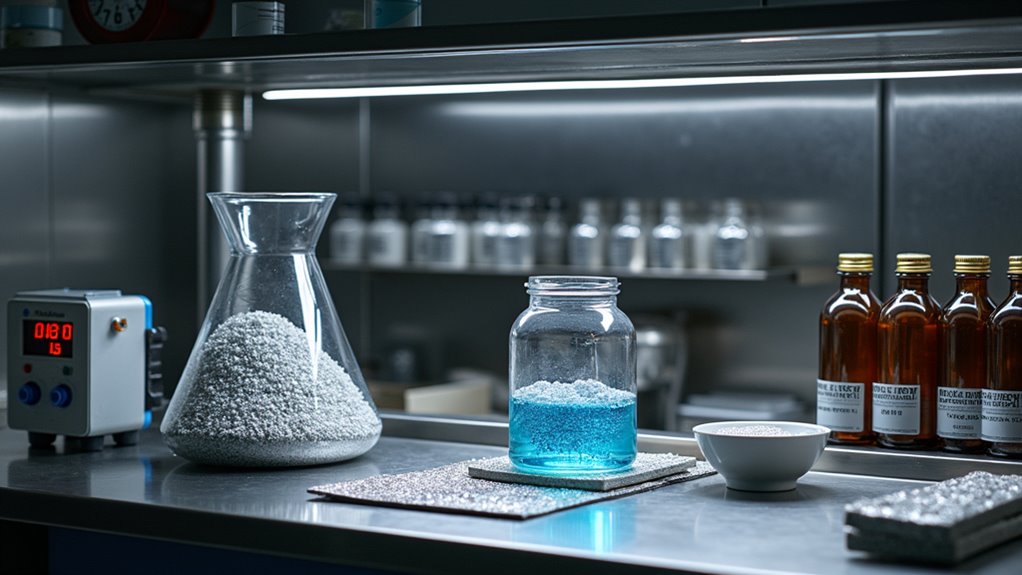
Transforming raw silver into gleaming pure metal isn’t exactly a walk in the park. The process requires serious know-how, specialized equipment, and a healthy dose of patience – plus a stomach for handling some pretty nasty chemicals. Let’s be real: this isn’t your grandma’s craft project.
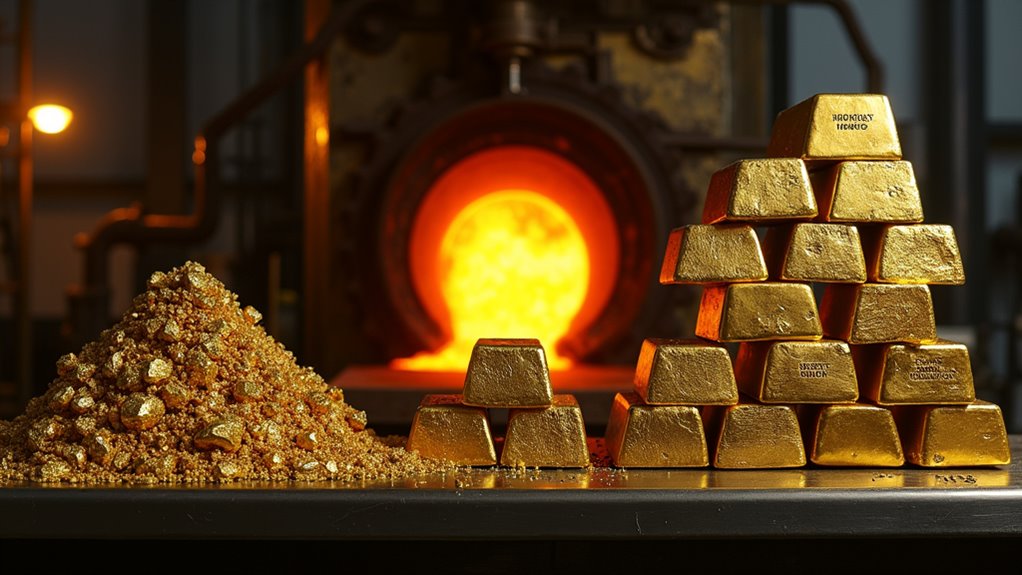
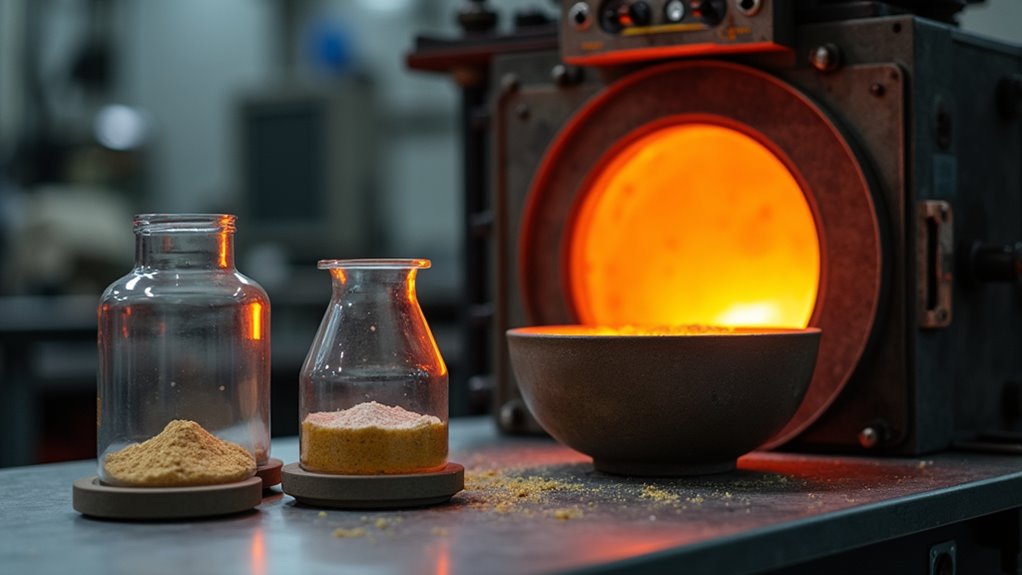
The old-school approach uses heat – lots of it. Pyrometallurgical refining basically means burning the hell out of your silver until it’s pure. First, you torch off the organic crud through calcination, then roast it to convert silver dioxide into native silver. After that, you’ll need to get cozy with lead and zinc in a fusion melting process that’d make your chemistry teacher proud. The final step, cupellation, kicks out the remaining base metals like a bouncer tossing troublemakers from a club. With the rising demand for electronics, experts predict silver usage will hit 300 million ounces in this sector alone. Interestingly, gold refining techniques can also be applied to silver, enhancing yield and efficiency.
Heat is your best friend in old-school silver refining – just torch it, roast it, and melt it until pure metal emerges.
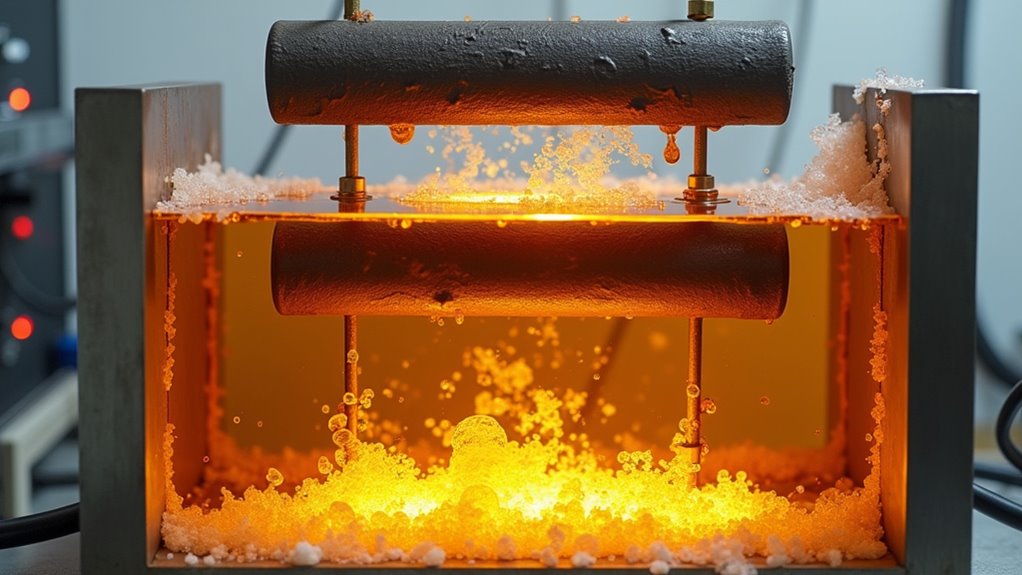
For those who prefer their refining with a side of electricity, electrochemical methods are where it’s at. The Moebius process lines up electrodes vertically, while the Balbach-Thum method lays them flat – both work by zapping impurities right outta there. Pure silver crystals form on the cathode like magic, reaching purities that’ll make perfectionists weep with joy (we’re talking 99.9% or better). The process starts with a nitrate solution that contains silver and various metal contaminants.
Now, if you’re feeling particularly scholarly, there’s always the silver chloride process. It starts by dissolving silver in nitric acid, then playing matchmaker with sodium chloride to create silver chloride. After a thorough washing that’d put your mom’s laundry routine to shame, you’ll convert it to silver oxide using sodium hydroxide. Finally, glucose reduces it to pure silver – because apparently, even metals need a sugar fix.
Where does all this silver come from? Pretty much everywhere. Dedicated mines, sure, but also as a bonus prize from mining gold, copper, lead, and zinc. There’s also a ton of recycled silver from old electronics and photography equipment – because one person’s trash is another’s precious metal jackpot.
The equipment list reads like a mad scientist’s shopping spree: crucibles, furnaces, electrolysis cells, and enough chemical reagents to stock a small lab. And don’t forget safety gear – unless you fancy chemical burns and toxic fumes (spoiler alert: you don’t).
Here’s the kicker: choosing the right refining method isn’t just about flipping a coin. You’ve gotta consider your starting material’s purity, dodge environmental regulations like a pro, and figure out if your chosen method won’t bankrupt you.
Plus, proper waste disposal is essential – dumping acid down the drain might save time, but it’s a one-way ticket to an EPA smackdown. At the end of the day, refining silver is a delicate dance between science, safety, and economic sensibility.
Frequently Asked Questions
What Protective Equipment Is Essential When Handling Silver Refining Chemicals?
Let’s get real – you need serious protection when messing with those nasty refining chemicals. No shortcuts here!
Chemical-resistant gloves (nitrile or neoprene), proper safety goggles, and a face shield are absolute must-haves.
Add a chemical-resistant apron and respirator with appropriate cartridges, cause those fumes ain’t playing around.

Skip any of these, and you’re basically asking for a chemical burn or toxic lung damage. Pretty stupid gamble, right?
How Can I Test the Purity of My Refined Silver?
Testing refined silver doesn’t have to be rocket science.
Start with basic visual checks – look for that “925” stamp and natural tarnishing.
The ice cube test is neat – real silver melts ice crazy fast.

For hardcore proof, nitric acid turns genuine silver creamy white (careful with that stuff).
XRF analyzers are the gold standard – they’ll tell you exactly what’s in there.
No guesswork, just cold hard facts.
What Are the Legal Requirements for Selling Home-Refined Silver?
Selling home-refined silver isn’t a walk in the park.
You’ll need proper licenses and registrations as a precious metals dealer – no shortcuts. Gotta keep detailed records of every transaction, report sales over $10k to the IRS, and maintain accurate documentation for years.

Plus, you’re legally required to disclose purity levels and descriptions honestly.
Skip these requirements? Hello, hefty fines and possible jail time. The government doesn’t mess around with precious metals.
Can Sterling Silver Jewelry Be Refined Into Pure Silver?
Yes, sterling silver jewelry can absolutely be refined into pure silver – it’s just chemistry and physics doing their thing.
The process strips away that pesky 7.5% of other metals, leaving behind the good stuff. Chemical refining uses acids and precipitants, while electrolysis literally pulls pure silver out of solution.
But here’s the kicker – it’s rarely worth the hassle for small pieces. The equipment and chemicals cost more than you’d get back.
What Is the Minimum Amount of Silver Needed for Profitable Refining?
Let’s get real – refining tiny amounts of silver is basically burning money.
For home refining, you need at least 100-500 grams to make it worth the hassle. Pro refiners won’t even look at you without 5-25 pounds minimum.
Sure, you could technically refine smaller amounts, but between chemicals, equipment, and time investment? You’d be better off selling that sterling scrap to a local jeweler or coin shop.
Simple economics, folks.