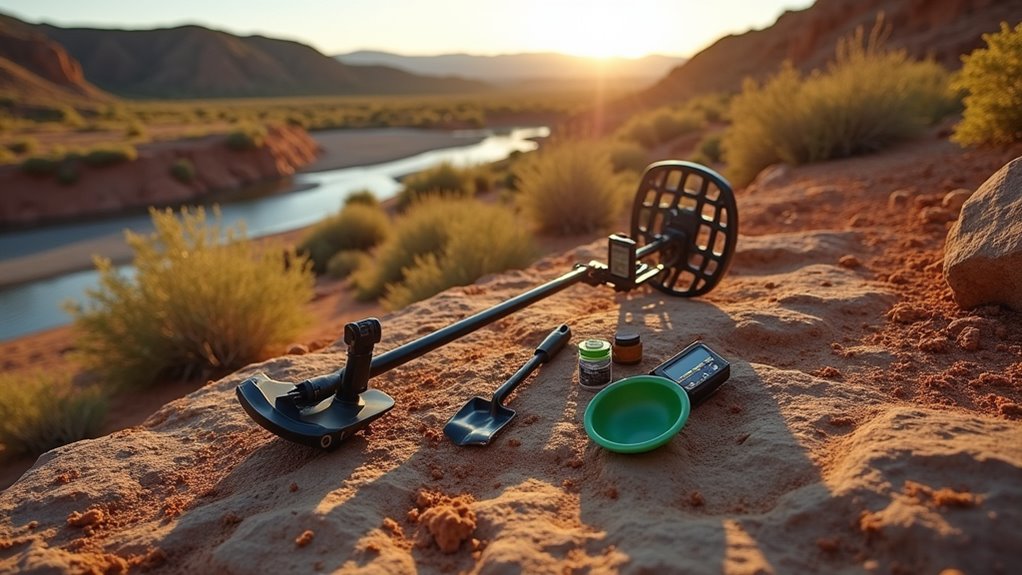
Major gold rushes have repeatedly transformed societies across continents. The 1848 California Gold Rush saw 300,000 prospectors flood San Francisco after James Marshall’s discovery at Sutter’s Mill. Australia’s 1850s Victorian Rush turned Melbourne into a global hub, while South Africa’s 1886 Witwatersrand Rush birthed Johannesburg. The 1896 Klondike Rush lured 100,000 hopefuls into Arctic conditions. Each rush left lasting impacts – from environmental scars to cultural revolutions. The glitter of these tales only scratches the surface.

When precious metal sparks human desire, civilization changes course. The discovery of gold has repeatedly triggered massive population movements and transformed societies across continents, leaving indelible marks on human history. From the Portuguese explorers who stumbled upon Ghana’s Gold Coast in 1471 to the frenzied rush of fortune-seekers in California during 1848, these golden fever dreams have shaped nations.
The California Gold Rush stands as perhaps the most iconic of these transformative events. When James Marshall spotted those glittering flakes at Sutter’s Mill, he unknowingly released a tidal wave of 300,000 prospectors that would reshape the American West. San Francisco exploded from sleepy outpost to bustling metropolis, though this prosperity came at a devastating cost to Native American communities and the environment. Mercury-laden streams and scarred landscapes remain as toxic evidence of humanity’s gold-fevered excesses, leading to ongoing efforts for sustainable gold mining practices to mitigate such impacts. Notably, leading gold mining companies are increasingly adopting sustainable practices to lessen their environmental footprint.
Down under, Australia’s Victorian Gold Rush turned Melbourne into a global powerhouse during the 1850s. The discoveries at Ballarat and Bendigo didn’t just attract Europeans – they drew ambitious Chinese miners too, creating a multicultural melting pot that would influence Australian society forever. The rush even sparked the Eureka Rebellion, proving that gold’s ability to inspire revolution is as reliable as its lustre.

South Africa’s Witwatersrand Gold Rush of 1886 literally created Johannesburg from dust, transforming a quiet landscape into Africa’s financial epicenter. But this glittering success story had a dark underbelly – it intensified British colonial ambitions, ultimately contributing to the Second Boer War and laying groundwork for racial segregation policies that would haunt the nation for decades. This historical backdrop also reflects the ongoing political challenges faced by gold mining endeavors across Africa today.
The Klondike Gold Rush of 1896 proved that gold fever could drive humans to extreme lengths, as 100,000 prospectors battled Arctic conditions in Canada’s Yukon Territory. Most left empty-handed, but their story captured public imagination, romanticizing the gold rush narrative in ways that still influence popular culture today.
Earlier rushes, like Brazil’s 18th-century boom and Ghana’s Gold Coast exploitation, demonstrate gold’s long history of disrupting indigenous societies. When Portuguese ships first spotted Ghana’s golden shores in 1471, they kicked off centuries of European resource extraction that would reshape West African society through both gold mining and the tragic expansion of slave trade.
These golden moments in history reveal a consistent pattern – the initial euphoria of discovery, followed by rapid development and eventual reckoning with social and environmental costs. Yet despite knowing better, humans continue to chase that yellow metal with relentless determination. Maybe it’s not just about the gold itself – perhaps it’s about the eternal human hope that somewhere, somehow, we might still strike it rich.
Frequently Asked Questions
What Tools and Equipment Were Commonly Used by Gold Prospectors?
Gold prospectors relied on a diverse arsenal of tools, from basic to advanced gear.

Their must-haves included sturdy gold pans for separating precious metals from dirt, trusty shovels n’ picks for digging, and rocker boxes for efficiently processing material.
The big boys used sluice boxes and dredges for serious operations, while snuffer bottles and magnets helped with fine gold recovery.
Metal detectors revolutionzed the game, making prospecting less backbreaking.
How Did Gold Rushes Impact Indigenous Populations in Different Regions?
Gold rushes devastated indigenous populations across continents through eerily similar patterns of destruction.

From California’s brutal 90% Native population decline to Australia’s Aboriginal displacement, the impact was catastrophic. Disease, violence, and forced relocations shattered traditional ways of life.
Mining pollution poisoned water sources while land grabs stripped communities of hunting grounds.
The legacy persists today – many indigenous groups still struggle with generational trauma and economic marginalization from these “golden” years.
What Was the Average Success Rate for Individual Gold Miners?
The hard truth? Individual gold miners faced brutal odds.

Historical data shows less than 5% struck it rich during major gold rushes, with most barely scraping by or losing their shirts.
Early birds caught the golden worm – those first on scene had better shot’s at success.
But as deposits depleted and competition soared, success rates plummeted.
Today’s artisanal miners face similar struggles, with 90% barely earning subsistence wages.

Talk about fool’s gold!
How Did Transportation Methods Evolve During Major Gold Rushes?
Transportation during gold rushes evolved from brutal 5-month sea voyages around Cape Horn to increasingly efficient methods.
Early miners faced death-defying journeys by wagon train and horseback, but everything changed when steamships cut travel times in half!
The real game-changer? Railroads. By 1869, the Transcontinental Railroad revolutionized how miners reached their dreams – no more dysentery on the California Trail!

Local transport evolved too, from mules to mechanized mining equipment.
What Happened to Ghost Towns After Gold Deposits Were Depleted?
Ghost towns faced stark transformations after gold dried up. Most experienced rapid population exodus, leaving behind eerie shells of former prosperity.
Buildings crumbled under nature’s assault, while some structures got repurposed into tourist attractions. Places like Bodie, CA became time capsules, drawing history buffs and adventurers.
A few towns saw partial resettlement for tourism, but most just deteriorated. Environmental scars from mining lingered, leaving toxic soil and dangerous tunnel networks behind.